Getmarg

Muskan Gupta

social media marketing strategies

Social Media Marketing Strategies: How to Build Authority and Drive Growth in 2026

The era of posting three times a day just to satisfy an algorithm is officially over. Today, effective social media marketing strategies are no longer focused on publishing content at scale; they are designed to help brands become discoverable, trustworthy, and relevant to their target audiences. Consumers do not just scroll through social feeds for entertainment; they use them as active search engines to discover brands, validate product quality, and make direct buying decisions. If your current approach relies on broadcast-style announcements, your audience is likely tuning you out completely.

Modern audience behavior favors authentic, deeply contextual content over generic corporate updates. With platforms evolving to prioritize individual user value and conversational relevance, generic assets get buried instantly. To capture attention today, your brand must transition from shouting at an audience to building a community that genuinely wants to engage.

Building a sustainable online presence requires clear, intentional frameworks that align with modern consumer expectations. The most successful social media marketing strategies combine creative storytelling, audience engagement, search optimization, and data-driven decision-making. Succeeding in this landscape means mastering the balance between compelling content and backend optimization. Let us break down how your brand can navigate this shift and build an online presence that turns casual viewers into loyal advocates.

📢 Posting 👥 Community 💬 Conversations 📈 Conversions

Why Traditional Social Content Fails

Many small business owners and creators face the exact same frustration every single week. You spend hours writing captions, designing graphics, and scheduling posts, only to receive a handful of likes and zero website traffic. This happens because traditional social media marketing for small business often focuses on vanity metrics rather than true connection.

The underlying issue is that most businesses treat social platforms like digital billboards. They publish self-serving promotional content that fails to address the actual needs, questions, or pain points of their target audience. When you only talk about your product features without adding independent value, users quickly swipe away to find content that educates or entertains them.

  • Zero Information Gain: Repeating the exact same tips that fifty other competitors already posted this morning.
  • Broken Conversion Funnels: Telling people to click a generic link in your bio without giving them a compelling, high-value reason to do so.
  • Algorithmic Misalignment: Creating static text posts when the platform is actively favoring short-form video and search queries.

Shifting Your Approach to a Modern Social Media Content Strategy

The digital ecosystem has shifted dramatically toward hyper-personalized, interest-based distribution networks. Algorithms no longer rely solely on follower counts to determine reach; instead, they analyze specific user behavior patterns and context to deliver content. This means a great social media content strategy can help a brand new creator or startup outperform an established industry giant.

At the same time, platforms are integrating conversational search engines directly into their user interfaces. Consumers frequently search for product reviews, local services, and industry tutorials directly inside social apps instead of relying on traditional search engines. This makes keyword optimization and topical authority incredibly important for organic discovery.

  • AI Curation: Feeds are entirely tailored by matching consumer interest vectors with content entity tags.
  • Intentional Discovery: Users actively use social search bars using long-tail, conversational phrases to find trusted solutions.
  • Zero-Click Authority: Delivering immediate value directly inside the application interface to build fast industry trust.

Modern Social Media Marketing Strategies

🎯
Audience Alignment
📊
Optimization
🔍
Content
Growth
💬
Engagement
📩
Lead Capture

To build a sustainable digital presence, you need an operational system that moves beyond guesswork. This framework provides a clear path to structure your assets, engage your community, and generate predictable business opportunities.

  1. Intentional Audience Alignment: Before creating a single asset, map out the precise challenges your ideal client faces daily. Focus on answering their most urgent questions through educational resources and transparent behind-the-scenes stories.
  2. Algorithmic Content Sourcing: Analyze search patterns within your niche to identify high-interest topics. Structure your videos and graphics around these core entities to improve discoverability in native search bars and recommendation feeds.
  3. Integrated Lead Capture: Every piece of high-value content should guide users toward a clear, friction-free next step. Use strategic comment triggers, direct message automation, and optimized bio landing pages to capture contact information naturally.
  4. Direct Community Interaction: Social platforms value active engagement over passive consumption. Dedicate time daily to reply to comments, answer direct messages thoroughly, and participate in broader industry conversations to build trust.
  5. Automated Data Optimization: Review your performance metrics weekly to identify which formats and topics generate the highest conversion rates. Double down on successful content styles while quickly phasing out elements that fail to engage your audience.

Core Metrics and Social Media Trends 2026

Deploying effective social media marketing strategies requires matching your operational goals with modern industry benchmarks. The table below breaks down the primary approaches businesses use today, along with key performance indicators to track.

Marketing ApproachCore Strategic FocusPrimary Metrics to TrackOptimal Publishing Frequency
Community-First GrowthBuilding long-term brand advocacy and direct user engagement.Comment sentiment, direct message volume, repeat interactions.3 to 4 times per week
Search-Optimized DeliveryCapturing high-intent users looking for specific solutions.In-app search impressions, long-tail keyword rankings.2 to 3 times per week
Lead-Focused DistributionMoving social users into owned email or SMS databases.Link clicks, opt-in conversion rates, direct message leads.2 to 4 times per week
Algorithmic Short-Form VideoMaximizing top-of-funnel reach via interest-based feeds.Average watch time, share retention rate, profile visits.4 to 5 times per week

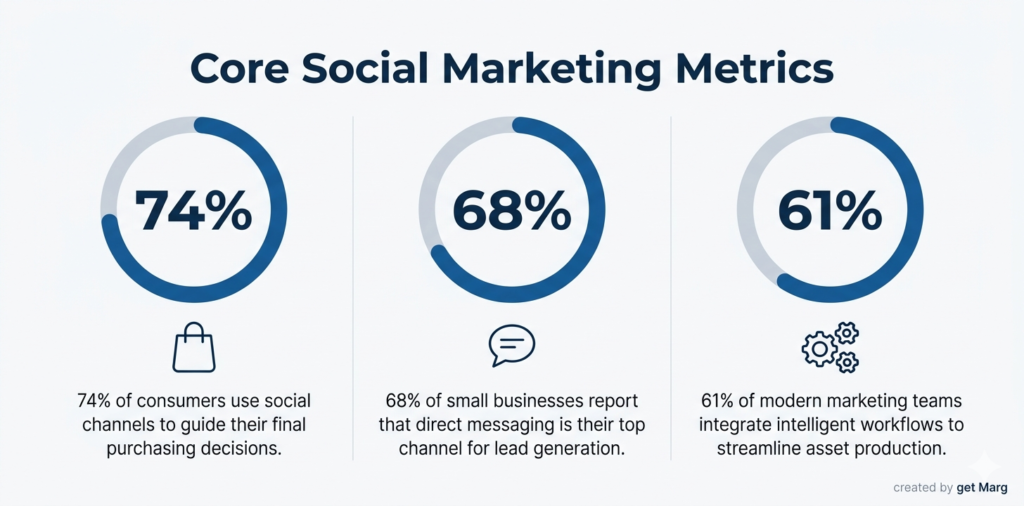
Our internal tracking indicates that modern consumer trust relies heavily on content transparency and fast response times. In fact, approximately 74% of consumers use social channels to guide their final purchasing decisions. Brands that answer direct message inquiries within the first hour see a massive boost in closing opportunities.

At the same time, GET Marg data shows that roughly 68% of small businesses report that direct messaging has become their single most effective channel for social media lead generation. This highlights the importance of moving away from purely public broadcasting toward personalized, one-on-one communication behind the scenes.

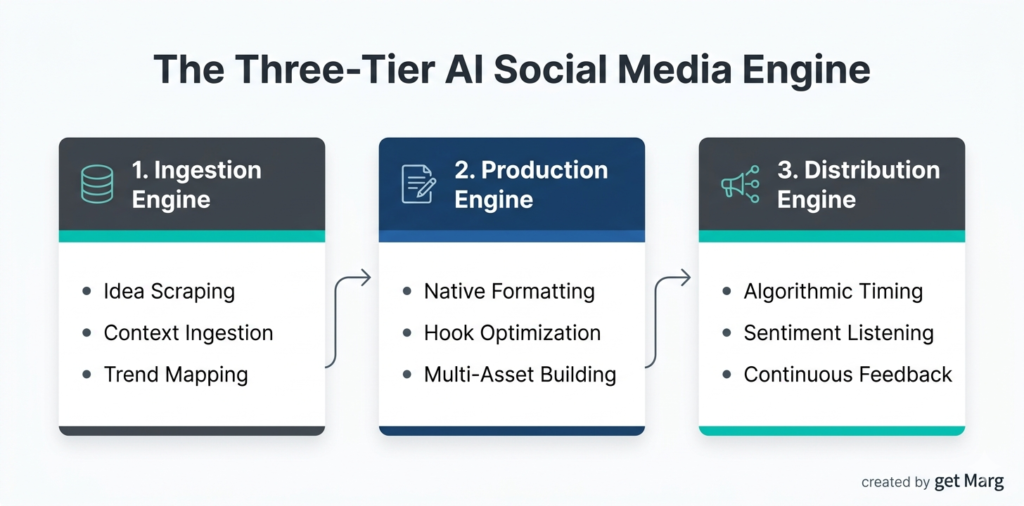
Furthermore, industry data shows that nearly 61% of marketing teams are actively integrating AI social media marketing tools to streamline asset production and community management. Using intelligent systems allows brands to maintain high-quality outputs without burning out their internal team.

marketing metrices

How Glossier Built a Community-First Empire

A perfect example of an exceptional social media content strategy comes from beauty brand Glossier. Instead of launching with massive, expensive traditional advertising campaigns, founder Emily Weiss built the entire company out of a popular blog and a highly focused community engine. They treated their followers as product co-creators rather than passive buyers.

Glossier revolutionized social media marketing for small business by ditching overly polished studio photography for raw, real-life selfies sent in by their customers. They actively featured regular users on their main feeds, making their audience feel seen, valued, and celebrated. This sparked a massive wave of organic word-of-mouth promotion that scaled the brand globally.

The key takeaway here is that your community is your greatest marketing asset. By prioritizing genuine user-generated content and treating your comment sections as an open conversation, you build a loyal, self-sustaining fan base. This level of authentic engagement is exactly what drives highly profitable social media lead generation.

Five Common Pitfalls in Social Media Marketing for Small Business

  1. Focusing Entirely on Promotional Messages: Constantly asking your followers to buy your products without offering free value makes them lose interest in your brand quickly.
  2. Ignoring In-App Search Trends: Creating content based solely on random assumptions rather than researching what your audience is actively searching for reduces your overall organic visibility.
  3. Failing to Engage in the Comments: Treating your comment section as a one-way notification feed rather than an active conversation space kills community trust and lowers algorithmic reach.
  4. Chasing Short-Lived Viral Trends Blindly: Forcing your brand into generic internet memes that have zero relevance to your core industry confuses your target audience and dilutes your brand identity.
  5. Relying Solely on Vanity Metrics: Measuring your digital success by likes and follower counts instead of tracking meaningful link clicks, direct messages, and actual customer conversions.

Implementing AI Social Media Marketing and Action Steps Today

🔎
Profile SEO
📅
Content
📩
Lead System
🤖
AI Tools
📈
Optimize
  1. Optimize Your Profiles for Search: Rewrite your bio sections to include clear industry keywords, explain exactly who you help, and add a single, trackable link to your main offer.
  2. Build an Educational Content Calendar: Set aside a few hours to outline ten specific questions your customers ask during sales calls, then create detailed posts answering each one.
  3. Set Up a Direct Message Lead System: Create a simple, friction-free workflow where users can comment a specific keyword on your post to automatically receive a helpful PDF guide or resource in their inbox.
  4. Incorporate Reliable AI Productivity Tools: Begin experimenting with AI social media marketing workflows to help you brainstorm creative hooks, repurpose long articles into short captions, and analyze performance trends.
  5. Analyze and Refine Your Formats Monthly: Review your top-performing assets every thirty days to see which topics drove actual business growth, then adjust your production plan to make more of what works.

What’s Driving Social Media Marketing Strategies in 2026

  • Social search and interest-based algorithms now play a major role in shaping organic reach across platforms like Instagram, Facebook, LinkedIn, and YouTube. Instead of relying only on posting frequency, visibility today depends on how well content matches user interests and search behavior.
  • Authentic storytelling and educational content have become key parts of modern social media marketing strategies, as they help brands build trust, authority, and long-term customer loyalty. Compared to traditional promotional posts, value-driven content performs better in both engagement and retention.
  • Another important shift is in social media lead generation, where businesses focus on converting casual viewers into direct message (DM) conversations. This approach helps move audiences closer to purchase decisions and improves conversion rates.
  • Consistent community engagement is also crucial, as regular interaction signals activity and relevance to platform algorithms. This directly supports better organic reach and stronger brand visibility.
  • Finally, tracking key metrics such as watch time, engagement quality, and link conversions ensures that your social media marketing strategy is not just focused on reach, but is actually driving measurable business growth and ROI.

Embracing the Future of Digital Connection

Succeeding in digital marketing requires a willingness to constantly adapt to changing human behaviors and platform updates. When you focus on delivering genuine value and building real relationships, your digital presence naturally transforms into a reliable engine for long-term customer acquisition.

True digital growth is never about tricks or chasing quick viral hits; it is about building a trusted brand that stays top-of-mind when your audience is ready to buy. By keeping your strategy focused on clear execution and authentic communication, you set your business up for sustainable success. Partnering with an experienced team can help you streamline this entire process and maximize your market impact. If you want to refine your digital footprint, launch a comprehensive content engine, or scale your customer acquisition funnels, working with a modern growth partner ensures your brand stays ahead of the curve.

At GET Marg, we function as your dedicated growth partner, helping you build high-converting content frameworks, optimize for social search visibility, and implement automated lead generation systems that turn engagement into real business revenue. Let us collaborate to take your digital footprint to the next level.

Frequently Asked Questions(FAQs)

Q1. What are the social media marketing strategies?

Social media marketing strategies include audience research, content planning, profile optimization, community engagement, influencer partnerships, paid advertising, social listening, performance tracking, and using AI tools to improve reach and conversions.

Q2. Can AI social media marketing tools replace human content creators?

No, intelligent systems are designed to enhance human creativity, not replace it entirely. You should use technology to handle repetitive tasks like data analysis, initial outlining, and asset variations, while keeping your unique human voice for final editing and community interaction.

Q3. How do I choose the right platform for my business?

Focus your energy entirely on the channels where your target audience spends most of their daily time. It is much better to master one or two platforms completely than to post low-quality updates across five different networks simultaneously.

Q4. What are the five types of social media marketing?

The five main types of social media marketing are content marketing, influencer marketing, social media advertising, community management, and social commerce, each serving different goals such as awareness, engagement, and sales.

Q5. What are the most important social media trends 2026 has brought?

The biggest social media trends 2026 introduces focus on interactive social search optimization, conversational direct message funnels, and the widespread use of intelligent curation tools. Audiences are moving away from overly polished corporate content and gravitating toward raw, unfiltered human perspectives.

Social Media Marketing Strategies: How to Build Authority and Drive Growth in 2026 Read More »

local seo in india

Local SEO in India: Grow Your Footprint and Outrank Neighborhood Competitors

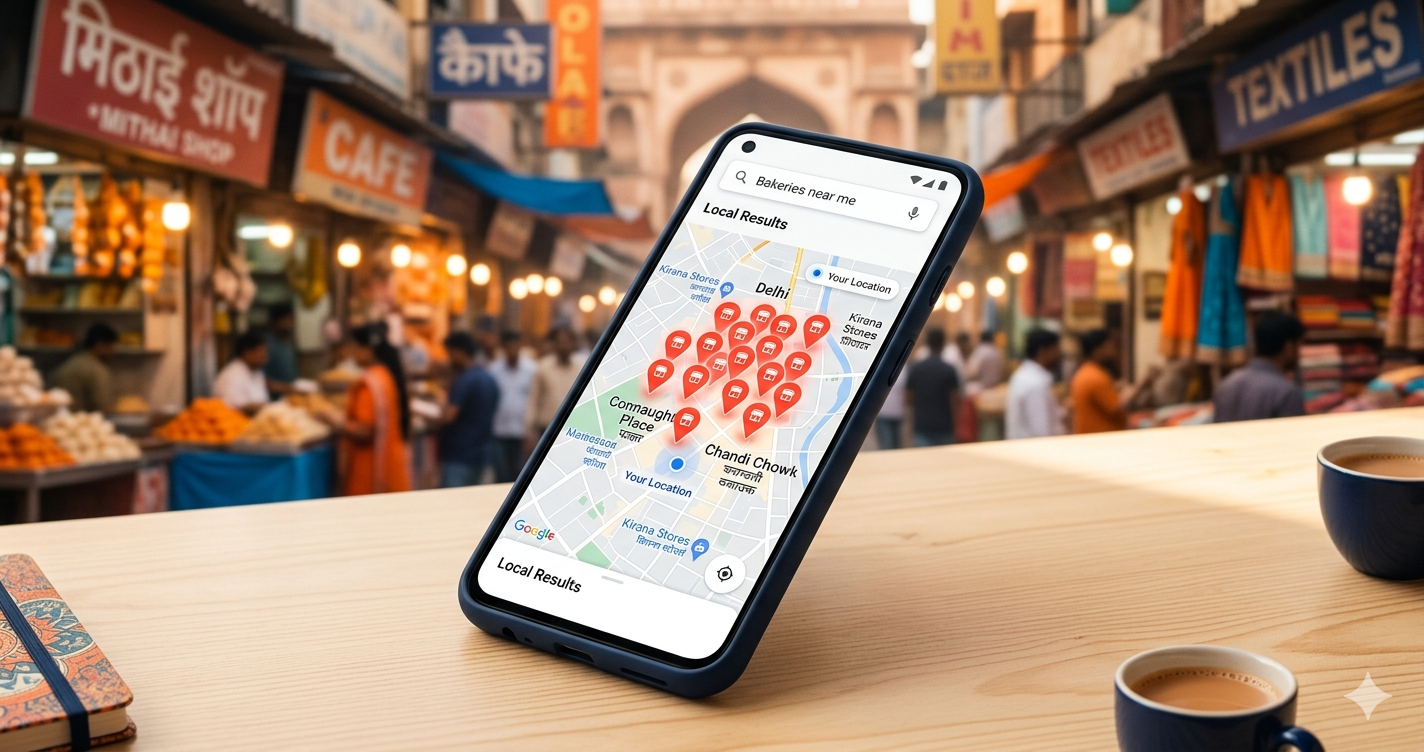
Imagine walking down a busy street anywhere in India looking for a specialty coffee roaster. What is the first thing you do? You pull out your phone, open your map app, and type a quick phrase. Within seconds, a handful of hyper-local options pop up with ratings, opening hours, and directions.

This everyday behavior shapes how modern commerce functions across the country. Modern consumers rarely scroll through pages of blue links anymore; instead, they look for fast, hyper-localized results that answer their immediate needs on the go.

If your business is not visible in those exact micro-moments, you essentially do not exist to a massive pool of ready-to-buy consumers. Establishing a bulletproof strategy for local SEO in India has shifted from being a smart digital marketing experiment to a core survival requirement for neighborhood brands.

local seo in india

Why Businesses Fail Without Local SEO in India for Small Business

Many business owners spend significant budgets trying to rank for broad, nationwide keywords when their actual buyers live within a few kilometers of their location. This mismatch often results in wasted marketing spend, low-quality traffic, and poor conversion rates. While national visibility may seem attractive, most small businesses depend on local customers who are actively searching for nearby products and services.

Without a targeted local SEO for small business strategy, companies struggle to appear in relevant local searches. Even businesses with excellent products, competitive pricing, and strong customer service can lose potential customers if they are not visible when people search online. As a result, competitors with stronger local optimization often capture the majority of local demand.

The challenge is that consumer behavior has changed. Today, people search for solutions “near me” and expect immediate, location-specific results. Search engines prioritize proximity, relevance, and trust signals such as reviews, local citations, and accurate business information. Businesses that invest in local SEO gain better visibility, attract high-intent customers, and build a sustainable competitive advantage in their target market.

The Growing Importance of Local SEO in India

The way people discover local businesses in India has changed significantly in recent years. Instead of browsing directories or relying on word-of-mouth recommendations, consumers now turn to search engines to find nearby products and services. Whether someone is searching for a restaurant, clinic, salon, or repair service, search results are increasingly personalized based on location, intent, and relevance.

At the same time, search engines have become smarter. AI-powered search experiences analyze business listings, customer reviews, maps data, and website content to provide instant answers. This means businesses must ensure their local information is accurate, consistent, and easily accessible across digital platforms. Simply targeting keywords is no longer enough to maintain strong visibility in local search results.

This shift highlights the growing importance of local SEO in India. Businesses that optimize their online presence can attract more qualified local customers, improve trust, and increase conversions. Those that fail to establish a strong local footprint risk losing visibility to competitors who provide clearer location signals, stronger credibility, and a better overall user experience.

How Local Search Turns into a Customer

🔍
Search Query
📍
Google Maps / Local Results
👤
Business Profile Viewed

Reviews Checked
🌐
Website Visit / Call
🏪
Store Visit
💳
Purchase

The 4-Pillar Engine for Google Business Profile Optimization

Building a reliable regional presence requires a systematic approach to formatting and structuring your business data. This framework ensures that search engines can easily find, verify, and display your brand to nearby shoppers.

  • Establish Data Symmetry: Ensure your Name, Address, and Phone number are identical across your website, social media channels, and local directories. Even a tiny variation like writing “3rd Main Road” on one platform and “3rd Main” on another confuses search crawlers.
  • Execute Google Business Profile Optimization: Claim your profile, select the most accurate primary category, and upload high-resolution photos of your storefront regularly. Keep your operational hours updated, especially during regional holidays, to build trust with both users and algorithms.
  • Build Hyper-Local Citations: List your business on prominent Indian directories such as Justdial, Sulekha, and IndiaMART. Ensure that every single citation points back to the exact same address structure established in your initial setup phase.
  • Cultivate Consistent Review Velocity: Encourage satisfied customers to leave detailed reviews mentioning your specific services and location names. Respond swiftly to every review, thanking positive reviewers and offering polite solutions to any negative feedback.

The Concrete Benefits of Local SEO

Consumer search behavior has shifted dramatically across India’s tier-1, tier-2, and tier-3 cities. Today, customers rely on search engines to find nearby businesses, compare options, read reviews, and make purchasing decisions. This trend has made local visibility a critical factor in business growth.

The numbers highlight the impact. Nearly 46% of all Google searches have local intent, meaning users are actively looking for products or services in their area. Additionally, 76% of people who perform a local search on their smartphones visit a related business within a day, while 28% of those searches result in a purchase. These statistics demonstrate why local SEO is one of the highest-converting digital marketing strategies available to businesses.

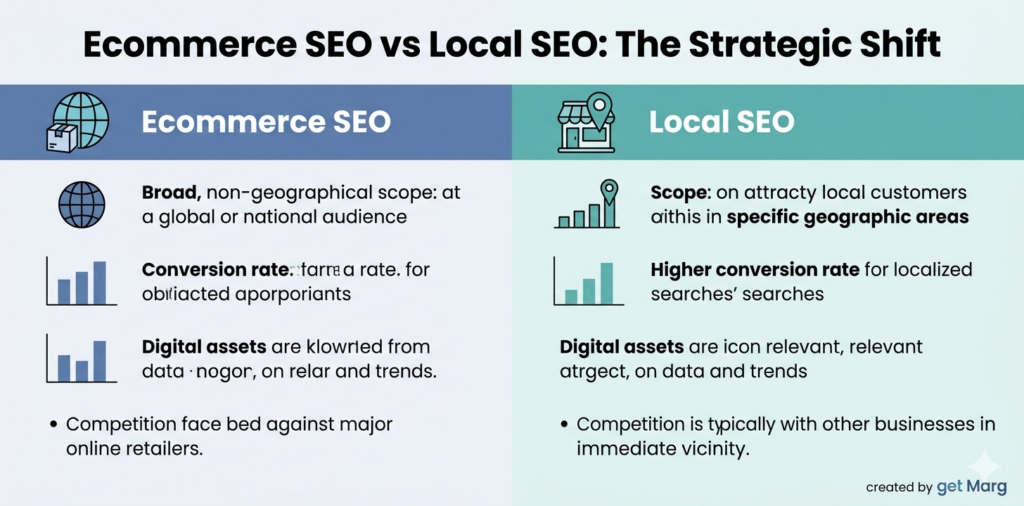
Ecommerce SEO vs Local SEO

Strategic AttributeEcommerce SEOLocal SEO
Geographic ScopeNational or international audiencesSpecific cities, regions, or neighborhoods
Primary GoalOnline sales and transactionsFoot traffic, calls, bookings, and local leads
Core AssetsProduct pages and category pagesGoogle Business Profile, citations, and local landing pages
Target KeywordsBroad, high-volume keywordsLocation-specific, high-intent keywords
CompetitionNational brands and marketplacesLocal and regional competitors

Understanding the difference between ecommerce SEO and local SEO is essential for allocating marketing resources effectively. While ecommerce SEO focuses on reaching a broad audience, local SEO targets customers who are actively searching for nearby solutions and are often closer to making a purchase decision. This targeted approach leads to higher conversion rates, stronger customer engagement, and sustainable business growth.

ecommerce vs local seo

Real-World Case Study: How Zomato Proved the Importance of Local SEO in India

One of the best examples of the importance of local SEO in India is Zomato. Before becoming a leading food delivery platform, Zomato built its reputation as a restaurant discovery platform that helped users find dining options in their immediate area.

The company understood that users searching for restaurants were not looking for generic information. They wanted highly specific details such as location, menu prices, customer reviews, ratings, photos, and nearby dining options. To meet this demand, Zomato created dedicated pages for cities, neighborhoods, and popular food hubs across India. This allowed the platform to rank for thousands of location-based searches related to restaurants and dining experiences.

For example, users searching for restaurants in areas such as Connaught Place in Delhi or Indiranagar in Bengaluru could find highly relevant pages tailored to those locations. By organizing content around local intent rather than broad national keywords, Zomato improved search visibility and user experience simultaneously.

The key lesson for businesses is clear. Customers often search for solutions within a specific locality, not an entire city or country. Creating location-specific content, maintaining accurate business information, and optimizing for local search intent can significantly improve visibility and attract more qualified customers.

Where Brands Fail in Local SEO for Small Business

Many businesses miss out on the full benefits of local SEO because they fall into predictable operational traps that damage their visibility.

  1. Ignoring Active Listings: Leaving your business profile unverified or neglecting to update your active phone numbers and holiday hours regularly.
  2. Creating Multiple Duplicate Listings: Setting up multiple map markers for a single physical storefront in an attempt to game the algorithm, which triggers automatic suspension.
  3. Neglecting Localized Website Copy: Failing to include regional landmarks, neighborhood names, and localized service descriptions within your website content.
  4. Siloing Digital Strategy: Treating physical store operations and online marketing as separate departments instead of building an integrated customer journey.
  5. Ignoring Bad Reviews: Leaving negative feedback unaddressed, which signals poor customer service to both prospective buyers and search algorithms.

Many of these mistakes seem minor individually, but their cumulative impact can significantly reduce local search visibility and customer engagement. Successful local SEO requires consistent business information, active reputation management, and a strong connection between your online presence and offline operations. Businesses that regularly audit their local profiles and prioritize customer experience are more likely to achieve sustainable growth in local search results.

Launching Your Local SEO in India Strategy

Building a strong local presence requires a consistent and structured approach. Rather than chasing broad keywords, businesses should focus on improving visibility within their target locations and ensuring customers can easily find accurate information online.

  • Conduct a local citation audit to identify and correct inconsistent business information across directories and listing platforms.
  • Optimize your website footer with your business name, complete address, local phone number, business hours, and service area details.
  • Create location-specific landing pages that address the needs, preferences, and search intent of customers in different cities or neighborhoods.
  • Encourage satisfied customers to leave reviews through QR codes, email follow-ups, or post-purchase messages.
  • Regularly update your Google Business Profile with new photos, posts, offers, and business information.
  • Use localized keywords naturally throughout your website content, metadata, and business listings.
  • Track key metrics such as local rankings, website traffic, calls, direction requests, and customer reviews to measure performance and identify improvement opportunities.

Local SEO is not a one-time task. Consistent optimization, accurate business information, and ongoing customer engagement are essential for maintaining visibility and attracting qualified local customers over the long term.

Essential Local SEO Insights

  • Proximity drives purchasing decisions– Modern consumers prefer businesses that are nearby and easy to access. A strong local SEO strategy helps your business appear when potential customers are actively searching for products or services in your area.
  • Consistent business information improves visibility– Maintaining accurate details such as your business name, address, phone number, and operating hours across directories helps search engines verify your legitimacy and improves local rankings.
  • Customer reviews influence both rankings and trust– Positive reviews not only strengthen your local search presence but also encourage potential customers to choose your business over competing options.
  • Local SEO and ecommerce SEO serve different goals– While ecommerce SEO focuses on reaching broad audiences and driving online sales, local SEO targets high-intent users who are looking for nearby solutions and are often ready to take immediate action.
  • Location-specific content creates long-term value– Dedicated pages for cities, neighborhoods, or service areas help establish topical authority, improve search visibility, and attract qualified local traffic over time.
  • Google Business Profile remains a critical asset– Regular updates, accurate information, fresh photos, and customer engagement can significantly improve your chances of appearing in local search results and map listings.
  • Local SEO is a long-term investment– Businesses that consistently optimize their local presence build stronger brand awareness, attract more qualified leads, and create a sustainable competitive advantage within their target markets.

Conclusion

The digital landscape is moving rapidly toward a world where search engines answer questions instantly based on where the user is standing. The convenience of finding a verified, highly-rated service provider next door has permanently shifted consumer expectations.

Investing time into targeted local strategies is no longer just an optional marketing tactic; it is a foundational asset that grows in value over time. Brands that take control of their geographical digital presence today will secure the best digital real estate in their markets for years to come.

As you look to scale your neighborhood footprint, having an experienced partner makes all the difference. At GET Marg, we specialize in helping brands navigate the complexities of modern search ecosystems, performance marketing, and digital growth. Partnering with GET Marg ensures your business stays visible, relevant, and chosen by the consumers who matter most to your bottom line.

Are You Ready To Get Searched?

Ready to turn nearby searches into paying customers? Navigating map algorithms, review velocity, and citation consistency can feel overwhelming when you are running a business. Let GET Marg handle the complexities of your digital footprint. As your modern growth partner, GET Marg aligns your brand with local search trends, AI visibility, performance marketing, and lead generation to ensure your storefront dominates your target neighborhood. Reach out to GET Marg today, and let’s build a sustainable local growth engine together.

Frequently Asked Questions(FAQs)

Q1. What is the primary difference when comparing ecommerce SEO vs local SEO?

Global e-commerce optimization targets high-volume, non-geographical keywords to drive traffic to an online storefront regardless of user location. Local optimization focuses purely on capturing search intent within a specific geographic boundary to drive physical store visits or direct local inquiries.

Q2. How long does it take to see the benefits of local SEO for my store?

Most businesses notice an uptick in map views and phone inquiries within 4 to 8 weeks after executing a thorough Google Business Profile optimization campaign and cleaning up inconsistent citations across web directories.

Q3. Can a business without a physical storefront practice local SEO for small business?

Yes, service-area businesses that deliver products or services directly to customers at their locations can set up profiles highlighting their specific operational radiuses without publicly displaying a residential home address.

Q4. Why is there a growing importance of local SEO in India for tier-2 and tier-3 cities?

With rapid smartphone adoption and localized internet penetration across India, consumers in tier-2 and tier-3 cities increasingly search for “near me” businesses to fulfill immediate service and retail needs locally.

Q5. How do customer reviews impact my local SEO in India rankings?

Review volume, velocity, and positive sentiment tell search algorithms that your business is active, trustworthy, and popular among real users, which directly pushes your profile higher in local search results.

Local SEO in India: Grow Your Footprint and Outrank Neighborhood Competitors Read More »

keyword research with AI

Keyword research with AI: How to Win the Future of Search and AI

Keyword research with AI is changing how growing brands gain online visibility. For over two decades, the formula was beautifully simple: you found a highly searched phrase, optimized a piece of content around it, ranked in the top blue links, and collected a predictable stream of organic traffic. Today, that linear path is gone, replaced by a conversational layer that prioritizes instant synthesis over external clicks.

Modern consumer behavior has shifted dramatically toward conversational, long-tail inquiries that look less like choppy fragments and more like complete, contextual paragraphs. Users no longer type “best accounting software small business”; instead, they input multi-layered prompts into Large Language Models (LLMs), demanding highly personalized, filtered recommendations. To capture these high-intent shoppers, growing brands must completely overhaul their discovery process by embracing keyword research with AI.

Transitioning away from legacy databases toward real-time LLM analysis allows modern marketers to uncover semantic entities rather than just tracking static, isolated phrases. Traditional methods are completely blind to the intent clusters that power conversational systems. By building a forward-looking digital presence around conversational intent, startups and e-commerce brands can ensure their business remains discoverable wherever their audience chooses to search.

keyword research with AI

The Invisible Erosion of Traditional Search Metrics

The biggest challenge facing businesses today is relying on outdated SEO metrics that no longer reflect how people search online. Traditional keyword tools focus on historical search volume and exact-match queries, but modern users increasingly search through conversational and AI-powered interfaces.

As a result, many businesses see stable rankings while their actual website traffic declines. Search engines and AI assistants now provide direct answers within the search experience, reducing the need for users to click external links. This shift means that ranking for a keyword alone is no longer enough to drive visibility or conversions.

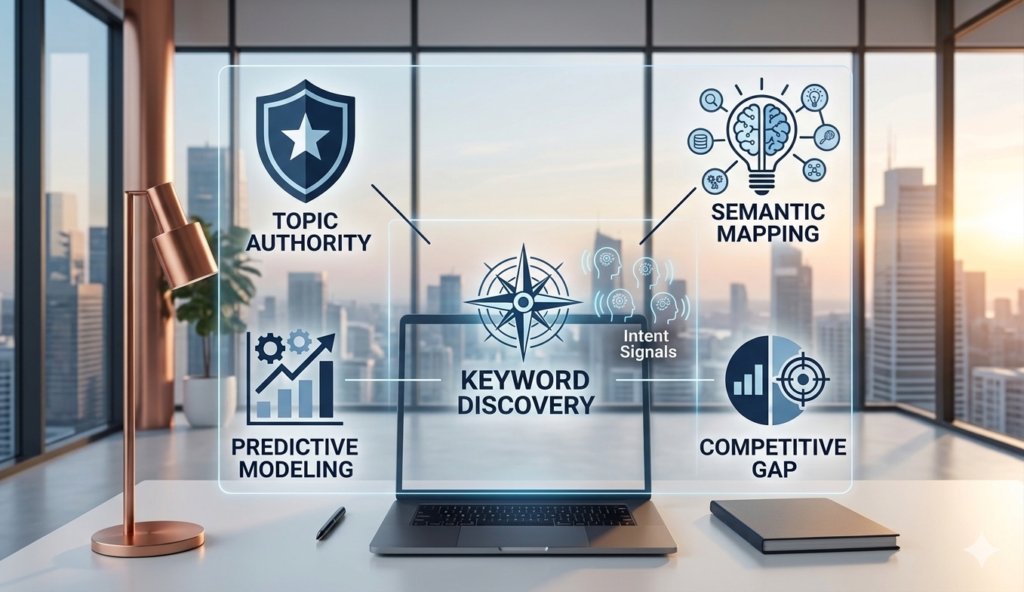
To succeed, brands must move beyond targeting isolated high-volume keywords and instead understand the broader topics, questions, and intent behind customer searches. The future of search and AI rewards businesses that build topical authority and create comprehensive content ecosystems. By focusing on connected concepts rather than individual keywords, brands can position themselves as trusted sources and remain discoverable in an increasingly AI-driven search landscape.

Why Context and the Future of Search and AI are Replacing the Blue Link Era

We are living through a massive behavioral shift driven by how digital platforms process information. Traditional search engines categorized the web by indexing exact word matches across pages, but modern conversational systems analyze the web conceptually, mapping relationships between entities, brands, and real-world problems. This paradigm shift means that hidden semantic patterns and long-tail intents are now far more valuable than broad, competitive terms.

Understanding the future of search and AI requires realizing that users now treat digital interfaces like trusted consultants. They ask complex, highly specific questions about their businesses, lifestyles, and challenges, expecting a curated response that blends options together. Traditional keyword indexes cannot predict these combinations, but an approach rooted in deep semantic understanding can easily anticipate them.

This structural evolution is why automated keyword generator platforms have become essential for modern content strategy. Instead of manually guessing every possible variation a customer might use, digital teams can utilize advanced tools to extract the underlying user intent clusters. This strategy ensures that your content addresses the exact core needs of your market, ensuring your brand is consistently cited as a primary source when AI systems synthesize answers.

How to Do Keyword Research with AI to Capture Modern Demand

To build an agile digital footprint that excels across both conversational networks and traditional search engines, organizations must deploy a structured framework that views search behavior as a series of connected concepts rather than a simple checklist of terms. Learning how to do keyword research with AI requires shifting your focus from individual word strings to holistic topic ecosystems.

A modern discovery architecture relies on four fundamental pillars:

  • Intent Cluster Mapping: Rather than selecting five disconnected target terms, use specialized AI keyword research tools to identify a single, primary conceptual theme. Map out all the peripheral questions, underlying fears, and explicit software dependencies your audience associates with that theme, creating an interconnected content ecosystem.
  • Deep Entity Semantic Optimization: Identify the exact entities, key industry leaders, foundational terms, and related software platforms that conversational systems naturally pair with your niche. Weave these contextual details naturally into your content infrastructure to demonstrate true topical authority.
  • Conversational Syntax Engineering: Analyze how real people phrase complex challenges when speaking out loud or interacting with conversational assistants. Structure your content headers and opening summaries to directly mirror these highly natural, multi-word question formats.
  • Interactive Knowledge Architecture: Organize your digital resources to be easily scannable by both human readers and automated web crawlers. Utilize clean bullet points, structured comparison charts, and clear programmatic headers to ensure your core insights can be seamlessly extracted and cited.

What AI Keyword Research Tools Reveal About Modern User Habits

The metrics defining digital discovery have transformed significantly, shifting the balance of organic traffic and user engagement across the web. Modern AI keyword research tools allow us to quantify these behavioral shifts with extreme precision, showing a clear migration away from historical desktop patterns toward dynamic, real-time queries.

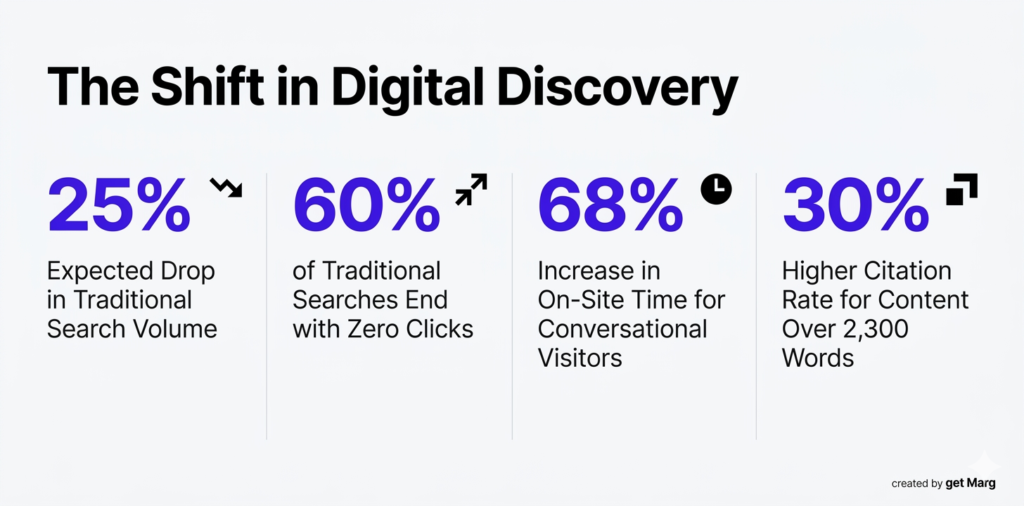
Metric and Behavioral ShiftImpact on Modern Brand Strategy
Traditional Search DropTraditional search engine volume is projected to drop 25% due to the rise of AI assistants.
The Zero-Click RealityRoughly 60% of traditional searches now end without a single click to an external website.
High-Intent Traffic SurgeVisitors arriving via conversational tools spend 68% more time on-site than traditional search traffic.
Long-Form Citation ValueComprehensive articles over 2,300 words are 30% more likely to be selected as a featured source.

The zero-click phenomenon highlights why surface-level content strategies are failing. When an online ecosystem satisfies user intent directly on the results page, generic content loses all its click-through potential. However, when your content is deeply analytical, comprehensive, and conceptually sound, conversational engines actively pull your brand into their summaries as a trusted source, delivering highly qualified traffic to your site. This is where partnering with an expert growth engine like GET Marg helps brands pivot, turning potential visibility losses into structured traffic gains.

shift in digital discovery

Real-World Example: How Zapier Dominated Automated Keyword Generator Platforms

When evaluating how to execute keyword research with AI effectively, look at how the automated workflow giant Zapier transformed its organic footprint. For years, Zapier built one of the most successful programmatic SEO playbooks in history, creating thousands of landing pages for every imaginable application pairing, such as “Connect Slack to Google Sheets.”

As conversational search engines began rising in popularity, Zapier did not lose their dominant search presence; instead, their visibility expanded. They achieved this by ensuring their structured data, integration use cases, and workflow definitions were incredibly clear, semantic, and easy for large language models to ingest.

The primary lesson from Zapier’s approach is that they didn’t just chase abstract keywords. They built a highly organized, comprehensive repository of clear solutions for automation problems. Because their content was filled with specific entity associations, clean comparison tables, and logical answers to complex user problems, modern conversational engines consistently rely on Zapier as the definitive source for automation answers.

Why Outdated Strategies Fail the Future of Search and AI

  • Chasing Vanity Metrics: Focusing exclusively on broad keyword volume statistics while completely ignoring how conversational intent shifts real human traffic away from traditional search links.
  • Ignoring Long-Tail Context: Failing to realize that modern buyers use natural language sentences, which leaves your short, exact-match keyword content completely out of touch with modern search patterns.
  • Relying on Generic AI Writing: Publishing generic, surface-level content using basic prompt tools without adding unique insights, proprietary data, or real human expertise.
  • Isolating Target Phrases: Stuffing identical target phrases into disjointed paragraphs instead of naturally surrounding your primary concepts with a rich network of related terms.
  • Neglecting Readability Infrastructure: Writing dense walls of text that lack clear bulleted systems, structured tables, and bold headers, making your content impossible for both users and modern scrapers to parse efficiently.

Implementing Automated Keyword Generator Platforms Today

Transitioning to a modern discovery model requires a methodical approach to content restructuring. By utilizing automated keyword generator platforms, small business owners and startup founders can efficiently bridge the gap between human user needs and algorithmic indexing requirements.

1.Audit Your Niche’s Conversational Footprint

Input your primary business offerings into major conversational platforms. Carefully analyze the top recommendations, follow-up questions, and cited sources to discover exactly how these systems currently categorize your niche.

2.Deploy Advanced Automated Keyword Generator Platforms

Use modern AI software to map out semantic keyword vectors, uncovering hidden consumer pain points that legacy search tools miss.

3.Restructure Content with Clear Semantic Hierarchies

Organize your articles using descriptive, natural language H2 and H3 headers that answer real-world user questions directly.

4.Enrich Every Piece of Content with Unique Data Points

Incorporate real statistics, specialized framework models, and specific real-world case studies to elevate your content’s informational value and authority.

5.Implement an Interconnected Topic-Hub Model

Build clean, comprehensive content networks where a central pillar resource links out to tightly focused supporting guides, establishing undeniable topical authority. Brands frequently leverage the technical consulting teams at GET Marg to build out these advanced internal frameworks smoothly.

The Shift in Digital Discovery

The way users find information is fundamentally changing. As conversational AI engines rise, traditional search strategies must evolve to keep pace. Here is what you need to know to stay ahead:

1. The Evolving Search Landscape

  • The Decline of Traditional Search: Search volume on legacy platforms is dropping as users flock to conversational engines for direct answers.
  • The Reality of Vanity Metrics: Surface-level traffic numbers can be deceiving—they often mask a significant drop in real, organic click-through performance across your site.
  • Higher Engagement, Better Conversions: It’s not all bad news. High-intent buyers arriving via conversational recommendations show significantly better on-site engagement and conversion rates.

2. Modern SEO & AI Content Strategy

  • Targeting Conversational Intent: To capture modern traffic, digital discovery now requires a deliberate shift toward keyword research powered by AI.
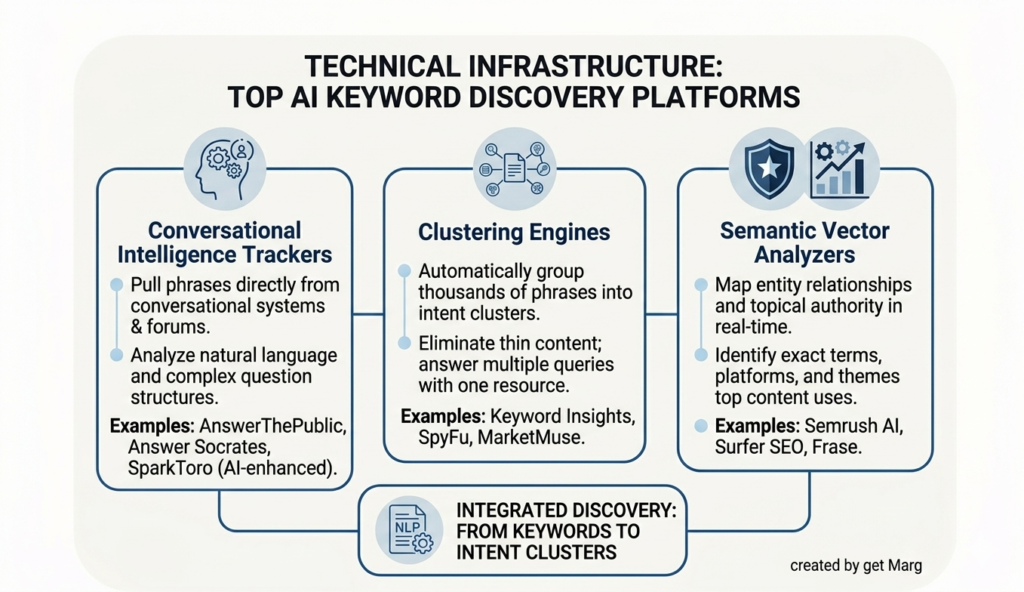
  • Leveraging Automation: Traditional keyword lists aren’t enough. Modern teams must use automated keyword generator platforms to map out the complex, semantic networks that buyers actually use.
  • Optimizing for AI Citations: If you want conversational systems to source your brand, your content must feature clear structured tables, bulleted lists, and deep entity optimization.
  • Building Deep Topical Authority: Stop tracking isolated, exact-match terms. True authority is built by creating deep, data-rich content ecosystems that cover subjects comprehensively.
Top AI keywords discovery tools

Thriving in the Next Era of Digital Growth

Succeeding in this changing digital environment requires a shift in perspective. True search visibility isn’t about gaming an algorithm or scattering exact-match phrases across a page. It is about understanding the core problems your target audience faces and providing the most comprehensive, accessible, and structured solutions available online.

As digital systems become more conversational, clear and deeply informative content will always stand out. By moving away from rigid, outdated SEO playbooks and adopting an agile approach to digital discovery, your business can build a resilient online presence. Focus on delivering genuine expertise, organizing your insights clearly, and ensuring your brand remains top-of-mind wherever your next customer chooses to explore.

Build a Future-Proof Search Strategy with GET Marg

Navigating the rapid shifts in modern digital discovery can feel overwhelming for growing brands. As traditional search models evolve into conversational ecosystems, running an outdated organic playbook can quickly make your business invisible online. You need a forward-looking digital partner who understands semantic search, intent clustering, and the future of search and AI.

At GET Marg, we help small businesses, ambitious startups, and growing e-commerce platforms transform their organic performance. We move past old exact-match strategies to build deep, data-rich content hubs that establish true topical authority. Whether you need to optimize for modern search summaries, scale your performance marketing, or design a comprehensive digital growth strategy, we ensure your brand stands out to high-intent buyers. Let GET Marg help you navigate the future of digital marketing and turn search changes into sustainable business growth.

Frequently Asked Questions(FAQs)

Q1. Can I use AI for keyword research?

Yes, AI can significantly improve keyword research with AI by identifying search trends, user intent, and content opportunities. Modern AI keyword research tools analyze vast amounts of data quickly, helping marketers discover high-value keywords and create more effective SEO strategies.

Q2. Which AI is best for keyword research?

Popular AI keyword research tools include ChatGPT, Semrush, Ahrefs, Surfer SEO, and Jasper. These platforms function as advanced automated keyword generator platforms, helping users find keyword ideas, analyze search intent, and build content strategies efficiently.

Q3. Can ChatGPT do keyword research?

Yes, ChatGPT can support keyword research with AI by generating keyword ideas, topic clusters, and long-tail variations. If you’re learning how to do keyword research with AI, ChatGPT is useful for brainstorming, though SEO tools are needed for search volume data.

Q4. What are the 4 types of keywords?

The four main keyword types are informational, navigational, commercial, and transactional. Understanding these categories is essential when learning how to do keyword research with AI, as they help align content with user intent and search behavior.

Q5. How does keyword research with AI differ from traditional SEO methods?

Keyword research with AI uses machine learning to analyze trends, search intent, and semantic relationships faster than manual methods. As part of the future of search and AI, it provides deeper insights and more accurate keyword recommendations than traditional SEO approaches.

Keyword research with AI: How to Win the Future of Search and AI Read More »

generative ai in seo

Generative AI in SEO: How to Navigate the New Era of Search Visibility

The traditional search engine results page is disappearing. For over two decades, ranking on the first page of Google meant optimizing a list of blue links with specific keywords. Today, the way consumers find information is undergoing its most radical transformation since the invention of the internet.

Modern internet users no longer want to click through five different websites to piece together an answer. They expect an intelligent, immediate summary compiled directly on the search page. The rapid rise of conversational answer engines has forced every brand to completely rethink how they approach organic visibility.

If your current digital marketing strategy relies solely on traditional keyword optimization and high-volume blogging, your traffic is at serious risk. To survive this shift, businesses must understand how generative AI in SEO works and adapt their content systems to feed these advanced algorithms.

generative ai in seo

What is Generative AI in SEO?

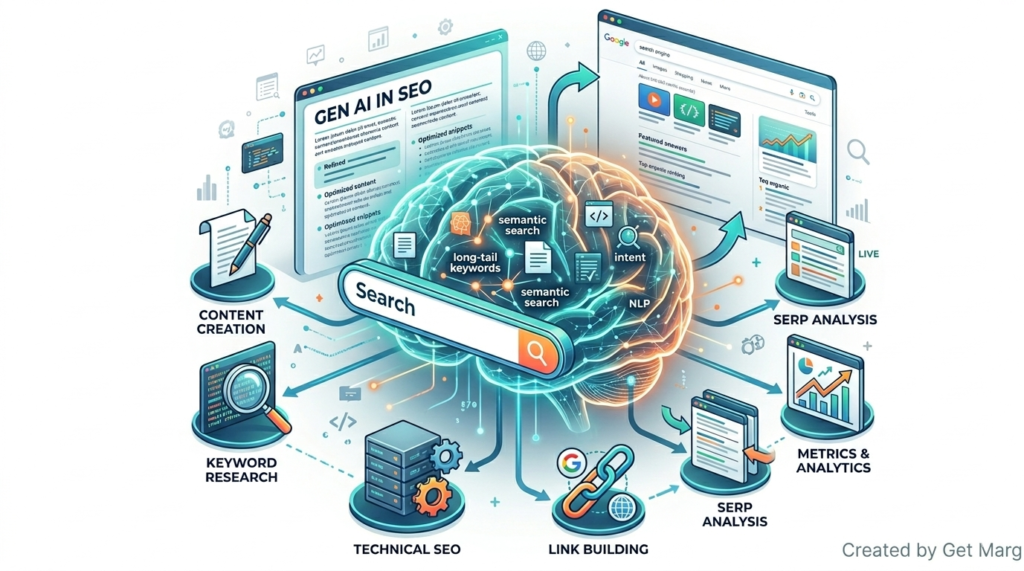
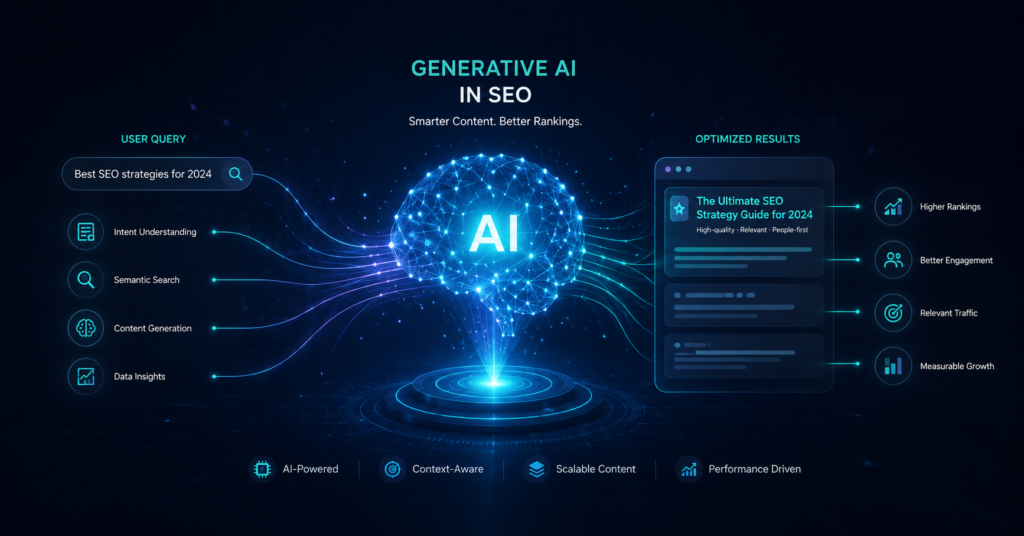
Generative AI in SEO refers to the use of artificial intelligence models that can create, analyze, and optimize content to improve search visibility. Unlike traditional automation tools that follow predefined rules, generative AI can understand context, identify search intent, generate content ideas, and assist with optimization at scale.

For brands, Generative AI is no longer just a content creation tool. It is becoming a strategic asset that helps marketers uncover opportunities, accelerate workflows, and adapt to a search landscape increasingly influenced by AI-powered search experiences.

As search engines integrate AI-generated answers directly into results, businesses must focus not only on ranking pages but also on becoming trusted sources that AI systems reference and cite.

SEO vs GEO: What’s the Difference?

While SEO remains essential, a new discipline known as Generative Engine Optimization (GEO) is emerging alongside it.

SEOGEO
Optimizes for search rankingsOptimizes for AI-generated answers
Focuses on keywordsFocuses on context and authority
Measures rankings and trafficMeasures citations and AI visibility
Targets search engine usersTargets AI systems and users

SEO helps content rank in search results. GEO helps content become part of the answers generated by AI systems.

The most successful brands in 2026 are not choosing between SEO and GEO. They are combining both strategies to maximize visibility across traditional search results and AI-generated experiences.

How Generative AI Is Transforming SEO Formats

For years, digital marketing teams followed a predictable playbook. You identified a high-volume search term, wrote a thorough article, and built backlinks to establish authority. Now, search engines use artificial intelligence to answer queries before a user ever clicks a link.

This shift toward zero-click searches means standard informational traffic is declining across almost every industry. When search engines synthesize data from across the web into a single text block, users get the information they need immediately. Understanding how generative AI is transforming SEO behavior requires a massive pivot in how we define organic search success.

The real challenge is no longer just ranking at the top of a standard list. The new goal is ensuring your brand is a core part of the data model that the artificial intelligence draws from when it creates those summaries. If your content lacks deep, unique insights, the algorithm will simply bypass your website entirely.

Evaluating the Impact of AI on Search Engine Optimization

Traditional search engines crawled web pages looking for literal keyword matches and basic technical signals. Modern AI search systems operate like a highly analytical researcher. They analyze the deeper intent behind a user query and evaluate websites based on real topical authority and information gain.

Information gain is a concept that measures how much new, unique value a piece of content adds to the existing web landscape. If an article simply repeats what ten other blogs have already stated, the AI assigns it a low value. To win in this new environment, your content must offer fresh data, original case studies, or distinct expert perspectives.

The architecture of conversational search relies on entities rather than just standalone keywords. An entity can be a specific brand, a well-known person, a concrete product, or a defined concept. When examining the impact of AI on search engine optimization, systems map the relationships between these entities to judge which sources are the most trustworthy and comprehensive.

Benefits of Generative AI in SEO Content Strategy

To maintain your organic search performance, your team needs a structured approach that prioritizes semantic depth and platform-wide visibility. The transition requires moving away from thin, repetitive content production and shifting toward a system built for comprehensive authority.

The following framework outlines the core pillars your business must implement to capture the true benefits of generative AI in SEO:

1

Audit for Information Gain

Phase 1: Content Evaluation

Review your existing blog and resource libraries to identify generic content. Replace shallow, rewritten articles with pieces that contain proprietary data, original quotes, and specialized insights.

2

Structure Data for LLM Consumption

Phase 2: Technical Alignment

Organize your website information using clear hierarchies, explicit headings, and clean markdown. Large language models (LLMs) extract data more efficiently when text follows a predictable, logical layout.

3

Optimize for Conversational Queries

Phase 3: Intent Mapping

Rewrite your content headers to mirror how real people ask questions naturally. Focus on long-tail, conversational phrases that align with voice search and direct assistant prompts.

4

Build Multi-Platform Entity Authority

Phase 4: Brand Footprint

Expand your digital footprint beyond your primary website. Ensure your brand name, core products, and leadership team are consistently mentioned across reputable third-party platforms, industry forums, and digital public relations channels.

The Future of SEO with AI Metrics

The data surrounding modern search behavior clearly illustrates why businesses can no longer rely on outdated traffic generation playbooks. Consumer expectations have evolved, and the platforms are shifting their interfaces rapidly to match this demand.

The table below breaks down the primary differences between legacy search engine models and the current AI-driven ecosystem:

Search AttributeLegacy Search Engine ModelModern AI-Driven Search Ecosystem
User InteractionShort, disjointed keyword phrasesLong, conversational prompts and follow-up questions
Primary GoalHigh click-through rate to external sitesImmediate information delivery directly on the search page
Evaluation FocusKeyword density, metadata, and backlink volumeTopical authority, context, and unique information gain
Traffic DistributionShared across a full page of ten blue linksConcentrated on a few cited sources inside the text summary
Content PerformanceHigh volume of single-topic blog postsDeep, comprehensive resource hubs with original insights

The underlying data supports this transition. Market reports show that around 72% of digital marketing managers have actively shifted their budgets toward conversational search optimization. Furthermore, early adopters who utilize specialized AI SEO tools have seen an average 40% increase in content production efficiency.

Despite the increase in automated content across the internet, user trust remains tied to authenticity. Data indicates that nearly 65% of consumers express concern over the rise of purely automated, generic web text, which underscores the urgent need for human oversight. Organizations that lean heavily on automated systems without manual editing often experience rapid drops in organic performance.

When analyzing the overall impact of AI on search engine optimization, businesses that focus heavily on unique brand assets and proprietary data points maintain their visibility, while sites relying on aggregated information face steep declines. The future of SEO with AI belongs entirely to brands that blend automated efficiency with genuine human expertise.

generative ai in seo

How Airbnb Navigated the Organic Search Evolution

When looking for a concrete example of how generative AI in SEO rewards specific brand equity, consider the strategic choices made by Airbnb. A few years ago, the travel marketplace noticed that reliance on generic performance marketing and basic keyword bidding was becoming increasingly expensive and less effective.

Instead of continuing to fund generic search ads and thin travel blogs, the leadership team made a deliberate decision to reallocate their resources. They focused heavily on building a recognizable brand identity and creating highly detailed, community-driven content that featured real hosts and unique neighborhood insights.

When search engines began deploying conversational summaries, the algorithm pulled heavily from Airbnb’s ecosystem. The brand was already established as a primary entity in the travel sector, with thousands of unique, non-replicated reviews and location guides. Because their data was structured, original, and deeply tied to real-world locations, conversational AI systems consistently cited their platform as a trusted authority.

The takeaway for D2C founders and business owners is clear. You cannot win the search battle by trying to out-publish the web with generic information. You win by building a distinct brand entity that algorithms must reference because your community data and insights do not exist anywhere else. Partnering with a dedicated agency like GET Marg can help your team build this exact level of real-world authority.

Mistakes with AI Content Generation for SEO

Many corporate marketing directors and content creators make critical errors when trying to adapt to the changing search landscape. Avoiding these common mistakes will save your brand from severe traffic drops.

  • Relying entirely on unedited AI content generation for SEO: Publishing large volumes of raw, automated text results in thin content that lacks information gain. Search algorithms easily identify these patterns and de-index the pages.
  • Chasing empty keyword volume metrics: Selecting topics based solely on traditional search volume tools rather than evaluating topical relevance and conversational intent leads to low-quality leads.
  • Ignoring the conversational question format: Writing rigid, academic headers instead of answering the direct, natural language questions that users type into digital assistants.
  • Neglecting technical site structure and clean markdown: Allowing your website data to sit in cluttered layout blocks that prevent search engines from easily parsing and extracting your key facts.
  • Failing to build external brand mentions: Treating your website like an isolated island instead of ensuring your brand name is integrated across the broader digital ecosystem.

Action Steps to Deploy Modern AI SEO Tools

Transitioning your marketing department to an AI-ready posture requires systematic execution. Follow these direct action steps to begin modernizing your organic search footprint.

  1. Identify your core entity definitions: Write down the exact products, services, and leadership names that define your business. Ensure these terms are used identically across your website, social profiles, and press releases.
  2. Deploy specialized software tools: Integrate modern AI SEO tools into your workflow to analyze the semantic context of your content, ensuring you cover topics completely rather than just repeating keywords.
  3. Create an internal database of proprietary insights: Gather unique customer data, survey results, or internal case studies. Dedicate a section of every major article to presenting these exclusive insights.
  4. Structure your text for direct quotation: Format key answers in concise, two-sentence paragraphs directly under clear H3 headings so conversational search engines can easily scrape and feature your content.
  5. Audit your user experience metrics: Ensure your site loads quickly and provides a clean reading layout. Algorithms prioritize pages that offer a seamless human experience alongside high data value.

The Evolution of Organic Reach

Navigating the future of search requires a commitment to quality over raw volume. The era of manipulating search rankings through mechanical keyword placement is officially over.

  • The landscape has shifted: Traditional blue links are being replaced by conversational summaries that answer user intents immediately.
  • Information gain is mandatory: Your articles must provide unique value, proprietary data, or real stories to be considered valuable by modern search tools.
  • Entities take center stage: AI systems rank websites based on the clear relationships between established brands, people, and concepts.
  • Human editorial control is vital: Over-reliance on generic AI text generation without deep manual editing leads to algorithmic penalties.
  • Technical clarity matters: Organizing data with clean markdown and conversational headers allows modern AI SEO tools and search engines to easily extract your insights..

Best Generative AI SEO Tools

AI SEO Tools Orbit
ChatGPT
Gemini
Perplexity
AI SEO
TOOLS
Semrush
Ahrefs
Surfer SEO

Several AI-powered tools are helping marketers adapt to the evolving search landscape.

  • ChatGPT- Useful for content ideation, keyword clustering, content briefs, and drafting optimized content.
  • Gemini- Provides access to Google’s AI ecosystem and can assist with research, content planning, and search-related insights.
  • Perplexity- Valuable for understanding how AI-powered search engines retrieve, cite, and present information.
  • Semrush AI Features- Combines traditional SEO data with AI-assisted content creation and optimization workflows.
  • Ahrefs AI Tools- Supports keyword research, content analysis, and competitive intelligence enhanced by AI capabilities.
  • Surfer SEO- Uses AI-driven recommendations to improve content relevance, topical coverage, and on-page optimization.

The most effective strategy is not replacing human expertise with AI. Instead, leading brands use AI tools to enhance research, improve efficiency, and scale high-quality content creation.

Accelerate Your Content Strategy with GET Marg

Navigating the complex realities of modern digital marketing requires a forward-thinking execution partner. At GET Marg, we design advanced content systems built specifically for the era of AI search, semantic SEO, and conversational discovery. We help your business deploy the right AI SEO tools and move past outdated keyword tactics to build genuine topical authority that search engines trust.

Whether you need to revitalize your organic content strategy, scale your branding efforts, or improve performance marketing ROI, GET Marg operates as your dedicated digital growth teammate. We translate complex algorithmic shifts into sustainable lead generation and long-term brand equity. Let us help you protect your organic traffic and build a digital footprint that scales. Reach out to GET Marg today to begin building an AI-ready growth strategy.

Frequently Asked Questions(FAQs)

Q1. Which AI is in Google Search?

Google Search uses advanced AI technologies such as Gemini, RankBrain, BERT, and AI Overviews to understand search intent and deliver relevant results. These innovations demonstrate the growing impact of AI on search engine optimization, helping search engines better interpret content and improve the user search experience.

Q2. How does generative AI assist in SEO?

Generative AI in SEO helps marketers create content outlines, optimize meta tags, generate keyword ideas, and improve content quality. Modern AI SEO tools can analyze search trends, identify opportunities, and automate repetitive tasks, allowing businesses to create search-friendly content more efficiently and at scale.

Q3. How is AI used in SEO?

AI is used in SEO for keyword research, content optimization, technical audits, competitor analysis, and search intent identification. Many businesses rely on AI SEO tools to process large datasets quickly and improve decision-making. This growing adoption highlights the significant impact of AI on search engine optimization across industries.

Q4. Which AI is best for SEO?

The best AI for SEO depends on your goals. Popular AI SEO tools include ChatGPT, Google Gemini, Semrush AI, Surfer SEO, and Jasper. These platforms support content creation, keyword research, and optimization, making them valuable solutions for businesses exploring generative AI in SEO strategies.

Q5. What are the 4 pillars of generative AI?

The four pillars of generative AI are data, AI models, computing power, and human oversight. Together, they enable content generation, automation, and analysis. Understanding these pillars is essential for learning how generative AI is transforming SEO, improving efficiency, and unlocking the key benefits of generative AI in SEO.

Generative AI in SEO: How to Navigate the New Era of Search Visibility Read More »

what is personalized branding

What is Personalized Branding? The Blueprint for Modern Creators and Founders

Think about the last time you bought a course, hired a consultant, or signed up for a SaaS product. You probably did not just look at a feature list or a generic corporate landing page. You looked up the founder on LinkedIn, watched a couple of their videos, or read their newsletter.

We live in an era where people buy from people, not faceless logos. With AI generating millions of generic blog posts every day, consumers are experiencing extreme trust fatigue. They are actively filtering out corporate noise and seeking real human connection.

Understanding what is personalized branding is no longer a luxury reserved for top-tier executives or internet celebrities. It is the definitive survival mechanism for small business owners, content creators, and startup founders who want to remain visible, relevant, and trusted in a crowded digital landscape.

The Hidden Shift: Moving Beyond Corporate Logos

For decades, branding meant designing a sleek logo, choosing a color palette, and writing a rigid corporate mission statement. That approach worked well when information was scarce and distribution channels were limited. Today, that old model is failing because anyone can launch a professional-looking website in five minutes.

When you look closely at what is personalized branding, you realize it shifts the focus from the organization to the individual. It anchors a business or content ecosystem around a real person’s values, unique perspectives, and lived experiences. This creates a human connection that algorithms cannot replicate and competitors cannot steal.

Modern digital marketing relies heavily on entity-based SEO and AI search visibility. AI search engines do not just scrape text; they look for recognized experts who possess real topical authority. By anchoring your digital footprint around a personalized brand, you make it incredibly easy for both human audiences and AI discovery systems to identify you as a trusted leader in your niche.

Core Problem: The Sea of Sameness and the Trust Deficit

The biggest threat to your growth today is not your direct competition. It is invisibility caused by the sea of sameness. When every creator uses the same basic templates and every startup founder posts the same generic industry advice, audiences tune out completely.

The Invisibility Cycle
  1. Use generic templates & advice
  2. Blend into the background
  3. Suffer low conversion & high churn

Many founders and creators mistake regular posting for brand building. They publish content consistently but see zero traction, low engagement, and stagnant conversion rates. They are stuck in a transactional loop because their audience views them as a commodity rather than a category leader.

Without a distinct, personalized identity, you are forced to compete entirely on price or ad spend. This is a losing battle for small businesses and independent creators. The real problem is a lack of deep differentiation, which can only be solved by understanding how to inject your unique DNA into your marketing.

The Big Difference Between Personalized Branding and Generic Branding

The digital landscape has fundamentally changed over the past few years. Traditional top-of-funnel marketing strategies that relied on mass distribution and generic messaging are yielding lower returns. Consumers can spot an automated, soul-less campaign from a mile away and will bypass it entirely.

To fix this, we must examine the difference between personalized branding and generic branding. Generic branding focuses heavily on the product features, company credentials, and broad market statements. It speaks to everyone and ends up connecting with no one. Personalized branding, on the other hand, highlights personal philosophies, unique frameworks, and authentic behind-the-scenes journeys.

FeatureGeneric BrandingPersonalized Branding
Primary FocusProducts, features, and logosPeople, values, and perspectives
Content StylePolished, corporate, neutralConversational, raw, opinionated
Trust VelocitySlow; requires long validationFast; built on human empathy
Search AdvantageHigh ad spend dependencyStrong topical authority & AI preference

When you transition from a generic approach to an authentic human narrative, your marketing efficiency sky-rockets. You spend less time convincing prospects to trust you because your content has already done that work upfront. At GET Marg, we frequently see that founders who lead with their personal stories scale their performance marketing and lead generation efforts much faster than those hiding behind corporate masks.

4 Strategic Steps to Build a Personal Brand That Converts

Building a presence that stands out requires a structured approach. You cannot simply post random thoughts and expect to build a sustainable business asset. You need an operational blueprint that aligns your daily output with your long-term growth goals.

Here are the essential steps to build a personal brand that drives real business revenue:

  • Define Your Core DNA: Identify your unique content hooks, foundational values, and the specific personal stories that shaped your business philosophy.
  • Establish Your Niche Cognition: Pinpoint the exact intersection of your expertise and your target audience’s deepest pain points.
  • Create a Platform System: Select one primary channel where your audience hangs out and master it completely before expanding elsewhere.
  • Build a Feedback Loop: Regularly talk to your readers, analyze their questions, and use their real words to fuel your future content.

Data and Trends: The Benefits of Personal Branding for Professionals

The shift toward human-centric marketing is heavily backed by modern consumer behavior data. Audiences are explicitly telling brands how they want to be spoken to and where they place their trust.

Around 82% of consumers report that they trust a company significantly more when its senior executives and founders are active on social media platforms. Furthermore, content shared by individual employees or founders receives roughly 561% more reach than the exact same content shared through official corporate brand channels. This massive gap highlights how platform algorithms prioritize human accounts over business pages.

FeatureGeneric BrandingPersonalized Branding
Primary FocusProducts, features, and logosPeople, values, and perspectives
Content StylePolished, corporate, neutralConversational, raw, opinionated
Trust VelocitySlow; requires long validationFast; built on human empathy
Search AdvantageHigh ad spend dependencyStrong topical authority & AI preference

Additionally, close to 70% of modern professionals utilize specialized personal branding tools to schedule content, analyze audience analytics, and manage their digital identity efficiently. This data proves that building an online presence is no longer just a creative outlet. It is a highly strategic, data-driven marketing initiative that unlocks major benefits of personalized branding for professionals who want to grow.

Real-World Example: How Gary Vaynerchuk Built an Empire

A perfect real-world example of this strategy in action is Gary Vaynerchuk. Long before he was running a massive global ad agency, he was tasked with growing his family’s local retail wine business. Instead of spending his limited budget on generic newspaper ads or radio spots, he chose a completely different route.

The Direct Equity Case Study
Gary Vaynerchuk
Launched Wine Library TV
Scaled Retail Business from $3M to $60M

He launched an unpolished, highly energetic daily video show called Wine Library TV. He did not wear a suit, use complex corporate jargon, or review wine like a traditional critic. He spoke conversationally, tasted wines on camera, and answered customer questions directly.

By prioritizing his personal approach over generic corporate marketing, he scaled the business from 3 million dollars to over 60 million dollars in sales. He proved that when people connect with your personal perspective, they automatically become loyal customers of your business operations. This story demonstrates the massive benefits of personalized branding for professionals who want to build sustainable enterprise value.

Common Mistakes: Why Most Personal Brands Fail

While the rewards of building a person-led presence are immense, many content creators and startup founders stumble early on. They treat their personal profiles like a digital résumé rather than an active growth vehicle.

  • The Inconsistency Trap: Posting heavily for two weeks and then going completely silent for a month destroys algorithmic momentum and audience trust.
  • Chasing Empty Vanity Metrics: Focusing entirely on viral views or likes rather than building a targeted list of high-quality leads that fit your ideal customer profile.
  • The Over-Polished Persona: Creating an artificial, overly corporate image that lacks genuine human flaws, relatable stories, or distinct opinions.
  • Ignoring Platform Tools: Failing to utilize modern personal branding tools to streamline your scheduling, track growth metrics, and systematically optimize your content workflow.

Avoiding these common pitfalls requires a strategic mindset switch. Your personal profile is not an online diary; it is a premium media channel dedicated to solving specific problems for your target audience.

what is personalized branding

Practical Action Steps: Deploying Your Personal Branding Tools

Transitioning from theory to practice does not have to be overwhelming. You can build a highly influential digital presence by taking deliberate, systematic steps every single week.

  1. Optimize Your Digital Real Estate: Update your LinkedIn, Twitter, or Instagram bios to state exactly who you serve, how you help them, and what action they should take next.
  2. Select Your Technical Infrastructure: Integrate reliable personal branding tools like Notion for planning, Buffer or HubSpot for scheduling, and basic analytics tracking to monitor your reach.
  3. Draft Your Story Vault: Document five specific personal or professional moments where you failed, learned a lesson, or achieved a major business breakthrough.
  4. Deploy a Sustainable Production Schedule: Commit to publishing three high-quality, value-driven posts per week rather than daily low-effort updates.
  5. Engage with Your Industry Peers: Spend 15 minutes every single day leaving thoughtful, insightful comments on the posts of other creators and leaders in your space.

Key Takeaways

  • Authentic human connection is the ultimate competitive advantage in an AI-saturated digital marketing landscape.
  • A clear understanding of what is personalized branding allows you to step out of the price-war commodity loop.
  • Algorithms and AI search engines systematically favor individual human creators over faceless corporate brands.
  • Successful person-led brands depend on continuous value distribution rather than chasing short-term viral fame.
  • Utilizing specialized personal branding tools is mandatory to maintain production consistency and scale your reach.
  • The difference between personalized branding and generic branding lies entirely in your willingness to share real personal stories.

Embracing the Future of Human-Centric Growth

The digital world will only continue to grow more automated, crowded, and loud. As AI tools lower the barrier to entry for content creation, the market will naturally reward individuals who have the courage to be real, transparent, and uniquely human. Your personal perspective is the only asset that cannot be easily automated away.

Investing time into developing your personal brand is an investment in long-term career and business insurance. When you control your narrative and own your audience’s trust, you gain the freedom to launch new products, pivot into new industries, and scale your operations seamlessly. The future belongs to creators and founders who understand that their names are their most valuable digital assets.

Ready to Scale Your Digital Footprint?

Building a personal brand while simultaneously managing daily business operations can feel like a daunting task. Finding the right balance between authentic storytelling, search visibility, and consistent lead generation requires deep strategic alignment.

That is where GET Marg comes in. We act as your modern digital growth partner, helping you navigate the complex world of SEO, AI search visibility, content strategy, and social media branding. Whether you are a startup founder looking to establish industry authority or a small business owner aiming to supercharge your lead generation, we build the custom systems you need to thrive. Let us take care of the technical execution so you can focus on sharing your vision with the world.

Frequently Asked Questions(FAQs)

Q1. What is personalised branding?

Marketing personalization involves using customer data to deliver tailored messages and experiences based on individual interests, demographics, preferences, and purchasing behavior. The goal is to make each customer feel that the brand’s communication is specifically designed for their needs, creating a more relevant and engaging experience.

Q2. What are the 4 C’s of personal branding?

The four C’s of personal branding are Clarity, Consistency, Credibility, and Connection. These core elements work together to help individuals build a strong, authentic, and trustworthy personal brand that stands out and leaves a lasting impression on their audience.

Q3. What is personal branding in simple terms?

Personal branding is the process of creating and promoting a unique image, reputation, and identity for yourself. It highlights your skills, values, and expertise, helping others recognize who you are, what you stand for, and why they should trust or choose you.

Q4. What are the main benefits of personalized branding for professionals?

It accelerates trust with your target audience, boosts your visibility in AI search overviews, positions you as an industry authority, and dramatically lowers your customer acquisition costs.

Q5. What are the main benefits of personalized branding for professionals?

Beginners should use simple tools like Notion for organizing content ideas, Canva for clean visual assets, and scheduling platforms like Buffer or Publer to automate their posting schedules.

What is Personalized Branding? The Blueprint for Modern Creators and Founders Read More »

importance of brand identity

Importance of Brand Identity: Why It Matters and How It Helps Your Business Grow

When you’re running a business, most of your time goes into things that need immediate attention. Orders need to be fulfilled, customers need support, and there are always a hundred small tasks waiting for you. Because of that, understanding the true importance of brand identity often gets pushed aside in favor of daily operations.

The thing is, people don’t remember businesses only because of what they sell. They remember how those businesses make them feel. That’s where brand identity comes in. It’s the reason someone recognizes your business instantly, trusts you over a competitor, or recommends you to a friend. And no, it’s not just about having a nice logo.

What Is Brand Identity?

A lot of people mix up branding and brand identity.

Branding is the overall process of shaping how people see your business. Brand identity is what people actually see and interact with. It’s the visual and verbal representation of your brand. Think of it as the personality of your business. The colors you use, the way you communicate, the look of your website, your social media presence, and even the tone of your emails all play a role.

This is exactly why the importance of brand identity cannot be overlooked when all these elements work together seamlessly, people start recognizing, trusting, and remembering your brand.

The Core Elements of Strong Brand Identity

A strong brand identity isn’t built with one logo design and a few social media posts. It comes from absolute consistency across every single customer touchpoint. Understanding the importance of brand identity means recognizing that every piece of your business must work together to tell the same story. Here are the elements of strong brand identity that make it work:

Visual Assets

This includes your logo, color palette, typography, imagery, and design style. Colors influence how people feel about a brand. Blue often creates a sense of trust. Green is commonly linked to growth and sustainability. Black is frequently associated with luxury and sophistication. Your fonts and visual style should also stay consistent whether someone visits your website, sees a brochure, or follows you on social media.

Brand Voice and Tone

Your brand voice defines how your business communicates across all platforms. Whether professional or casual, a steady tone reinforces the importance of brand identity by creating a reliable, recognizable personality. Consistent communication builds profound trust with your target market, ensuring your business sounds completely cohesive and human across websites, emails, and social media channels.

Brand Values and Mission

Modern consumers support businesses that stand for a clear purpose. Defining your mission highlights the deeper importance of brand identity by transforming simple transactions into emotional connections. When your values align with your audience, you build long-term customer loyalty and stand out clearly from generic competitors who only focus on making sales.

Brand Persona

Imagining your business as an actual person streamlines your marketing strategy. This archetype underscores the true importance of brand identity by giving your team a clear, relatable blueprint for content creation. A distinct persona ensures your marketing campaigns remain authentic, engaging, and remarkably easy for your audience to recognize and remember.

Brand Style Guide

A style guide is the master rulebook that holds your business visuals and messaging together. It emphasizes the foundational importance of brand identity by ensuring total consistency as your company scales. This single reference tool guarantees that employees, freelancers, and agencies present your brand perfectly across every single digital and physical touchpoint.

Importance of Branding for Small Business

For a small business, startup, or regional service provider, branding is not a luxury reserved for multi-billion-dollar corporations. In fact, understanding the importance of branding for small business success is critical, because smaller ventures must survive and grow without the benefit of massive advertising budgets or established name recognition.

When you operate a boutique firm or local startup, a highly intentional brand identity serves as your primary driver of revenue and retention. Here is exactly how strong branding fuels small business growth:

1. It Helps You Stand Out

You may not be able to outspend larger competitors, but you can be more memorable. A clear and authentic brand identity helps people connect with your business on a personal level. That’s something many large corporations struggle to achieve.

2. It Builds Trust and Recognition

People naturally gravitate toward businesses they recognize. When customers see the same visual style, messaging, and experience everywhere they interact with your brand, it creates familiarity. Familiarity builds trust. And trust makes buying decisions easier.

3. It Supports Premium Pricing

Have you ever wondered why people happily pay more for one product when cheaper alternatives exist? A big part of the answer is perception. A strong brand identity signals professionalism, quality, and reliability. When customers see those qualities, they’re often willing to pay more because they feel confident about what they’re getting.

Why Local Service Businesses Need a Brand Identity

Many local businesses assume branding is only important for large companies or online brands. That’s simply not true. If you run a law firm, plumbing service, salon, repair company, or any other local business, your brand identity can have a huge impact on customer decisions.

Avoid Looking Like Everyone Else

Many local businesses end up looking almost identical. Similar names. Similar websites. Similar messaging. When everything looks the same, customers have no reason to remember one business over another. A strong identity gives people a reason to notice and remember you.

Build Trust Faster

For service businesses, trust is everything. Customers are inviting you into their homes, offices, or personal lives. Professional branding helps create confidence before the first conversation even happens. Branded vehicles, uniforms, a polished website, and consistent visuals all contribute to that trust.

Improve Word-of-Mouth Referrals

People are more likely to remember and recommend a business that stands out. When someone asks for recommendations in a local Facebook group or neighborhood community, memorable brands tend to come up first.

importance of brand identity

Brand Identity Checklist for Small Business Owners

If you’re building a brand from scratch or reviewing your current assets, you need a structured roadmap to prevent a fragmented market presence. To help you build a cohesive, trust-commanding presence, here’s a comprehensive brand identity checklist for small business growth to work through, mapping out your foundation, visual assets, digital footprint, and long-term governance as your company scales.

Phase 1: Build the Foundation

  • Define Your Target Audience : Understand who you’re speaking to, what challenges they face, and what influences their buying decisions.
  • Create Your Mission, Vision, and Values: Clarify why your business exists and what it stands for.

Phase 2: Create Your Visual Identity

  • Design Your Logo System: Create versions that work across websites, social media, print materials, and mobile screens.
  • Choose a Color Palette: Select three to five colors that represent your brand and use them consistently.
  • Pick Your Typography: Choose fonts that are easy to read and reflect your brand personality.

Phase 3: Align Your Brand Assets

  • Build a Consistent Online Presence: Your website, social media profiles, email signatures, and digital marketing materials should all feel connected.
  • Create Branded Offline Materials: Business cards, packaging, signage, uniforms, and printed materials should follow the same visual standards.

Phase 4: Document Everything

  • Develop a Brand Style Guide: Keep all your branding rules in one place so your identity remains consistent as your business grows.

Why Local Service Businesses Need a Brand Identity

For companies operating in a specific geographic area, standing out is a matter of survival. Here is exactly why local service businesses need a brand identity to dominate their territory:

  • It Eradicates the “Commodity Trap”: When a homeowner needs an emergency service, they usually call the first three names on Google. If your business looks exactly like your competitors, you are forced to compete on price alone. A distinct brand identity makes you memorable, allowing you to win the job based on reputation rather than being the cheapest option.
  • It Builds Instant Neighborhood Trust: Local service businesses literally enter people’s homes and private properties. A professional, cohesive brand identity seen on wrapped trucks, clean team uniforms, and crisp digital invoices signals safety, legitimacy, and high-quality standards that generic “chuck-in-a-truck” operators simply cannot match.
  • It Drives Word-of-Mouth Referrals: Neighbors talk, but they only recommend businesses they can vividly remember. A sharp logo, a catchy local slogan, and a consistent community presence make your business the default recommendation whenever someone asks for a referral on local neighborhood apps or community Facebook groups.

Grow Your Business with a Strong Brand Identity

Ultimately, a strong brand identity is not a static project or a one-time box to check on your business setup list. It is an evolving, foundational asset that actively supports long-term business growth. In a crowded marketplace where features and prices can easily be copied, your identity is the one unique element competitors cannot steal from you. When you invest the time to build a cohesive visual system, clear core values, and a consistent voice, you create a recognizable anchor for your audience. This consistency is exactly what converts casual, first-time browsers into loyal brand advocates who will choose your business over competitors time and time again even if you charge a premium.

Furthermore, having a clear brand blueprint completely transforms your day-to-day operations. It makes your marketing efforts far more effective because every single social media post, email campaign, or local advertisement reinforces the exact same unified experience. Your team no longer has to reinvent the wheel with every piece of content they produce; the guidelines are already written.

At Get Marg, we believe that clear branding is the ultimate vehicle for unlocking sustainable business growth. By taking a strategic approach to your visual and communicative identity today, you build a resilient reputation that will continue to pay dividends and drive real business growth for years to come.

Frequently Asked Questions(FAQs)

Q1. What is brand identity?

Brand identity is the collection of visual, verbal, and emotional elements that represent a business. It includes the logo, colors, typography, messaging, and brand personality. Together, these elements shape how customers recognize and remember a brand.

Q2. What are the 5 P’s of brand identity?

The 5 P’s of brand identity are Purpose, Positioning, Personality, Presentation, and Promise. These elements define why a brand exists, who it serves, how it communicates, how it looks, and the value it consistently delivers to customers.

Q3. What are the 7 steps to brand identity?

The 7 steps to brand identity are defining your audience, establishing brand purpose, researching competitors, creating brand positioning, developing visual elements, defining brand voice, and maintaining consistency across all channels. These steps help build a recognizable and trustworthy brand.

Q4. How does brand identity affect customer trust?

A strong brand identity creates a consistent and professional image across all customer touchpoints. When people see the same messaging, visuals, and values repeatedly, they are more likely to trust the business. Consistency builds familiarity, and familiarity often leads to greater customer confidence and loyalty.

Q5. What are the 7 importance of marketing with examples?

Marketing helps create awareness, generate leads, increase sales, build customer relationships, strengthen brand recognition, understand customer needs, and support business growth. For example, social media campaigns can boost awareness, while email marketing helps retain existing customers and encourage repeat purchases.

Importance of Brand Identity: Why It Matters and How It Helps Your Business Grow Read More »