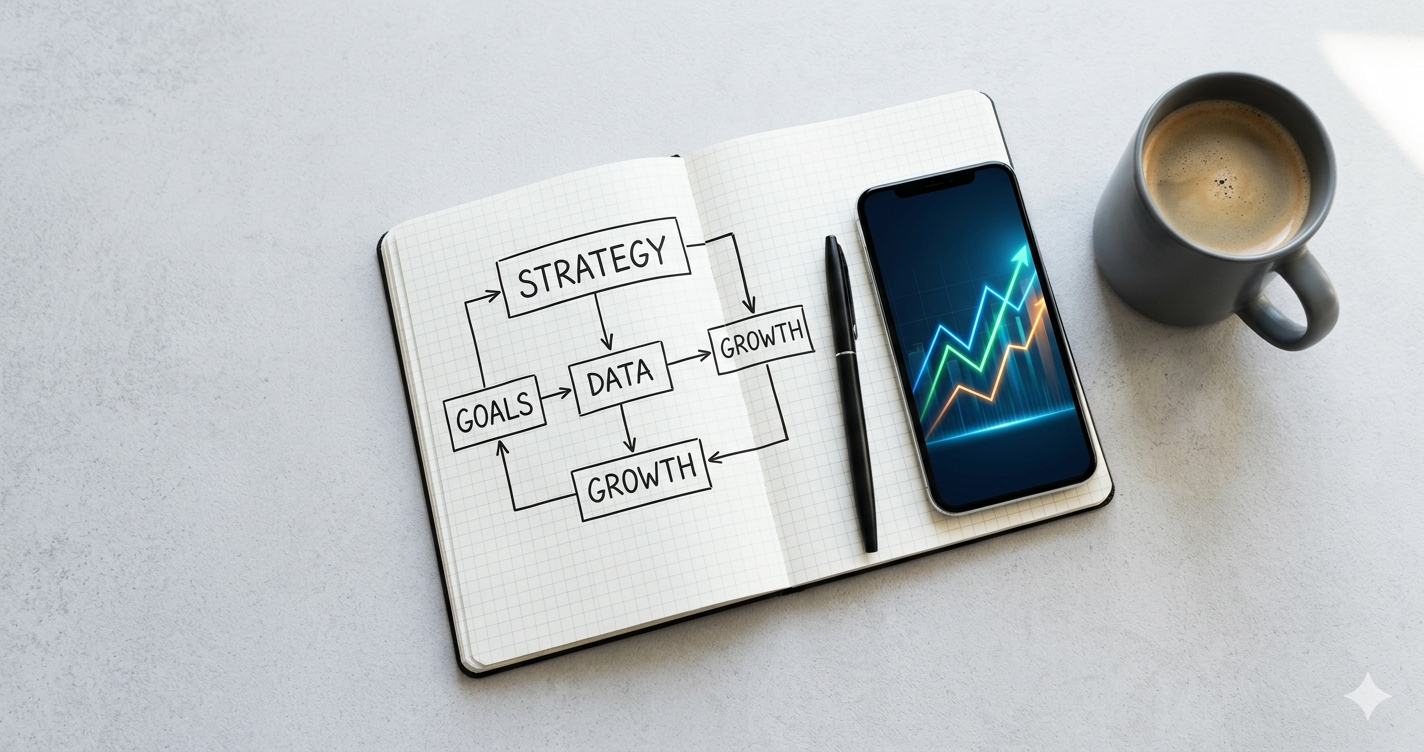
The era of posting three times a day just to satisfy an algorithm is officially over. Today, effective social media marketing strategies are no longer focused on publishing content at scale; they are designed to help brands become discoverable, trustworthy, and relevant to their target audiences. Consumers do not just scroll through social feeds for entertainment; they use them as active search engines to discover brands, validate product quality, and make direct buying decisions. If your current approach relies on broadcast-style announcements, your audience is likely tuning you out completely.
Modern audience behavior favors authentic, deeply contextual content over generic corporate updates. With platforms evolving to prioritize individual user value and conversational relevance, generic assets get buried instantly. To capture attention today, your brand must transition from shouting at an audience to building a community that genuinely wants to engage.
Building a sustainable online presence requires clear, intentional frameworks that align with modern consumer expectations. The most successful social media marketing strategies combine creative storytelling, audience engagement, search optimization, and data-driven decision-making. Succeeding in this landscape means mastering the balance between compelling content and backend optimization. Let us break down how your brand can navigate this shift and build an online presence that turns casual viewers into loyal advocates.
Why Traditional Social Content Fails
Many small business owners and creators face the exact same frustration every single week. You spend hours writing captions, designing graphics, and scheduling posts, only to receive a handful of likes and zero website traffic. This happens because traditional social media marketing for small business often focuses on vanity metrics rather than true connection.
The underlying issue is that most businesses treat social platforms like digital billboards. They publish self-serving promotional content that fails to address the actual needs, questions, or pain points of their target audience. When you only talk about your product features without adding independent value, users quickly swipe away to find content that educates or entertains them.
- Zero Information Gain: Repeating the exact same tips that fifty other competitors already posted this morning.
- Broken Conversion Funnels: Telling people to click a generic link in your bio without giving them a compelling, high-value reason to do so.
- Algorithmic Misalignment: Creating static text posts when the platform is actively favoring short-form video and search queries.
Shifting Your Approach to a Modern Social Media Content Strategy
The digital ecosystem has shifted dramatically toward hyper-personalized, interest-based distribution networks. Algorithms no longer rely solely on follower counts to determine reach; instead, they analyze specific user behavior patterns and context to deliver content. This means a great social media content strategy can help a brand new creator or startup outperform an established industry giant.
At the same time, platforms are integrating conversational search engines directly into their user interfaces. Consumers frequently search for product reviews, local services, and industry tutorials directly inside social apps instead of relying on traditional search engines. This makes keyword optimization and topical authority incredibly important for organic discovery.
- AI Curation: Feeds are entirely tailored by matching consumer interest vectors with content entity tags.
- Intentional Discovery: Users actively use social search bars using long-tail, conversational phrases to find trusted solutions.
- Zero-Click Authority: Delivering immediate value directly inside the application interface to build fast industry trust.
Modern Social Media Marketing Strategies
To build a sustainable digital presence, you need an operational system that moves beyond guesswork. This framework provides a clear path to structure your assets, engage your community, and generate predictable business opportunities.
- Intentional Audience Alignment: Before creating a single asset, map out the precise challenges your ideal client faces daily. Focus on answering their most urgent questions through educational resources and transparent behind-the-scenes stories.
- Algorithmic Content Sourcing: Analyze search patterns within your niche to identify high-interest topics. Structure your videos and graphics around these core entities to improve discoverability in native search bars and recommendation feeds.
- Integrated Lead Capture: Every piece of high-value content should guide users toward a clear, friction-free next step. Use strategic comment triggers, direct message automation, and optimized bio landing pages to capture contact information naturally.
- Direct Community Interaction: Social platforms value active engagement over passive consumption. Dedicate time daily to reply to comments, answer direct messages thoroughly, and participate in broader industry conversations to build trust.
- Automated Data Optimization: Review your performance metrics weekly to identify which formats and topics generate the highest conversion rates. Double down on successful content styles while quickly phasing out elements that fail to engage your audience.
Core Metrics and Social Media Trends 2026
Deploying effective social media marketing strategies requires matching your operational goals with modern industry benchmarks. The table below breaks down the primary approaches businesses use today, along with key performance indicators to track.
| Marketing Approach | Core Strategic Focus | Primary Metrics to Track | Optimal Publishing Frequency |
| Community-First Growth | Building long-term brand advocacy and direct user engagement. | Comment sentiment, direct message volume, repeat interactions. | 3 to 4 times per week |
| Search-Optimized Delivery | Capturing high-intent users looking for specific solutions. | In-app search impressions, long-tail keyword rankings. | 2 to 3 times per week |
| Lead-Focused Distribution | Moving social users into owned email or SMS databases. | Link clicks, opt-in conversion rates, direct message leads. | 2 to 4 times per week |
| Algorithmic Short-Form Video | Maximizing top-of-funnel reach via interest-based feeds. | Average watch time, share retention rate, profile visits. | 4 to 5 times per week |
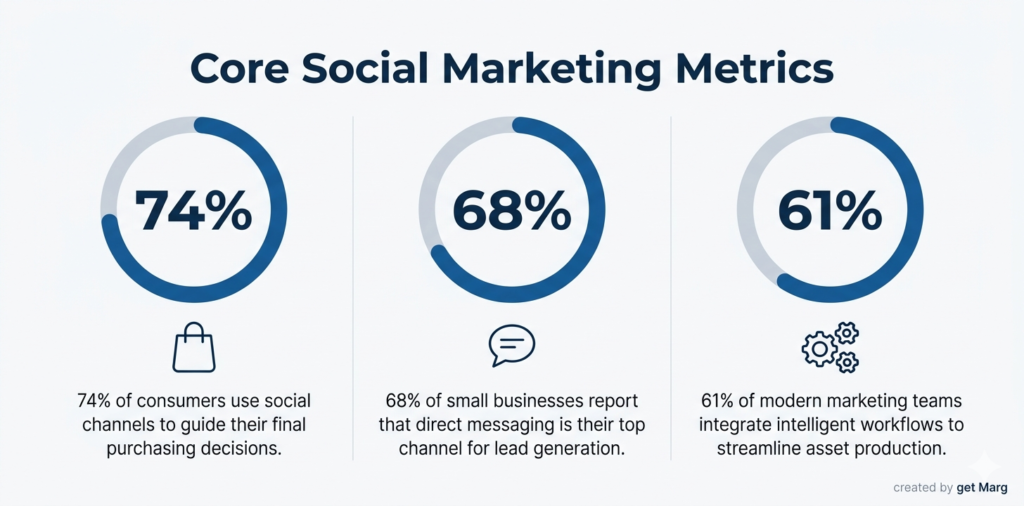
Our internal tracking indicates that modern consumer trust relies heavily on content transparency and fast response times. In fact, approximately 74% of consumers use social channels to guide their final purchasing decisions. Brands that answer direct message inquiries within the first hour see a massive boost in closing opportunities.
At the same time, GET Marg data shows that roughly 68% of small businesses report that direct messaging has become their single most effective channel for social media lead generation. This highlights the importance of moving away from purely public broadcasting toward personalized, one-on-one communication behind the scenes.
Furthermore, industry data shows that nearly 61% of marketing teams are actively integrating AI social media marketing tools to streamline asset production and community management. Using intelligent systems allows brands to maintain high-quality outputs without burning out their internal team.
How Glossier Built a Community-First Empire
A perfect example of an exceptional social media content strategy comes from beauty brand Glossier. Instead of launching with massive, expensive traditional advertising campaigns, founder Emily Weiss built the entire company out of a popular blog and a highly focused community engine. They treated their followers as product co-creators rather than passive buyers.
Glossier revolutionized social media marketing for small business by ditching overly polished studio photography for raw, real-life selfies sent in by their customers. They actively featured regular users on their main feeds, making their audience feel seen, valued, and celebrated. This sparked a massive wave of organic word-of-mouth promotion that scaled the brand globally.
The key takeaway here is that your community is your greatest marketing asset. By prioritizing genuine user-generated content and treating your comment sections as an open conversation, you build a loyal, self-sustaining fan base. This level of authentic engagement is exactly what drives highly profitable social media lead generation.
Five Common Pitfalls in Social Media Marketing for Small Business
- Focusing Entirely on Promotional Messages: Constantly asking your followers to buy your products without offering free value makes them lose interest in your brand quickly.
- Ignoring In-App Search Trends: Creating content based solely on random assumptions rather than researching what your audience is actively searching for reduces your overall organic visibility.
- Failing to Engage in the Comments: Treating your comment section as a one-way notification feed rather than an active conversation space kills community trust and lowers algorithmic reach.
- Chasing Short-Lived Viral Trends Blindly: Forcing your brand into generic internet memes that have zero relevance to your core industry confuses your target audience and dilutes your brand identity.
- Relying Solely on Vanity Metrics: Measuring your digital success by likes and follower counts instead of tracking meaningful link clicks, direct messages, and actual customer conversions.
Implementing AI Social Media Marketing and Action Steps Today
- Optimize Your Profiles for Search: Rewrite your bio sections to include clear industry keywords, explain exactly who you help, and add a single, trackable link to your main offer.
- Build an Educational Content Calendar: Set aside a few hours to outline ten specific questions your customers ask during sales calls, then create detailed posts answering each one.
- Set Up a Direct Message Lead System: Create a simple, friction-free workflow where users can comment a specific keyword on your post to automatically receive a helpful PDF guide or resource in their inbox.
- Incorporate Reliable AI Productivity Tools: Begin experimenting with AI social media marketing workflows to help you brainstorm creative hooks, repurpose long articles into short captions, and analyze performance trends.
- Analyze and Refine Your Formats Monthly: Review your top-performing assets every thirty days to see which topics drove actual business growth, then adjust your production plan to make more of what works.
What’s Driving Social Media Marketing Strategies in 2026
- Social search and interest-based algorithms now play a major role in shaping organic reach across platforms like Instagram, Facebook, LinkedIn, and YouTube. Instead of relying only on posting frequency, visibility today depends on how well content matches user interests and search behavior.
- Authentic storytelling and educational content have become key parts of modern social media marketing strategies, as they help brands build trust, authority, and long-term customer loyalty. Compared to traditional promotional posts, value-driven content performs better in both engagement and retention.
- Another important shift is in social media lead generation, where businesses focus on converting casual viewers into direct message (DM) conversations. This approach helps move audiences closer to purchase decisions and improves conversion rates.
- Consistent community engagement is also crucial, as regular interaction signals activity and relevance to platform algorithms. This directly supports better organic reach and stronger brand visibility.
- Finally, tracking key metrics such as watch time, engagement quality, and link conversions ensures that your social media marketing strategy is not just focused on reach, but is actually driving measurable business growth and ROI.
Embracing the Future of Digital Connection
Succeeding in digital marketing requires a willingness to constantly adapt to changing human behaviors and platform updates. When you focus on delivering genuine value and building real relationships, your digital presence naturally transforms into a reliable engine for long-term customer acquisition.
True digital growth is never about tricks or chasing quick viral hits; it is about building a trusted brand that stays top-of-mind when your audience is ready to buy. By keeping your strategy focused on clear execution and authentic communication, you set your business up for sustainable success. Partnering with an experienced team can help you streamline this entire process and maximize your market impact. If you want to refine your digital footprint, launch a comprehensive content engine, or scale your customer acquisition funnels, working with a modern growth partner ensures your brand stays ahead of the curve.
At GET Marg, we function as your dedicated growth partner, helping you build high-converting content frameworks, optimize for social search visibility, and implement automated lead generation systems that turn engagement into real business revenue. Let us collaborate to take your digital footprint to the next level.
Frequently Asked Questions(FAQs)
Q1. What are the social media marketing strategies?
Social media marketing strategies include audience research, content planning, profile optimization, community engagement, influencer partnerships, paid advertising, social listening, performance tracking, and using AI tools to improve reach and conversions.
Q2. Can AI social media marketing tools replace human content creators?
No, intelligent systems are designed to enhance human creativity, not replace it entirely. You should use technology to handle repetitive tasks like data analysis, initial outlining, and asset variations, while keeping your unique human voice for final editing and community interaction.
Q3. How do I choose the right platform for my business?
Focus your energy entirely on the channels where your target audience spends most of their daily time. It is much better to master one or two platforms completely than to post low-quality updates across five different networks simultaneously.
Q4. What are the five types of social media marketing?
The five main types of social media marketing are content marketing, influencer marketing, social media advertising, community management, and social commerce, each serving different goals such as awareness, engagement, and sales.
Q5. What are the most important social media trends 2026 has brought?
The biggest social media trends 2026 introduces focus on interactive social search optimization, conversational direct message funnels, and the widespread use of intelligent curation tools. Audiences are moving away from overly polished corporate content and gravitating toward raw, unfiltered human perspectives.