
When you’re running a business, most of your time goes into things that need immediate attention. Orders need to be fulfilled, customers need support, and there are always a hundred small tasks waiting for you. Because of that, understanding the true importance of brand identity often gets pushed aside in favor of daily operations.
The thing is, people don’t remember businesses only because of what they sell. They remember how those businesses make them feel. That’s where brand identity comes in. It’s the reason someone recognizes your business instantly, trusts you over a competitor, or recommends you to a friend. And no, it’s not just about having a nice logo.
What Is Brand Identity?
Branding is the overall process of shaping how people see your business. Brand identity is what people actually see and interact with. It’s the visual and verbal representation of your brand. Think of it as the personality of your business. The colors you use, the way you communicate, the look of your website, your social media presence, and even the tone of your emails all play a role.
This is exactly why the importance of brand identity cannot be overlooked when all these elements work together seamlessly, people start recognizing, trusting, and remembering your brand.

The Core Elements of Strong Brand Identity
A strong brand identity isn’t built with one logo design and a few social media posts. It comes from absolute consistency across every single customer touchpoint. Understanding the importance of brand identity means recognizing that every piece of your business must work together to tell the same story. Here are the elements of strong brand identity that make it work:
Visual Assets
This includes your logo, color palette, typography, imagery, and design style. Colors influence how people feel about a brand. Blue often creates a sense of trust. Green is commonly linked to growth and sustainability. Black is frequently associated with luxury and sophistication. Your fonts and visual style should also stay consistent whether someone visits your website, sees a brochure, or follows you on social media.
Brand Voice and Tone
Your brand voice defines how your business communicates across all platforms. Whether professional or casual, a steady tone reinforces the importance of brand identity by creating a reliable, recognizable personality. Consistent communication builds profound trust with your target market, ensuring your business sounds completely cohesive and human across websites, emails, and social media channels.
Brand Values and Mission
Modern consumers support businesses that stand for a clear purpose. Defining your mission highlights the deeper importance of brand identity by transforming simple transactions into emotional connections. When your values align with your audience, you build long-term customer loyalty and stand out clearly from generic competitors who only focus on making sales.
Brand Persona
Imagining your business as an actual person streamlines your marketing strategy. This archetype underscores the true importance of brand identity by giving your team a clear, relatable blueprint for content creation. A distinct persona ensures your marketing campaigns remain authentic, engaging, and remarkably easy for your audience to recognize and remember.
Brand Style Guide
A style guide is the master rulebook that holds your business visuals and messaging together. It emphasizes the foundational importance of brand identity by ensuring total consistency as your company scales. This single reference tool guarantees that employees, freelancers, and agencies present your brand perfectly across every single digital and physical touchpoint.
Importance of Branding for Small Business
For a small business, startup, or regional service provider, branding is not a luxury reserved for multi-billion-dollar corporations. In fact, understanding the importance of branding for small business success is critical, because smaller ventures must survive and grow without the benefit of massive advertising budgets or established name recognition.
Stand Out
Be memorable in a crowded market.
Build Trust
Consistency creates confidence.
Charge More
Strong brands justify premium pricing.
When you operate a boutique firm or local startup, a highly intentional brand identity serves as your primary driver of revenue and retention. Here is exactly how strong branding fuels small business growth:
1. It Helps You Stand Out
You may not be able to outspend larger competitors, but you can be more memorable. A clear and authentic brand identity helps people connect with your business on a personal level. That’s something many large corporations struggle to achieve.
2. It Builds Trust and Recognition
People naturally gravitate toward businesses they recognize. When customers see the same visual style, messaging, and experience everywhere they interact with your brand, it creates familiarity. Familiarity builds trust. And trust makes buying decisions easier.
3. It Supports Premium Pricing
Have you ever wondered why people happily pay more for one product when cheaper alternatives exist? A big part of the answer is perception. A strong brand identity signals professionalism, quality, and reliability. When customers see those qualities, they’re often willing to pay more because they feel confident about what they’re getting.
Why Local Service Businesses Need a Brand Identity
Many local businesses assume branding is only important for large companies or online brands. That’s simply not true. If you run a law firm, plumbing service, salon, repair company, or any other local business, your brand identity can have a huge impact on customer decisions.
Avoid Looking Like Everyone Else
Many local businesses end up looking almost identical. Similar names. Similar websites. Similar messaging. When everything looks the same, customers have no reason to remember one business over another. A strong identity gives people a reason to notice and remember you.
Build Trust Faster
For service businesses, trust is everything. Customers are inviting you into their homes, offices, or personal lives. Professional branding helps create confidence before the first conversation even happens. Branded vehicles, uniforms, a polished website, and consistent visuals all contribute to that trust.
Improve Word-of-Mouth Referrals
People are more likely to remember and recommend a business that stands out. When someone asks for recommendations in a local Facebook group or neighborhood community, memorable brands tend to come up first.
Brand Identity Checklist for Small Business Owners
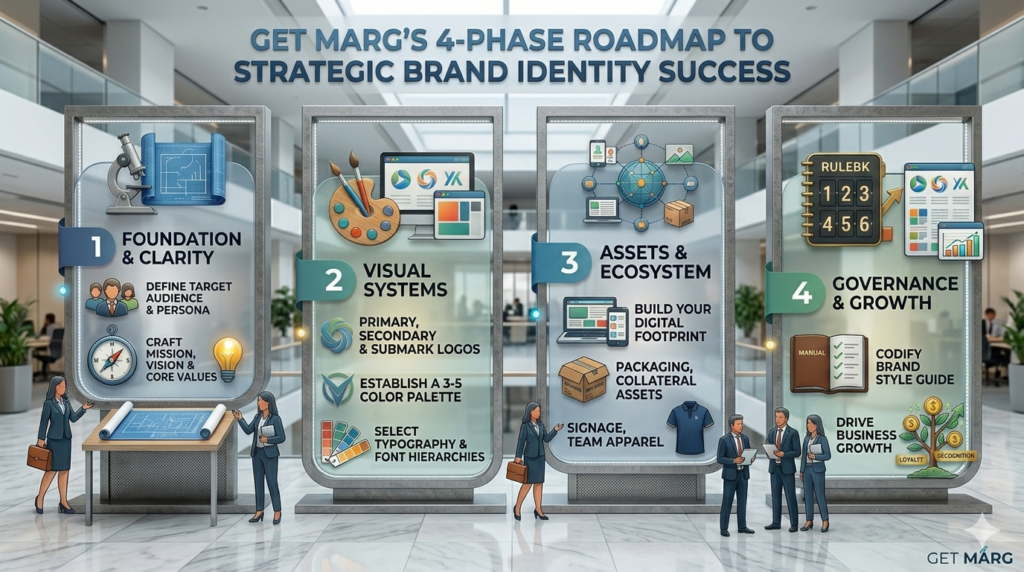
If you’re building a brand from scratch or reviewing your current assets, you need a structured roadmap to prevent a fragmented market presence. To help you build a cohesive, trust-commanding presence, here’s a comprehensive brand identity checklist for small business growth to work through, mapping out your foundation, visual assets, digital footprint, and long-term governance as your company scales.
Phase 1: Build the Foundation
- Define Your Target Audience : Understand who you’re speaking to, what challenges they face, and what influences their buying decisions.
- Create Your Mission, Vision, and Values: Clarify why your business exists and what it stands for.
Phase 2: Create Your Visual Identity
- Design Your Logo System: Create versions that work across websites, social media, print materials, and mobile screens.
- Choose a Color Palette: Select three to five colors that represent your brand and use them consistently.
- Pick Your Typography: Choose fonts that are easy to read and reflect your brand personality.
Phase 3: Align Your Brand Assets
- Build a Consistent Online Presence: Your website, social media profiles, email signatures, and digital marketing materials should all feel connected.
- Create Branded Offline Materials: Business cards, packaging, signage, uniforms, and printed materials should follow the same visual standards.
Phase 4: Document Everything
- Develop a Brand Style Guide: Keep all your branding rules in one place so your identity remains consistent as your business grows.
Why Local Service Businesses Need a Brand Identity
For companies operating in a specific geographic area, standing out is a matter of survival. Here is exactly why local service businesses need a brand identity to dominate their territory:
- It Eradicates the “Commodity Trap”: When a homeowner needs an emergency service, they usually call the first three names on Google. If your business looks exactly like your competitors, you are forced to compete on price alone. A distinct brand identity makes you memorable, allowing you to win the job based on reputation rather than being the cheapest option.
- It Builds Instant Neighborhood Trust: Local service businesses literally enter people’s homes and private properties. A professional, cohesive brand identity seen on wrapped trucks, clean team uniforms, and crisp digital invoices signals safety, legitimacy, and high-quality standards that generic “chuck-in-a-truck” operators simply cannot match.
- It Drives Word-of-Mouth Referrals: Neighbors talk, but they only recommend businesses they can vividly remember. A sharp logo, a catchy local slogan, and a consistent community presence make your business the default recommendation whenever someone asks for a referral on local neighborhood apps or community Facebook groups.
Grow Your Business with a Strong Brand Identity
Ultimately, a strong brand identity is not a static project or a one-time box to check on your business setup list. It is an evolving, foundational asset that actively supports long-term business growth. In a crowded marketplace where features and prices can easily be copied, your identity is the one unique element competitors cannot steal from you. When you invest the time to build a cohesive visual system, clear core values, and a consistent voice, you create a recognizable anchor for your audience. This consistency is exactly what converts casual, first-time browsers into loyal brand advocates who will choose your business over competitors time and time again even if you charge a premium.
Furthermore, having a clear brand blueprint completely transforms your day-to-day operations. It makes your marketing efforts far more effective because every single social media post, email campaign, or local advertisement reinforces the exact same unified experience. Your team no longer has to reinvent the wheel with every piece of content they produce; the guidelines are already written.
At Get Marg, we believe that clear branding is the ultimate vehicle for unlocking sustainable business growth. By taking a strategic approach to your visual and communicative identity today, you build a resilient reputation that will continue to pay dividends and drive real business growth for years to come.
Frequently Asked Questions(FAQs)
Q1. What is brand identity?
Brand identity is the collection of visual, verbal, and emotional elements that represent a business. It includes the logo, colors, typography, messaging, and brand personality. Together, these elements shape how customers recognize and remember a brand.
Q2. What are the 5 P’s of brand identity?
The 5 P’s of brand identity are Purpose, Positioning, Personality, Presentation, and Promise. These elements define why a brand exists, who it serves, how it communicates, how it looks, and the value it consistently delivers to customers.
Q3. What are the 7 steps to brand identity?
The 7 steps to brand identity are defining your audience, establishing brand purpose, researching competitors, creating brand positioning, developing visual elements, defining brand voice, and maintaining consistency across all channels. These steps help build a recognizable and trustworthy brand.
Q4. How does brand identity affect customer trust?
A strong brand identity creates a consistent and professional image across all customer touchpoints. When people see the same messaging, visuals, and values repeatedly, they are more likely to trust the business. Consistency builds familiarity, and familiarity often leads to greater customer confidence and loyalty.
Q5. What are the 7 importance of marketing with examples?
Marketing helps create awareness, generate leads, increase sales, build customer relationships, strengthen brand recognition, understand customer needs, and support business growth. For example, social media campaigns can boost awareness, while email marketing helps retain existing customers and encourage repeat purchases.