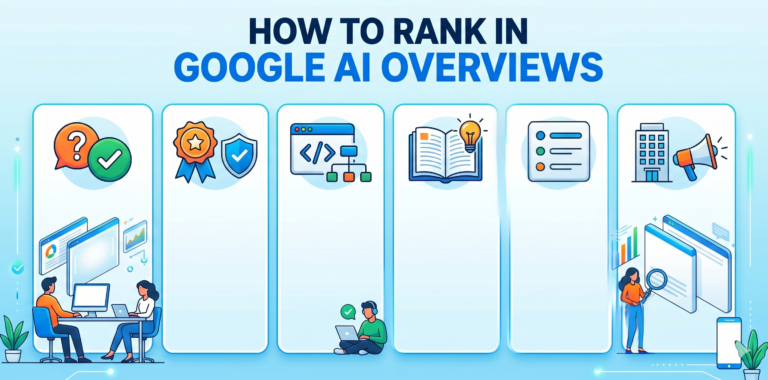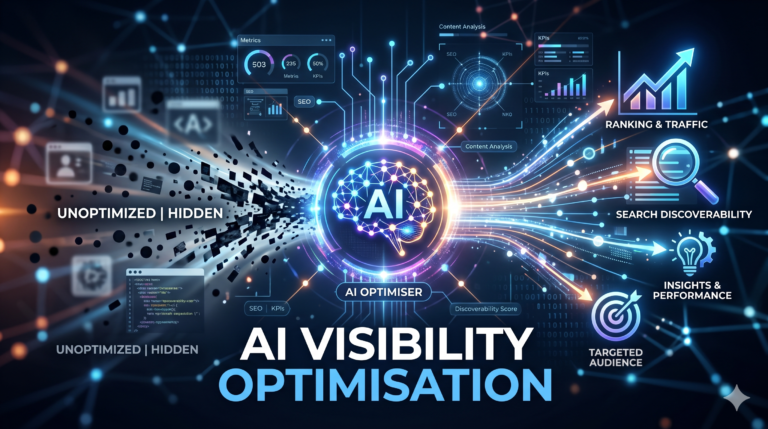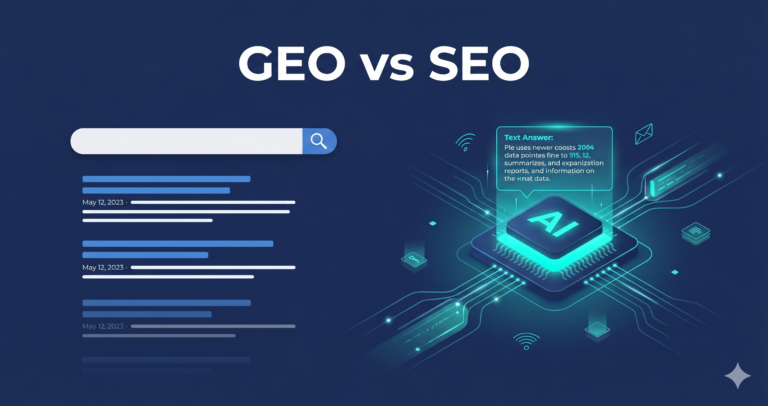
If you feel like the ground is shifting beneath your feet every time you check your website traffic, you are not alone. For the past two decades, growing a business online followed a predictable pattern: write a blog post, optimize it for a few keywords, build some links, and watch your brand climb the classic list of blue links. Today, however, businesses are increasingly turning to AI tools for SEO to adapt to a rapidly changing search landscape.
Today, that predictable world is disappearing as buyers change how they look for answers. Modern consumers no longer just scroll through pages of website links; they ask questions directly to AI platforms and read summarized answers on the spot.
This shift does not mean organic marketing is dying, but it does mean the old playbook will no longer protect your traffic. To stay visible, growing brands must learn how to use AI tools for SEO and modern optimization software to improve content visibility across both traditional search engines and generative AI platforms.
Why Your Traffic is Dropping Even When Your Rankings Look Good
Many business owners and content creators face a frustrating new paradox. They log into their traditional software dashboards and see that their core keywords are still sitting comfortably on page one. Yet, when they look at their actual Google Analytics data, their organic traffic is steadily dipping.
This drop happens because search engine result pages look entirely different than they did a few years ago. Generative summaries now occupy the most valuable real estate at the top of the screen, pushing standard organic listings far below the fold.
“Based on top sources, Shopify is best for scale, while WooCommerce offers maximum control…”
When users get a complete, well-packaged answer immediately, they rarely feel the need to click through to an external website. This zero-click behavior means that simply ranking for a keyword is no longer enough to guarantee that human eyes ever see your website.
The New Search Landscape and AI Behavior
To solve this problem, we have to look closely at how modern search behavior has evolved. Traditional search systems rely heavily on matching text strings and evaluating website authority metrics like backlinks. Modern platforms focus on understanding the deep context of a user’s question and serving a synthesized response.
This evolution requires a shift toward AI search optimization. Instead of just writing for a mechanical crawler, your content must serve as a highly structured data source that generative engines can easily pull from, cite, and recommend.
Traditional SEO
- Match exact text strings
- Focus on backlink count
- Rank in top blue links
AI Search Optimization
- Provide structured answers
- Build clear topical depth
- Earn citations in summaries
When systems like ChatGPT or Google synthesize an answer, they look for clarity, specific numbers, and unique insights. Brands that adapt early are using generative engine optimization tools to understand exactly how these systems perceive their information, ensuring they remain the preferred recommendation when a customer asks for help.
The Four-Step Engine Optimization Framework
Winning in this new environment requires a deliberate, step-by-step approach to structuring your website data. You cannot just publish generic text and hope an algorithm finds it. You need a reliable system to ensure your brand gets noticed by modern engines.
Analyze System Perspectives
Check how AI platforms currently describe your brand.
Structure Information
Format content using headers, tables, and definitions.
Build Authority
Create comprehensive topic clusters and content hubs.
Optimize Queries
Answer conversational and long-tail search questions.
Using these structured steps helps ensure that your business remains visible across multiple platforms. To make this shift successful, many teams collaborate with growth partners like GET Marg to audit their existing websites, align their content with conversational search patterns, and build a lasting foundation for digital growth.
Best AI Tools for SEO in 2026
Best AI Tools for SEO
“`Artificial intelligence has transformed how marketers approach search visibility. Modern optimization is no longer limited to keyword research and backlink acquisition. Today’s leading platforms help businesses understand user intent, create content faster, optimize for AI-generated answers, and improve visibility across search engines, AI assistants, and answer engines. The following AI tools for SEO are among the most effective solutions for marketers, agencies, and businesses looking to stay competitive in 2026.
1. ChatGPT
ChatGPT has become one of the most versatile AI visibility tools available to marketers. It can assist with keyword clustering, content briefs, competitor analysis, schema generation, content refreshes, and optimization for AI-powered search experiences.
SEO professionals use ChatGPT to:
- Generate content outlines based on search intent
- Create FAQ sections for AI Overviews optimization
- Discover long-tail keyword opportunities
- Rewrite content for improved readability
- Build topical authority maps
Its greatest strength is speed. Tasks that previously required hours of manual research can often be completed in minutes. However, human review remains essential to ensure factual accuracy and brand consistency.
2. Surfer SEO
Surfer SEO combines AI writing capabilities with data-driven content optimization. The platform analyzes top-ranking pages and provides recommendations for content structure, keyword usage, headings, and semantic relevance.
Key benefits include:
- Real-time content scoring
- SERP-based optimization suggestions
- AI-powered content generation
- NLP keyword recommendations
- Content audit functionality
For businesses focused on ranking blog content, Surfer remains one of the most practical AI search optimization tools available today.
3. Semrush
Semrush has evolved into a comprehensive digital marketing platform with powerful AI integrations. Beyond traditional keyword research, it now offers AI-driven content creation, topic discovery, competitor intelligence, and predictive insights.
Popular SEO features include:
- AI-assisted content writing
- Keyword gap analysis
- Search intent classification
- Technical SEO audits
- Competitive research dashboards
Because it combines SEO, PPC, and content marketing capabilities in one ecosystem, Semrush is particularly useful for teams managing large-scale digital campaigns.
4. Ahrefs
Ahrefs remains one of the most trusted platforms for backlink analysis and keyword research. In recent years, the company has incorporated AI-powered features that help marketers identify ranking opportunities more efficiently.
Notable capabilities include:
- Advanced keyword discovery
- Content gap analysis
- AI-assisted content insights
- Backlink monitoring
- SERP tracking and reporting
Its extensive link database continues to be a major advantage, making Ahrefs a preferred choice for businesses prioritizing authority building and competitive analysis.
5. Frase AI
Frase AI specializes in content research and AI-assisted optimization. The platform helps writers create search-focused content by analyzing top-ranking pages and extracting common themes, questions, and entities.
Marketers often use Frase for:
- Automated content briefs
- Question-based content research
- AI content generation
- Search intent analysis
- On-page optimization
Because Frase focuses heavily on user questions and intent, it is particularly useful for answer engine optimization strategies where visibility in AI-generated responses is becoming increasingly important.
6. MarketMuse
MarketMuse uses artificial intelligence to evaluate content depth, topical coverage, and authority. Unlike many tools that focus solely on keywords, it emphasizes comprehensive topic modeling and content quality.
Its core features include:
- Content inventory analysis
- Topic authority scoring
- AI-generated content briefs
- Competitive content evaluation
- Internal linking recommendations
For publishers managing large content libraries, MarketMuse provides valuable insights into which pages need updates, expansion, or consolidation to improve search performance.
Which AI Tool Is Right for Your Business?
There is no single “best” AI tool for SEO because different platforms solve different problems. ChatGPT excels at ideation and content workflows, Surfer SEO focuses on on-page optimization, Semrush and Ahrefs provide comprehensive research capabilities, while Frase and MarketMuse specialize in content intelligence.
Many successful SEO teams combine multiple solutions to create an efficient workflow that supports keyword research, content creation, optimization, and AI search visibility. As AI-powered search continues to evolve, leveraging the right combination of these tools can significantly improve your ability to rank, attract traffic, and maintain visibility across both traditional search engines and emerging answer engines.
AI SEO Tools Comparison Table
Choosing the right AI SEO platform depends on your goals, budget, and workflow. Some tools excel at content creation, while others are designed for keyword research, technical SEO, or AI search optimization. The table below provides a quick overview of the leading AI tools for SEO in 2026.
| Tool | Best For | Key Strength | Ideal Users |
| ChatGPT | Content creation & ideation | Fast content generation, keyword clustering, AI-assisted research | Bloggers, marketers, agencies |
| Surfer SEO | On-page SEO optimization | Real-time content scoring and SERP analysis | Content teams, SEO specialists |
| Semrush | All-in-one SEO & marketing | Keyword research, competitor analysis, technical SEO | Businesses, agencies, enterprises |
| Ahrefs | Backlink & competitor research | Industry-leading link database and keyword insights | SEO professionals, publishers |
| Frase | Content briefs & answer optimization | Search intent analysis and AI content workflows | Content marketers, writers |
| MarketMuse | Topical authority building | Content depth analysis and topic modeling | Large websites, publishers |
While each platform offers unique advantages, many businesses combine multiple AI SEO tools to create a complete workflow covering research, content creation, optimization, and AI visibility across search engines and answer engines.
Data, Statistics, and Trends in Modern Search
The shift in consumer behavior is backed by clear market trends. Recent digital marketing tracking reveals that search behavior has changed permanently, and businesses that fail to adjust are losing visibility rapidly. The data shows that a significant portion of daily queries now trigger some form of synthesized answer. For e-commerce brands and tech startups, this completely alters how buyers discover new products during the research phase.
| Performance Metric | Traditional Optimization Approach | Modern Search Engine Optimization |
| Average CTR on Top Spot | Often drops below 12% if an AI block is present | Captures up to 35% of clicks via direct AI citations |
| Query Style Focus | Short, robotic fragments (e.g., “best shoes”) | Long, highly specific phrases (e.g., “what shoes are best for flat feet wide toe box”) |
| Content Update Priority | Focuses on backlink volume and text matching | Focuses on factual accuracy and clear information gain |
| Primary Visibility Goal | Ranking in the top 3 standard web positions | Securing featured citations in summary snapshots |
The data proves that tracking standard rankings alone is an outdated strategy. To maintain your digital growth, your marketing team must utilize specialized digital tools to monitor these new spaces.
Real-World Brand Story: How a Major Streaming Platform Adapted
We can see this shift clearly by looking at how major global platforms manage their digital assets. Consider the massive audio streaming platform, Spotify.
For years, Spotify relied heavily on standard keywords like “workout music” or “90s rock.” However, as consumer habits evolved, they noticed that listeners started typing highly specific, narrative requests into search spaces, looking for exact moods and hyper-niche vibes rather than generic genres.
How Search Behavior Is Evolving
By making their audio details highly structured and conversational, Spotify ensured that when a user asks an AI assistant for a “lo-fi playlist perfect for reading a dystopian sci-fi novel,” the system can easily parse Spotify’s data and pull up their specific curation as top recommendations. This structural pivot allowed them to capture highly valuable, high-intent user engagement without relying solely on traditional keyword strings.
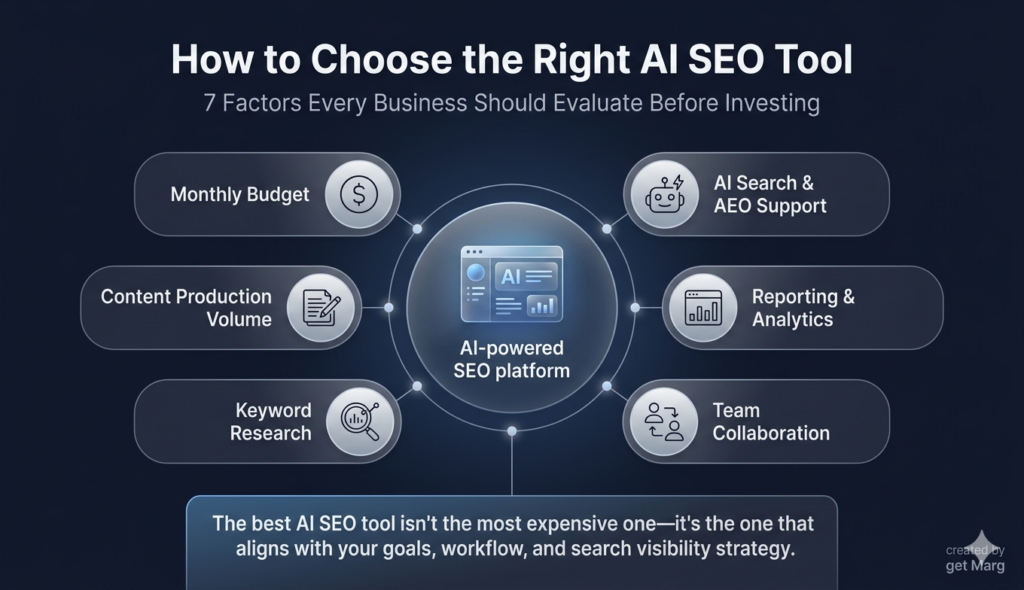
How to Choose the Right AI SEO Tool
With dozens of AI tools for SEO available today, selecting the right platform depends largely on your business goals, team size, and marketing strategy. Rather than choosing the most popular tool, focus on the features that solve your biggest SEO challenges.
For Small Businesses
Small businesses typically need affordable tools that simplify content creation, keyword research, and local search optimization. Platforms like ChatGPT and Surfer SEO can help create optimized content without requiring a large marketing team. Look for tools that offer ease of use, automation, and actionable recommendations rather than complex enterprise-level features.
For Agencies
SEO agencies often manage multiple clients across different industries, making scalability a priority. Tools such as Semrush and Ahrefs provide extensive keyword databases, competitor analysis, site audits, and reporting capabilities. Agencies benefit most from platforms that support collaboration, client reporting, and large-scale campaign management.
For Ecommerce Brands
Ecommerce businesses need AI SEO tools that can optimize product pages, category pages, and buying guides while identifying high-intent keywords. Semrush and Ahrefs are particularly valuable for uncovering transactional search opportunities and monitoring competitors. AI-powered content generation can also help create unique product descriptions and improve organic visibility across large catalogs.
For Content Marketers
Content marketers should prioritize tools that streamline research, content planning, and optimization. Frase and MarketMuse excel at identifying content gaps, analyzing search intent, and building topical authority. ChatGPT can further accelerate content ideation, outline creation, and FAQ generation. These capabilities are especially important as search engines increasingly reward comprehensive, user-focused content.
Why Most Brands Lose Visibility
Many startup founders and content creators make critical errors when trying to update their marketing plans for the current year. Avoid these common traps to protect your organic traffic:
- Relying entirely on generic AI text generators: Publishing thousands of low-quality, automated blog posts might feel efficient, but it actually hurts your brand. Modern systems look for unique data and information gain, meaning generic content gets ignored.
- Ignoring zero-click optimization: Many teams still structure their content to hide the main answer at the very bottom of a page to force clicks. This approach causes answer engine optimization tools to reject your page, as they prefer immediate clarity.
- Forgetting to optimize for specific applications: Assuming that general website maintenance is enough for ChatGPT SEO or Google AI Overviews optimization will leave your business hidden. Each system pulls information differently, requiring dedicated structuring.
- Overlooking technical structure: If your website data is trapped behind complex JavaScript or unorganized layouts, answer engine optimization tools cannot pull your facts efficiently, resulting in lost citation opportunities.
How to Secure Your Long-Term Digital Presence
Building a sustainable content plan in an era dominated by automated systems requires deep strategic expertise. You need a growth partner who understands how to navigate AI visibility tools, performance marketing, and modern lead generation without losing your brand’s unique human voice.
This is exactly where GET Marg comes in. As a modern digital growth partner, GET Marg helps startup founders, growing e-commerce brands, and business owners update their content architecture for maximum visibility in generative environments. From deep semantic optimization to modern social media and digital marketing strategy, GET Marg aligns your brand with current consumer behavior to drive real business growth.
If you are ready to protect your traffic and turn modern search shifts into a competitive advantage, connect with GET Marg today to build a future-proof content strategy.
Frequently Asked Questions(FAQs)
Q1. What are generative engine optimization tools?
These are specialized marketing software systems designed to analyze how artificial intelligence models read, summarize, and cite web pages. They help businesses identify whether their content is structured properly for automated systems to recommend.
Q2. How does ChatGPT SEO differ from traditional search optimization?
Traditional optimization focuses heavily on search volume, specific text strings, and third-party backlink profiles to rank pages on a search engine. ChatGPT SEO focuses on conversational relevance, factual density, and clearing up context so a language model trusts your data enough to recommend it to a user.
Q3. Why are answer engine optimization tools essential for e-commerce brands?
E-commerce brands face high competition in summary blocks. These software systems help online stores format their product specifications, customer reviews, and pricing data so that conversational engines can easily display them during a buyer’s research phase.
Q4. Will traditional digital marketing tactics stop working completely?
No, traditional optimization tactics still hold value because generative systems pull their data directly from high-quality web indexes. However, old methods must be paired with modern visibility strategies to ensure your content is structured for both humans and machines.
Q5. How can a business check its current AI visibility tools score?
You can check your status by running specific, long-tail product queries inside major conversational applications to see if your brand is mentioned. For a more comprehensive look, teams often work with digital growth partners to run deep thematic audits across their entire digital presence.