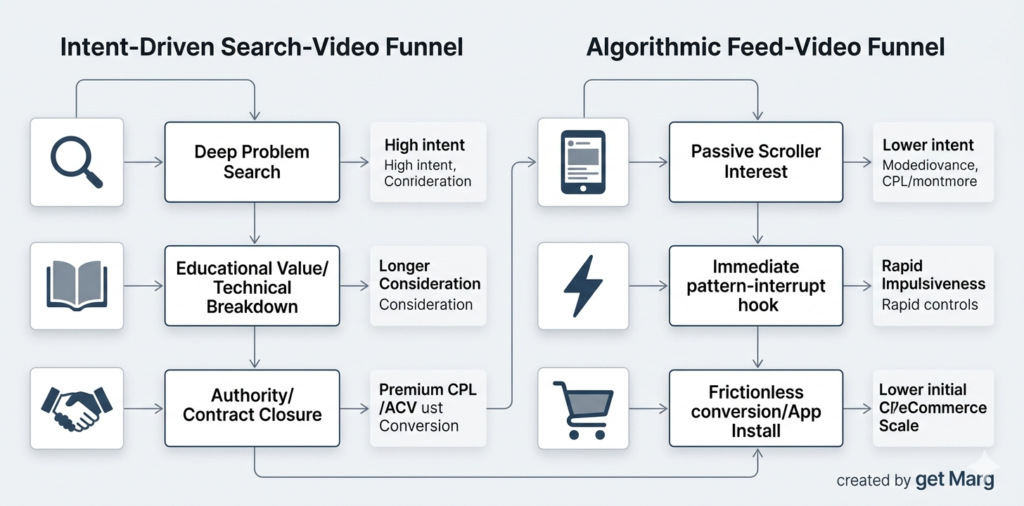
When you sit down to compare YouTube and Instagram for marketing, you are not just choosing between video formats; you are deciding where your business will invest its primary customer acquisition budget. Modern customer journeys are no longer linear, and digital video has split into two distinct distribution ecosystems. One system relies on user intent and search architecture, while the other capitalizes on algorithmic feed curation and rapid, impulse-driven user engagement.
For business-to-business brands, small-to-medium businesses, and tight niche enterprises, misallocating capital between these environments creates massive structural inefficiencies. Every marketing dollar spent must map directly to measurable business outcomes rather than vanity metrics like likes or superficial views. Understanding the operational core of each channel ensures that your video production assets generate sustained pipeline velocity rather than temporary engagement spikes.
The Customer Acquisition Trap: Why Vague Social Metrics Drain SMB Budgets
Many small and medium-sized businesses fall into a structural trap by treating all video views as equal economic indicators. High view counts and rapid comment notifications frequently create a false sense of traction while the actual customer acquisition cost continues to climb. This disconnect occurs because generic engagement metrics do not track consumer purchase intent or target audience alignment.
When brand infrastructure prioritizes superficial interaction over deep funnel conversion, long-term customer acquisition strategies collapse under the weight of high creative overhead. Small marketing teams often spend valuable hours designing trendy short-form clips that reach a broad, untargeted demographic but fail to generate qualified leads. This operational leakage drains liquidity away from scalable performance media frameworks and predictable pipeline creation.
The Customer Acquisition Leakage Loop
The Search vs. Feed Shift: How AI and User Intent Dictate Ad Spend Efficiency
The fundamental divergence between these platforms lies in the nature of user discovery and contemporary search mechanics. One engine operates as an archive where content retains value over multiple years, driven by intent-rich queries and specialized search indexing. The alternate engine relies on a fast-paced algorithmic feed that matches content to passive browsing behaviors, requiring immediate visual hooks to capture transient consumer attention.
Modern generative AI search overviews and traditional query indexes index long-form video assets using deep structural audio transcription. This means that an educational video addressing a specific corporate problem can surface for qualified buyers months after its initial publication date. Conversely, feed-based ecosystems require continuous media updates, as asset distribution drops significantly within forty-eight hours of posting.
Audio-Visual Search Optimization for Intent-Driven Lead Capture
Optimizing a YouTube marketing strategy requires treating video content with the same structural discipline as technical search engine optimization. Spoken words, automated transcription files, chapters, and descriptive text fields must align precisely with the commercial queries used by your target buyer persona. This optimization builds a compounding asset library that continuously captures high-intent traffic at the precise moment a prospect seeks a technical solution.
| Optimization Element | Technical Action Item | Funnel Impact |
| Spoken Transcript | Natural integration of primary and secondary search queries in the first sixty seconds. | Increases top-of-funnel discovery via automated AI indexing. |
| Video Timestamps | Structuring content into explicit, problem-focused chapters using exact search phrases. | Lowers bounce rates by guiding users directly to specific answers. |
| Metadata Blueprint | Aligning descriptive text and pinned comment links with concrete middle-funnel actions. | Accelerates the transition from passive viewer to qualified lead. |
Algorithm Dynamics and Distribution Realities for Niche B2B Brands
Niche enterprise organizations face unique hurdles in feed-centric environments due to the smaller absolute size of their total addressable audience. Content delivery networks designed for mass-consumer entertainment often penalize highly specific corporate assets because they do not generate broad, viral click-through patterns. To combat this limitation, an effective Instagram marketing strategy must bypass viral trends and focus on localized, high-value demographic parameters.
The Dual-Engine Core: A Unified YouTube vs Instagram Marketing Framework
To maximize resource efficiency, growing brands should deploy a dual-engine architecture that blends intent-based discovery with hyper-targeted feed touchpoints. This operational model balances long-form authority building with short-form brand reinforcement, ensuring complete coverage across the modern consumer decision pathway. By linking these assets, companies can capture market demand while simultaneously nurturing prospects through short-form visual validation.
GET MARG Dual-Engine Video Architecture
- Long-Form Asset Library
- Intent-Driven Search Traffic
- Deep Authority Building
- Short-Form Ad Placement
- Hyper-Targeted Re-Mining
- Rapid Frictionless Sales
- Intent Engine Deployment: Establish a central repository of comprehensive, educational videos that resolve complex industry problems and capture active search demand.
- Feed Engine Interception: Utilize programmatic social media advertising platforms to place contextual short-form assets directly into the daily browsing feeds of confirmed decision-makers.
- Cross-Channel Nurturing: Retarget high-intent website traffic generated by search assets with localized social proof, case studies, and direct offer frameworks on feed networks.
Performance Data and Conversion Metrics When You Compare YouTube and Instagram for Marketing
Evaluating historical performance data reveals stark differences in user behavior, average conversion percentages, and structural acquisition costs across both media landscapes. Average click-through rates on search-driven platforms vary based on thumbnail clarity and query relevance, but lookback attribution windows show longer conversion paths. Feed platforms display higher initial micro-conversion actions but typically experience steeper drop-offs during long sales cycles.
Standard conversion benchmarks across digital marketing sectors highlight that intent-driven search traffic closes at a higher average contract value for enterprise clients. Small-scale consumer brands, however, benefit from the immediate, frictionless checkout configurations embedded within modern social media advertising platforms. Balancing these distinct performance profiles allows mid-market businesses to construct a balanced portfolio of short-term cash generation and long-term asset value.
Conversion Attribution Runway
Conversion Funnel Mechanics for Higher Lifetime Value Customers
Acquiring high-lifetime-value accounts requires a media approach that respects the deep research phases common in enterprise procurement. When you compare YouTube and Instagram for Marketing, Educational video formats allow technical specialists to demonstrate subject matter expertise, handling complex compliance and integration objections before a sales call occurs. This structural trust-building accelerates deal velocity and reduces the overall drag on internal sales development representatives.
Paid Media Efficiency Across Modern Social Media Advertising Platforms
Paid amplification yields radically different cost-per-click and cost-per-lead outcomes depending on the targeted audience profile and campaign structure. Programmatic search-video placements capture users actively looking for answers, resulting in premium lead quality but higher initial bidding thresholds. Social feed advertising offers sophisticated behavioral and demographic filtering layers, allowing brands to isolate specific corporate titles at lower initial impression expenses.
| Performance Metric | Intent-Based Channels (YouTube) | Feed-Based Channels (Instagram) |
| Average Cost Per Lead | Higher initial dollar threshold due to competitive intent bidding structures. | Lower initial baseline, but requires strict validation filters. |
| Audience Intent Level | High; users actively seeking an immediate solution to a verified operational bottleneck. | Passive; users browsing content based on historic interest signals. |
| Asset Lifespan | Compounding; organic search visibility can persist for multiple fiscal quarters. | Ephemeral; content visibility drops sharply after a brief algorithmic push. |
| Primary Ad Formats | Skippable in-stream assets, search discovery placements, and long-form native features. | Stories, in-feed video carousels, and algorithmic short-form sequences. |
Video Asset Production Logistics and Creative Overhead Control
Managing your content production budget is vital to sustaining positive campaign returns over time. Long-form content requires meticulous preparation, specialized audio gear, and comprehensive editing to maintain corporate brand standards. Short-form feed pieces favor rapid asset variation and authentic, less polished presentation styles, which helps lower initial production costs but demands a constant stream of new creative variants.
How Zomato Scaled Domestic Customer Acquisition Across Diversified Video Channels
Food delivery and restaurant discovery giant Zomato orchestrated a sophisticated domestic customer acquisition strategy by clean-cutting its video deployment across both search and feed ecosystems. To capture immediate consumer hunger pangs and impulse orders, the brand deployed hyper-contextual, short-form creative assets on social feeds. These short-form campaigns featured localized restaurant highlights, real-time delivery tracking visuals, and time-sensitive discount hooks that prompted frictionless app installations.
Simultaneously, Zomato built long-term brand equity and captured deep culinary interest search volume by investing in high-production lifestyle content and food documentaries on YouTube. This dual strategy allowed the enterprise to capture top-of-funnel search intent while maintaining an aggressive retargeting framework via social feeds. By analyzing localized user data, the growth team systematically reduced its blended customer acquisition cost while maximizing monthly active user retention across urban markets.
Zomato Diversified Media Acquisition
- YouTube Brand Asset Vaults
- Compounding Lifestyle Search
- Documentaries & Series
- Instagram Feed Intercepts
- Immediate Impulse Prompts
- High-Volume App Installs
Outdated Social Playbooks: Legacy Content System Mistakes to Avoid
- Chasing Generic Virality: Creating content based on trending audio tracks that have zero connection to your commercial offerings or core customer demographics.
- Ignoring Platform-Specific Aspect Ratios: Re-uploading horizontal desktop video formats directly into vertical mobile feeds without editing layout frames or text placements.
- Omitting Explicit Direct-Response Links: Failing to include a clear, accessible call to action within the first lines of descriptions or pinned comment sections.
- Over-Indexation on Production Gloss: Delaying the distribution of helpful customer answers because the video assets lack cinematic lighting or professional studio mastering.
- Evaluating Channel Performance in Isolation: Failing to track how early touchpoints on feed-based apps influence final product searches on intent-driven networks.
Implementation Blueprint: Deploying Your YouTube Marketing Strategy and Instagram Marketing Strategy
Sustaining a competitive advantage requires clear, systematic operational phases designed to turn raw video files into structured client acquisition paths. Content pipelines must function with predictable rhythm, removing creative guesswork and ensuring that your engineering and sales teams cooperate seamlessly.
Asset Repurposing Flowchart
Core Long-Form Asset
Short-Form Clips
Native Lead Magnets
Phase 1: Core Content Mapping
Identify the top five critical operational questions fielded by your client services department over the last business quarter. Script precise, comprehensive answers that serve as foundational assets for your long-form YouTube marketing strategy.
Phase 2: Short-Form Asset Extraction
Slice each core long-form video asset into three distinct vertical clips that focus on a single, isolated problem or case study metric. Package these vertical segments with clear text headlines to form the foundation of your organic Instagram marketing strategy.
Phase 3: Paid Retargeting Layer
Establish a permanent retargeting audience group inside your social media advertising platforms comprised of individuals who watched more than fifty percent of your intent videos. Serve this audience specific product demonstrations, case study deep dives, and low-friction consultation booking invitations to close the conversion loop.
High-Impact Strategic Takeaways for B2B and SMB Decision Makers
- Intent Outperforms Passive Browsing: Prioritize intent-driven video channels when marketing intricate B2B solutions that require long consideration timelines and senior executive approval.
- Feed Channels Accelerate Velocity: Leverage vertical feed ecosystems to drive immediate consumer conversions, promote localized offers, and scale software-as-a-service customer trials.
- Design for Native Environments: Ensure all video assets feature accurate, clear open-caption text to capture engagement from users browsing with device volume muted.
- Audit Acquisition Costs Regularly: Review performance data monthly to ensure that creative production costs do not exceed the actual customer lifetime value generated by the channel.
- Unify Your Conversion Attribution: Build cross-channel measurement tracking to recognize when top-of-funnel feed exposure assists a final conversion driven by organic search queries.
Frequently Asked Questions (FAQ’s)
Q1. Which platform yields a better return on investment for long-term B2B lead generation?
Intent-driven video platforms typically deliver a more stable long-term return for complex B2B lead generation due to their compounding search functionality. A high-value asset optimized for a specific corporate problem can continue capturing high-intent prospects for multiple years without ongoing ad spend. Feed-based platforms require continuous content creation or consistent ad spend to maintain the same lead volume over time.
Q2. How much budget should a small business allocate to video production versus paid ad amplification?
Small and medium businesses should allocate approximately twenty percent of their available funds to clear, functional video production and eighty percent directly to paid ad amplification. High-end cinematic visual styling is rarely the deciding factor in digital customer acquisition pipelines. Clear audio, straightforward problem-solving content, and strategic distribution targeting will consistently outperform expensive production values that lack budget for paid reach.
Q3. Can short-form vertical video assets replace long-form content for technical products?
Short-form vertical video works exceptionally well as a hook or initial touchpoint, but it cannot completely replace long-form content during technical product evaluations. B2B decision-makers and procurement officers require detailed breakdowns, system architecture overviews, and comprehensive compliance answers before making significant software or hardware investments. Use short-form assets to generate initial interest, then guide those prospects to comprehensive, long-form content libraries to build deep trust.
Q4. How often should an organization update its social media advertising platform creative?
Paid creative running on feed-based marketing channels should be refreshed every two to four weeks to minimize ad fatigue and prevent performance degradation. When frequency metrics rise and click-through percentages decline, it indicates the target demographic has repeatedly seen the same visual concepts. Search-based video ads enjoy a longer operational window because they trigger based on active user queries rather than passive user streams.
Q5. What is the most critical metric to monitor when analyzing video ad account health?
The most accurate health metric to track is the hook rate alongside the subsequent conversion completion percentage, rather than total impressions or raw view counts. Your hook rate reveals whether your creative asset successfully pauses user scrolling behavior within the opening three seconds of delivery. Pairing this with backend pipeline metrics ensures your video campaigns are driving genuine corporate revenue rather than unquantifiable digital impressions.
Navigating the Future of Digital Authority with GET Marg
Selecting the ideal digital distribution channel requires aligning your platform choices with your overarching business conversion mechanics. Blindly following popular social trends without a clear calculation of client acquisition costs leaves your brand exposed to algorithm changes and rising paid media fees. Businesses that carefully compare YouTube and Instagram for marketing discover that sustainable revenue growth stems from balancing intent-driven search libraries with high-frequency social touchpoints.
Partnering with an elite growth engine transforms digital media production from an unquantifiable operating expense into a highly predictable client acquisition framework. Our team designs integrated content engines that combine technical search engine optimization, content strategy, branding, and performance marketing to scale organic market dominance. Let GET Marg analyze your target audience, optimize your media infrastructure, and construct a scalable customer acquisition strategy that builds long-term digital authority and enterprise value.