Think about the last time you bought a course, hired a consultant, or signed up for a SaaS product. You probably did not just look at a feature list or a generic corporate landing page. You looked up the founder on LinkedIn, watched a couple of their videos, or read their newsletter.
We live in an era where people buy from people, not faceless logos. With AI generating millions of generic blog posts every day, consumers are experiencing extreme trust fatigue. They are actively filtering out corporate noise and seeking real human connection.
Understanding what is personalized branding is no longer a luxury reserved for top-tier executives or internet celebrities. It is the definitive survival mechanism for small business owners, content creators, and startup founders who want to remain visible, relevant, and trusted in a crowded digital landscape.
The Hidden Shift: Moving Beyond Corporate Logos
For decades, branding meant designing a sleek logo, choosing a color palette, and writing a rigid corporate mission statement. That approach worked well when information was scarce and distribution channels were limited. Today, that old model is failing because anyone can launch a professional-looking website in five minutes.
When you look closely at what is personalized branding, you realize it shifts the focus from the organization to the individual. It anchors a business or content ecosystem around a real person’s values, unique perspectives, and lived experiences. This creates a human connection that algorithms cannot replicate and competitors cannot steal.
Modern digital marketing relies heavily on entity-based SEO and AI search visibility. AI search engines do not just scrape text; they look for recognized experts who possess real topical authority. By anchoring your digital footprint around a personalized brand, you make it incredibly easy for both human audiences and AI discovery systems to identify you as a trusted leader in your niche.
Core Problem: The Sea of Sameness and the Trust Deficit
The biggest threat to your growth today is not your direct competition. It is invisibility caused by the sea of sameness. When every creator uses the same basic templates and every startup founder posts the same generic industry advice, audiences tune out completely.
- Use generic templates & advice
- Blend into the background
- Suffer low conversion & high churn
Many founders and creators mistake regular posting for brand building. They publish content consistently but see zero traction, low engagement, and stagnant conversion rates. They are stuck in a transactional loop because their audience views them as a commodity rather than a category leader.
Without a distinct, personalized identity, you are forced to compete entirely on price or ad spend. This is a losing battle for small businesses and independent creators. The real problem is a lack of deep differentiation, which can only be solved by understanding how to inject your unique DNA into your marketing.
The Big Difference Between Personalized Branding and Generic Branding
The digital landscape has fundamentally changed over the past few years. Traditional top-of-funnel marketing strategies that relied on mass distribution and generic messaging are yielding lower returns. Consumers can spot an automated, soul-less campaign from a mile away and will bypass it entirely.
To fix this, we must examine the difference between personalized branding and generic branding. Generic branding focuses heavily on the product features, company credentials, and broad market statements. It speaks to everyone and ends up connecting with no one. Personalized branding, on the other hand, highlights personal philosophies, unique frameworks, and authentic behind-the-scenes journeys.
| Feature | Generic Branding | Personalized Branding |
| Primary Focus | Products, features, and logos | People, values, and perspectives |
| Content Style | Polished, corporate, neutral | Conversational, raw, opinionated |
| Trust Velocity | Slow; requires long validation | Fast; built on human empathy |
| Search Advantage | High ad spend dependency | Strong topical authority & AI preference |
When you transition from a generic approach to an authentic human narrative, your marketing efficiency sky-rockets. You spend less time convincing prospects to trust you because your content has already done that work upfront. At GET Marg, we frequently see that founders who lead with their personal stories scale their performance marketing and lead generation efforts much faster than those hiding behind corporate masks.
4 Strategic Steps to Build a Personal Brand That Converts
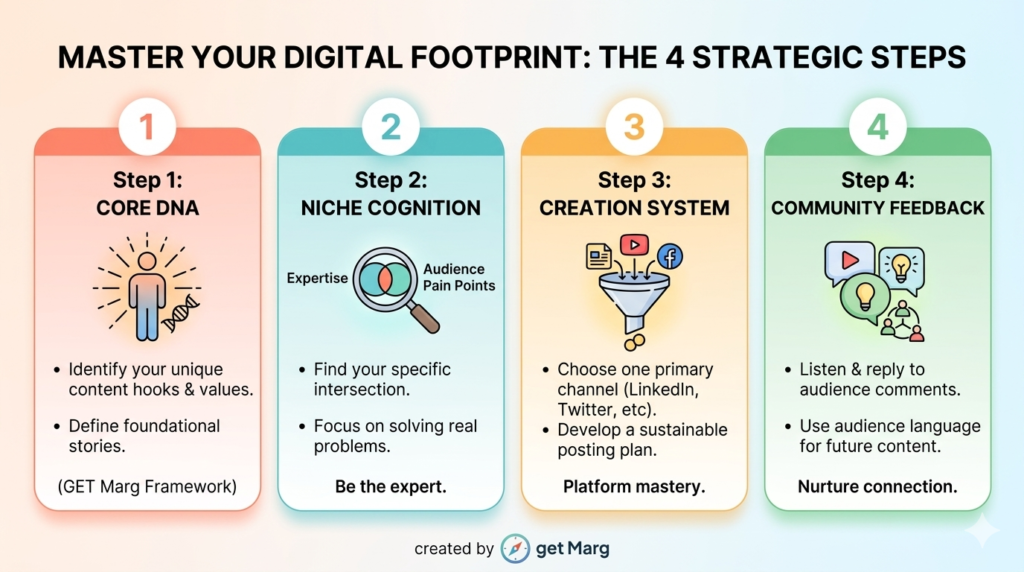
Building a presence that stands out requires a structured approach. You cannot simply post random thoughts and expect to build a sustainable business asset. You need an operational blueprint that aligns your daily output with your long-term growth goals.
Here are the essential steps to build a personal brand that drives real business revenue:
- Define Your Core DNA: Identify your unique content hooks, foundational values, and the specific personal stories that shaped your business philosophy.
- Establish Your Niche Cognition: Pinpoint the exact intersection of your expertise and your target audience’s deepest pain points.
- Create a Platform System: Select one primary channel where your audience hangs out and master it completely before expanding elsewhere.
- Build a Feedback Loop: Regularly talk to your readers, analyze their questions, and use their real words to fuel your future content.
Data and Trends: The Benefits of Personal Branding for Professionals
The shift toward human-centric marketing is heavily backed by modern consumer behavior data. Audiences are explicitly telling brands how they want to be spoken to and where they place their trust.
Around 82% of consumers report that they trust a company significantly more when its senior executives and founders are active on social media platforms. Furthermore, content shared by individual employees or founders receives roughly 561% more reach than the exact same content shared through official corporate brand channels. This massive gap highlights how platform algorithms prioritize human accounts over business pages.
| Feature | Generic Branding | Personalized Branding |
| Primary Focus | Products, features, and logos | People, values, and perspectives |
| Content Style | Polished, corporate, neutral | Conversational, raw, opinionated |
| Trust Velocity | Slow; requires long validation | Fast; built on human empathy |
| Search Advantage | High ad spend dependency | Strong topical authority & AI preference |
Additionally, close to 70% of modern professionals utilize specialized personal branding tools to schedule content, analyze audience analytics, and manage their digital identity efficiently. This data proves that building an online presence is no longer just a creative outlet. It is a highly strategic, data-driven marketing initiative that unlocks major benefits of personalized branding for professionals who want to grow.
Real-World Example: How Gary Vaynerchuk Built an Empire
A perfect real-world example of this strategy in action is Gary Vaynerchuk. Long before he was running a massive global ad agency, he was tasked with growing his family’s local retail wine business. Instead of spending his limited budget on generic newspaper ads or radio spots, he chose a completely different route.
He launched an unpolished, highly energetic daily video show called Wine Library TV. He did not wear a suit, use complex corporate jargon, or review wine like a traditional critic. He spoke conversationally, tasted wines on camera, and answered customer questions directly.
By prioritizing his personal approach over generic corporate marketing, he scaled the business from 3 million dollars to over 60 million dollars in sales. He proved that when people connect with your personal perspective, they automatically become loyal customers of your business operations. This story demonstrates the massive benefits of personalized branding for professionals who want to build sustainable enterprise value.
Common Mistakes: Why Most Personal Brands Fail
While the rewards of building a person-led presence are immense, many content creators and startup founders stumble early on. They treat their personal profiles like a digital résumé rather than an active growth vehicle.
- The Inconsistency Trap: Posting heavily for two weeks and then going completely silent for a month destroys algorithmic momentum and audience trust.
- Chasing Empty Vanity Metrics: Focusing entirely on viral views or likes rather than building a targeted list of high-quality leads that fit your ideal customer profile.
- The Over-Polished Persona: Creating an artificial, overly corporate image that lacks genuine human flaws, relatable stories, or distinct opinions.
- Ignoring Platform Tools: Failing to utilize modern personal branding tools to streamline your scheduling, track growth metrics, and systematically optimize your content workflow.
Avoiding these common pitfalls requires a strategic mindset switch. Your personal profile is not an online diary; it is a premium media channel dedicated to solving specific problems for your target audience.

Practical Action Steps: Deploying Your Personal Branding Tools
Transitioning from theory to practice does not have to be overwhelming. You can build a highly influential digital presence by taking deliberate, systematic steps every single week.
- Optimize Your Digital Real Estate: Update your LinkedIn, Twitter, or Instagram bios to state exactly who you serve, how you help them, and what action they should take next.
- Select Your Technical Infrastructure: Integrate reliable personal branding tools like Notion for planning, Buffer or HubSpot for scheduling, and basic analytics tracking to monitor your reach.
- Draft Your Story Vault: Document five specific personal or professional moments where you failed, learned a lesson, or achieved a major business breakthrough.
- Deploy a Sustainable Production Schedule: Commit to publishing three high-quality, value-driven posts per week rather than daily low-effort updates.
- Engage with Your Industry Peers: Spend 15 minutes every single day leaving thoughtful, insightful comments on the posts of other creators and leaders in your space.
Key Takeaways
- Authentic human connection is the ultimate competitive advantage in an AI-saturated digital marketing landscape.
- A clear understanding of what is personalized branding allows you to step out of the price-war commodity loop.
- Algorithms and AI search engines systematically favor individual human creators over faceless corporate brands.
- Successful person-led brands depend on continuous value distribution rather than chasing short-term viral fame.
- Utilizing specialized personal branding tools is mandatory to maintain production consistency and scale your reach.
- The difference between personalized branding and generic branding lies entirely in your willingness to share real personal stories.
Embracing the Future of Human-Centric Growth
The digital world will only continue to grow more automated, crowded, and loud. As AI tools lower the barrier to entry for content creation, the market will naturally reward individuals who have the courage to be real, transparent, and uniquely human. Your personal perspective is the only asset that cannot be easily automated away.
Investing time into developing your personal brand is an investment in long-term career and business insurance. When you control your narrative and own your audience’s trust, you gain the freedom to launch new products, pivot into new industries, and scale your operations seamlessly. The future belongs to creators and founders who understand that their names are their most valuable digital assets.
Ready to Scale Your Digital Footprint?
Building a personal brand while simultaneously managing daily business operations can feel like a daunting task. Finding the right balance between authentic storytelling, search visibility, and consistent lead generation requires deep strategic alignment.
That is where GET Marg comes in. We act as your modern digital growth partner, helping you navigate the complex world of SEO, AI search visibility, content strategy, and social media branding. Whether you are a startup founder looking to establish industry authority or a small business owner aiming to supercharge your lead generation, we build the custom systems you need to thrive. Let us take care of the technical execution so you can focus on sharing your vision with the world.
Frequently Asked Questions(FAQs)
Q1. What is personalised branding?
Marketing personalization involves using customer data to deliver tailored messages and experiences based on individual interests, demographics, preferences, and purchasing behavior. The goal is to make each customer feel that the brand’s communication is specifically designed for their needs, creating a more relevant and engaging experience.
Q2. What are the 4 C’s of personal branding?
The four C’s of personal branding are Clarity, Consistency, Credibility, and Connection. These core elements work together to help individuals build a strong, authentic, and trustworthy personal brand that stands out and leaves a lasting impression on their audience.
Q3. What is personal branding in simple terms?
Personal branding is the process of creating and promoting a unique image, reputation, and identity for yourself. It highlights your skills, values, and expertise, helping others recognize who you are, what you stand for, and why they should trust or choose you.
Q4. What are the main benefits of personalized branding for professionals?
It accelerates trust with your target audience, boosts your visibility in AI search overviews, positions you as an industry authority, and dramatically lowers your customer acquisition costs.
Q5. What are the main benefits of personalized branding for professionals?
Beginners should use simple tools like Notion for organizing content ideas, Canva for clean visual assets, and scheduling platforms like Buffer or Publer to automate their posting schedules.