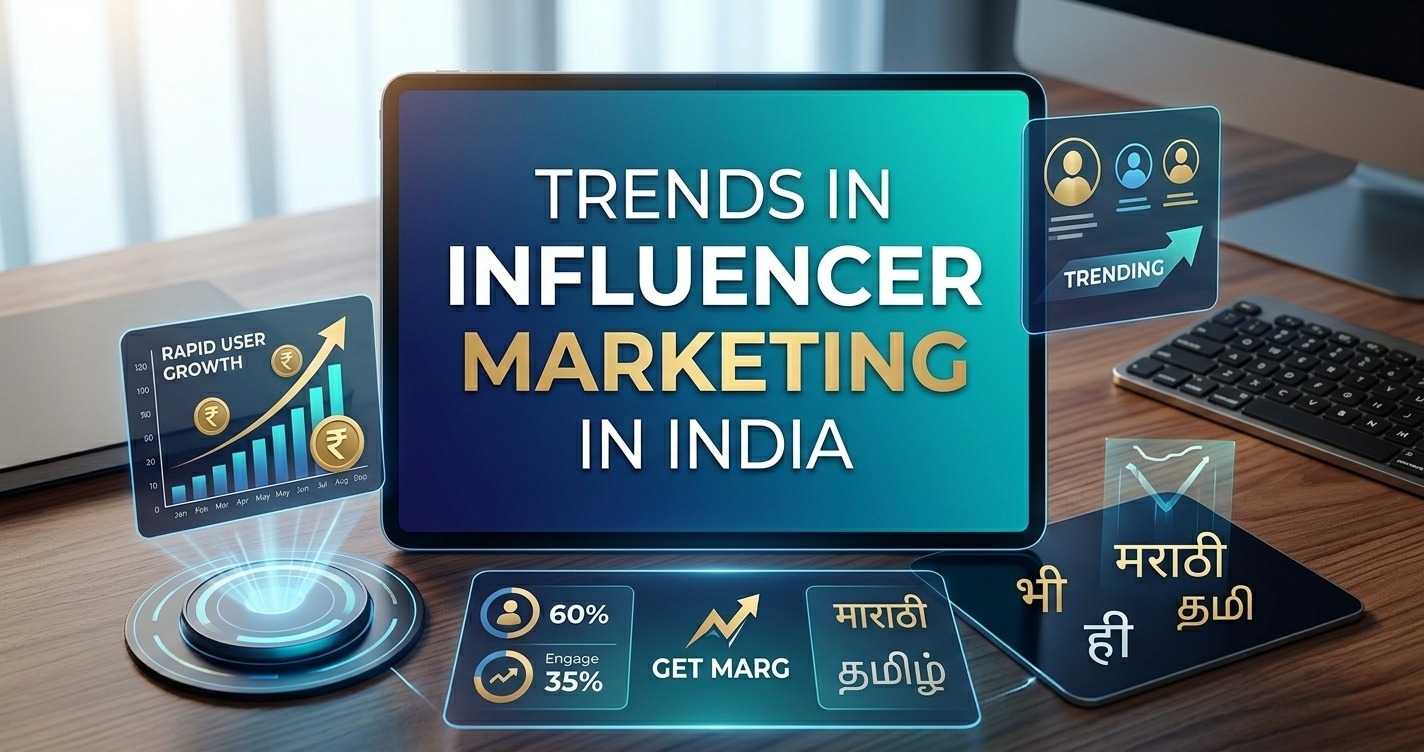
Trends in influencer marketing in India are changing faster than most businesses realize – and the brands that understand this shift are pulling ahead.
Think about the last time you bought something because someone online recommended it. Maybe it was a skincare product a creator you follow swore by. Maybe it was a restaurant a food blogger visited. Maybe it was a course a founder on LinkedIn kept talking about.
That is influencer marketing – and it is reshaping how Indian businesses grow.
We are not talking about Bollywood celebrities holding up products in staged photos anymore. The trends in influencer marketing in India have shifted dramatically. Brands are now working with creators who have built real relationships with real audiences – and those relationships are translating into real business results.
For Indian SMB founders, marketing heads, D2C brands, and digital marketing professionals, understanding these shifts is not optional. It is the difference between staying competitive and getting left behind. This article breaks down the latest influencer marketing trends in India – covering the emerging influencer marketing trends that are reshaping how brands grow, what has changed, and where things are headed.
Why Influencer Marketing Is Growing So Fast in India
India now has one of the largest and fastest-growing digital audiences in the world. Affordable smartphones, cheap data, and a generation of creators producing. India now has one of the largest and fastest-growing digital audiences in the world. Affordable smartphones, cheap data, and a generation of creators producing genuinely engaging content have created the perfect conditions for influencer marketing to thrive.
But the real reason influencer marketing works is simpler than most people think. People trust people. A creator who has been consistently honest with their audience for two years carries far more credibility than a brand advertisement. When that creator recommends your product, their audience listens — because they already have a relationship built on trust.
Three things drive the success of influencer marketing strategies in India:
- Trust – audiences believe in creators they follow regularly
- Relatability – content feels personal, not corporate
- Targeted reach – brands can speak to specific communities, not just broad demographics
This is a fundamentally different dynamic from traditional advertising. And Indian brands are increasingly recognizing that.
Data, Statistics, and Trends Section
The rapid expansion of internet access in rural and semi-urban regions has transformed the Indian creator economy into a primary customer acquisition engine. Brands are systematically reallocating their budgets from print and television media directly toward digital creator partnerships to capture attention where it is most active.
Understanding emerging influencer marketing trends helps businesses allocate capital more efficiently across different content formats. Short-form video platforms and regional applications are seeing the highest engagement spikes, directly impacting customer acquisition costs.
| Metric Type | Standard Benchmark Value | Strategic Business Target |
| Average Micro-Creator Engagement Rate | Around 4.5% across platforms | Target 6% or higher for niche niches |
| Regional Vernacular Content Growth | Approx 60% year-on-year increase | Dedicate 40% of budget to local languages |
| Consumer Trust in Creator Recommendations | Near 72% of surveyed online shoppers | Optimize landing pages with creator assets |
| Average Conversion Rate from Direct Links | Near 2.8% for targeted campaigns | Aim for 3.5% through custom landing pages |
Top Trends in Influencer Marketing in India
1. Micro and Nano Influencers Are Winning
Here is something that surprises a lot of businesses. A creator with 15,000 followers in the fitness niche will often drive more actual sales for a health brand than a celebrity with 5 million passive followers.
This is one of the biggest emerging influencer marketing trends right now – the shift from chasing reach to chasing relevance.
Micro influencers (10,000 to 100,000 followers) and nano influencers (under 10,000) build tight-knit communities around specific topics – fitness, beauty, finance, food, travel, tech, parenting. Their audiences are engaged because they chose to follow someone who speaks directly to their interests.
For small and medium businesses, this is genuinely good news. Instead of spending an entire marketing budget on one celebrity post, you can collaborate with five or ten niche creators at a fraction of the cost — and often see significantly better results.
The insight: More followers do not mean more influence. Relevance always beats reach.
2. Short-Form Video Has Taken Over
If yoIf you have been on Instagram Reels or YouTube Shorts recently, you already know this. Short-form video is not just popular – it is dominant. Audiences have shorter attention spans and higher expectations for content quality, which means brands have seconds to capture interest.
The influencer marketing strategies in India that are working right now lean heavily into this format.
What works in short-form influencer content:
- Quick, honest product reviews that feel unscripted
- Tutorials that show rather than tell
- Behind-the-scenes content that makes brands feel human
- Relatable situations that weave a product in naturally
- Customer experience stories told by real people
A fashion brand that lets a creator style their clothing naturally – the way they actually dress – will always outperform a stiff promotional video. Authenticity is the whole point.
The insight: Give creators the freedom to make it feel like their content, not your ad. That is exactly why it works.
3. Regional Influencers Are Opening New Markets
India is not one market. It is dozens of distinct markets, each with its own language, culture, values, and consumer behaviour. A campaign that resonates with an audience in Mumbai may completely miss the mark in Coimbatore or Patna.
One of the most significant developments in the future of influencer marketing in India is the rise of regional creators – influencers who create content in Hindi, Marathi, Tamil, Telugu, Bengali, Kannada, and other regional languages.
These creators understand their local audience at a depth that no national campaign can replicate. For local businesses and growing brands looking to expand into tier-2 and tier-3 cities, regional influencer partnerships are not just effective — they are often the only strategy that actually works.
The insight: If you want to genuinely connect with an audience in a specific region, work with a creator who already speaks their language – literally and culturally.
4. AI and Data Are Removing the Guesswork
Not too long ago, choosing an influencer meant looking at follower counts and making a gut call. That approach wasted a lot of money.
One of the most important emerging influencer marketing trends today is the use of AI and analytics to make better decisions – before, during, and after campaigns. As emerging influencer marketing trends go, this one is reshaping how brands approach every stage of creator selection and campaign management.
Brands are now able to evaluate:
- Audience quality – are the followers real and active?
- Engagement rate – how many people are actually interacting?
- Content performance – which posts drive the most response?
- Audience demographics – does this creator actually reach your customer?
- Brand safety – does this creator’s content align with your values?
The future of influencer marketing in India will be built on this combination of creative instinct and performance data. Brands that learn to use both will have a significant advantage over those still picking influencers based on follower count alone.
The insight: Data does not replace creativity – it makes creativity more effective by pointing it in the right direction.
5. Authenticity Is Now the Baseline, Not the Differentiator
Indian audiences have become sophisticated. They can spot a scripted promotion within seconds. And when they do, they scroll past — or worse, lose trust in the creator entirely.
This is why one of the strongest emerging influencer marketing trends in India right now is the shift toward genuine, unfiltered content. Brands that give creators a product and a brief, then step back – consistently see better engagement than brands that script every word. Staying current with influencer marketing trends in India means understanding that authenticity is now the price of entry, not a bonus.
The goal has fundamentally changed. It is no longer just about promoting a product. It is about building trust through an honest recommendation from someone the audience already believes in.
The insight: The best influencer content does not feel like marketing. That is exactly why it performs better than marketing.
6. B2B Influencer Marketing Is Finally Arriving in India
For a long time, influencer marketing in India was almost exclusively associated with fashion, beauty, food, and lifestyle. That is changing fast.
The future of influencer marketing in India very clearly includes B2B – and it is already happening. Technology companies are working with industry experts. SaaS brands are partnering with startup founders on LinkedIn. Financial services businesses are collaborating with chartered accountants and finance educators who have built engaged communities.
A technology company that partners with a respected industry expert who explains how their tool helps businesses does not just get reach. It gets credibility with exactly the decision-makers it needs to influence.
The insight: Influence is not limited to consumer markets. In B2B, authority is influence – and the right expert partnership can open doors that no ad campaign can.
7. Long-Term Partnerships Are Replacing One-Off Posts
A brand that works with an influencer for one post gets one moment of visibility. A brand that builds a six-month partnership gets something far more valuable – familiarity.
Audiences need to see a recommendation multiple times before it registers. When a creator consistently talks about a brand across several months, it stops feeling like promotion and starts feeling like a genuine endorsement.
Long-term influencer collaborations help brands by:
- Building audience recall that a single post simply cannot achieve
- Creating consistent brand messaging across multiple touchpoints
- Developing a creator who genuinely understands and believes in the product
- Increasing credibility because repeated endorsement signals real confidence
This shift is becoming a core part of serious influencer marketing strategies in India – moving away from transactional one-off deals toward real brand partnerships.
The insight: Treat your best influencer relationships the way you treat your best employee relationships. Invest in them long-term, and they will deliver long-term.
8. Performance-Based Campaigns Are Becoming the Standard
Brands are no longer satisfied with reach and impressions as success metrics. They want to know whether the influencer campaign actually moved the needle.
Modern influencer marketing strategies in India are increasingly built around measurable outcomes:
- How much traffic did the campaign send to the website?
- How many leads came directly from the collaboration?
- What was the conversion rate on the influencer’s unique discount code?
- How many new customers can be directly attributed to this creator?
Influencers are becoming genuine growth partners – not just promotional channels. And the brands that treat them that way – with clear goals, fair compensation, and performance-based structures – get better results from the relationship.
The insight: Measure what matters. Reach is vanity, conversions are sanity.
Influencer Marketing in India
Tracking the pivotal shifts in the creator economy
Micro & Nano Influencers Are Winning
Short-Form Video Has Taken Over
Regional Influencers Are Opening New Markets
AI and Data Are Removing the Guesswork
Authenticity Is Now the Baseline, Not the Differentiator
B2B Influencer Marketing Is Finally Arriving
Long-Term Partnerships Are Replacing One-Offs
Performance-Based Campaigns Are the Standard
Real Example: What Zomato Got Right About Creator-Led Marketing
Zomato is one of the most studied examples of creator-aligned marketing in India – and for good reason. What they built is not traditional influencer marketing. It is something more sophisticated.
Instead of paying celebrities to hold up their app, Zomato built a brand voice that thinks and communicates like a creator. Their social media content is witty, timely, and deeply tuned to how their audience thinks and talks. When they collaborate with creators or respond to customer posts, it feels like a conversation — not a campaign.
Their content regularly taps into:
- Current trends and cultural moments – responding fast while they are still relevant
- Humour that feels genuinely Indian rather than translated corporate wit
- Real customer conversations that make their audience feel seen
- Relatable situations around food, delivery, and everyday life
The result is that audiences engage with Zomato’s content because they find it interesting – and the brand message arrives naturally as part of that engagement. The lesson for businesses is straightforward. Successful influencer and creator-led marketing is not about selling a product in every post. It is about creating content and conversations that people actually want to be part of. For brands tracking influencer marketing trends in India, Zomato’s approach is one of the clearest blueprints available. The sales follow.
The Challenges You Need to Know About
Every influencer campaign should begin with one simple question: what do we actually want to achieve? The answer shapes everything else — which creators you choose, what content you brief them on, and how you measure success.
Common campaign goals include:
- Building brand awareness in a new market or audience segment
- Driving traffic to a product page or website
- Generating leads for a high-ticket service
- Increasing sales during a launch or promotional period
Choose Creators Based on Relevance, Not Reach
Once you have a clear goal, find creators whose audience matches your customer — not just creators with the most followers. Look at:
- Whether their audience demographics align with your target customer
- The quality of engagement on their recent posts
- Whether their content style fits naturally with your brand
- Their track record with brand collaborations
Give Creators Room to Be Themselves
One of the most common mistakes brands make is over-briefing influencers. Provide clear brand guidelines and key messages — then let the creator communicate in their own voice. Their audience follows them for how they communicate. Forcing a script removes exactly what makes the endorsement believable.
Track, Learn, and Optimize
Set up tracking before the campaign goes live – unique discount codes, UTM linka, dedicated landing pages. After the campaign, analyse what worked and what did not. The insights from one campaign should directly inform the next.
How to Build an Influencer Marketing Strategy That Actually Works
Here is a practical framework for businesses approaching influencer marketing for the first time or looking to improve what they are already doing.
Start With a Clear Goal
Every influencer campaign should begin with one simple question: what do we actually want to achieve? The answer shapes everything else – which creators you choose, what content you brief them on, and how you measure success.
Common campaign goals include:
- Building brand awareness in a new market or audience segment
- Driving traffic to a product page or website
- Generating leads for a high-ticket service
- Increasing sales during a launch or promotional period
Choose Creators Based on Relevance, Not Reach
Once you have a clear goal, find creators whose audience matches your customer, not just creators with the most followers. Look at:
- Whether their audience demographics align with your target customer
- The quality of engagement on their recent posts
- Whether their content style fits naturally with your brand
- Their track record with brand collaborations
Give Creators Room to Be Themselves
One of the most common mistakes brands make is over-briefing influencers. Provide clear brand guidelines and key messages, then let the creator communicate in their own voice. Their audience follows them for how they communicate. Forcing a script removes exactly what makes the endorsement believable.
Track, Learn, and Optimize
Set up tracking before the campaign goes live – unique discount codes, UTM links, dedicated landing pages. After the campaign, analyze what worked and what did not. The insights from one campaign should directly inform the next.
A Practical Framework For Influencer Marketing
Start With a Clear Goal
- Building brand awareness in a new market or audience segment
- Driving traffic to a product page or website
- Generating leads for a high-ticket service
- Increasing sales during a launch or promotional period
Choose Creators Based on Relevance, Not Reach
- Whether their audience demographics align with your target customer
- The quality of engagement on their recent posts
- Whether their content style fits naturally with your brand
- Their track record with brand collaborations
Give Creators Room to Be Themselves
- Provide clear brand guidelines and key messages
- Let the creator communicate in their own voice
- Avoid forcing a script to maintain believable endorsements
Track, Learn, and Optimize
- Set up tracking before launch: unique discount codes, UTM links, dedicated landing pages
- Analyze what worked and what did not post-campaign
- Use insights from one campaign to directly inform the next
Your Influencer Marketing Action Plan: 5 Steps to Start Right Now
- Audit Your Current Creator Selection Process. Review your active roster of creators and filter out any profiles showing low engagement rates or unnatural follower growth patterns. Shift your focus toward partners whose audience demographics closely match your target buyers.
- Develop a Comprehensive Localization Playbook. Identify the top geographic growth regions for your product or service and source regional creators who can communicate fluently in the local vernacular, keeping your messaging highly relevant.
- Set Up a Transparent Attribution Tracking System. Provide every creator with a unique tracking link and custom promo code, and configure your analytics platform to monitor the complete user journey from initial click to final purchase.
- Build a Standardized Creative Brief Template. Create a brief that clearly outlines your essential brand guidelines and non-negotiable compliance points while giving creators the freedom to design the visual presentation and tone.
- Test Long-Term Brand Ambassador Agreements. Identify your top-performing micro-creators from past campaigns and transition them from single-post agreements to multi-month contracts to build deeper, more authentic audience trust.
Where Influencer Marketing in India Is Headed
The influencer industry in India is still growing — and growing fast. But the nature of that growth is becoming more sophisticated. Influencer marketing trends in India are evolving quickly — and the brands paying attention will be the ones that get ahead. Here is what the next few years will look like.
Key directions shaping the future of influencer marketing in India:
- AI-powered influencer discovery that removes guesswork from creator selection
- Regional creators becoming the primary channel for tier-2 and tier-3 market penetration
- Creator-led brands – influencers launching their own products using their audience as the distribution channel
- Community-based marketing where brands build ongoing relationships with niche communities rather than running one-off campaigns
- Data-backed performance campaigns with clear attribution from creator content to actual revenue
- Authentic long-form storytelling is gaining traction alongside short-form video
Brands that understand and adapt to these emerging influencer marketing trends will have a meaningful advantage. Those that stick with outdated approaches — big celebrity deals, scripted content, vanity metrics – will find it increasingly difficult to compete.
Create Impactful Influencer Campaigns with Get Marg
Building a scalable, high-performing content framework that converts modern consumers requires a clear, data-driven approach. At GET Marg, we help growing brands and companies navigate the evolving digital landscape with custom growth strategies, comprehensive SEO planning, and performance-driven marketing execution.
Whether you are looking to lower your customer acquisition costs, improve your organic visibility, or build an impactful regional creator framework, our team works as your dedicated growth partner. We design tailored solutions that turn digital engagement into predictable revenue growth.
Let us help you build a robust digital presence that scales efficiently. Connect with GET Marg today to evaluate your current marketing roadmap and discover new avenues for sustainable business growth.
Conclusion
The latest trends in influencer marketing in India tell a clear story. Marketing is becoming more personal, more authentic, and more community-driven. Audiences want recommendations they trust from people they actually follow – not polished advertisements from brands they barely know.
For startups, SMBs, agencies, and established companies, this is genuinely good news. The playing field has become more level. A small business with a smart influencer strategy and a genuinely good product can now compete for attention and trust in ways that were not possible with traditional advertising.
The brands that win will be the ones that invest in real relationships – with the right creators, built on genuine alignment, measured honestly, and sustained over time. At Get Marg, we help businesses understand changing digital trends and build influencer and content strategies that support real, sustainable growth – not just vanity metrics.
Frequently Asked Questions (FAQ’s)
What are the latest trends in influencer marketing in India?
The biggest trends right now are micro and nano influencers, short-form video content, regional creators, AI-powered influencer selection, authentic content over scripted promotions, and long-term brand partnerships. Each of these reflects a shift toward more genuine, targeted, and measurable marketing.
Why is influencer marketing so important for Indian businesses?
Indian consumers increasingly trust recommendations from creators they follow over traditional advertisements. Influencer marketing allows brands to reach specific communities through voices those communities already believe in – which translates to higher engagement and more genuine purchase intent.
What are the best influencer marketing strategies in India?
The most effective strategies focus on choosing niche influencers with genuinely engaged audiences, giving creators creative freedom, building long-term partnerships rather than one-off deals, using analytics to verify audience quality, and measuring campaigns against real business outcomes like leads and sales.
What does the future of influencer marketing in India look like?
The future is AI-driven, regional, and performance-focused. Expect to see more data-backed creator selection, more regional language content targeting tier-2 and tier-3 audiences, creator-led brands, and campaigns measured by direct revenue impact rather than reach and impressions.
How should brands choose the right influencers?
Start with audience relevance – does this creator’s audience match your target customer? Then evaluate the quality of engagement, content style, and brand alignment. Follower count is the least important metric. A creator with 15,000 genuinely engaged followers in your niche will almost always outperform a celebrity with a million passive ones.
Are micro influencers actually useful for small businesses?
Absolutely – and they are often the smartest choice for small businesses with limited budgets. Micro influencers have highly engaged niche audiences, charge far less than macro influencers, and often deliver better conversion rates because their recommendations feel more personal and genuine.
How do you measure influencer marketing success?
Set up tracking before the campaign launches – unique discount codes, UTM links, and dedicated landing pages. Then measure what actually matters: website traffic, leads generated, conversion rate, customer acquisition cost, and direct sales. Reach and impressions are useful context, not primary success metrics.