
The way people buy has changed dramatically over the last few years. Today, consumers do not just search for products; they ask AI engines for recommendations, research brand origins, and seek out deep alignment with their personal values. When it comes to high-end purchases, this shift is even more pronounced. Understanding luxury brand marketing psychology is no longer just about creating an aura of exclusivity. It is about understanding how human identity intersects with modern commerce.
For premium brands, fashion founders, and high-end service providers, survival relies on moving past standard transactional marketing. The modern audience can spot generic positioning instantly. To build real resonance, you have to understand the deeper emotional layers that make a premium price point feel not just justifiable, but necessary.
The Invisible Barrier: Why Standard Marketing Fails for Premium Brands
Most marketing advice focuses on solving functional problems quickly. This creates a massive issue for high-end businesses. When you sell a premium product or service, you are rarely competing on utility. A standard watch tells time just as well as a five-figure Swiss timepiece.
The core problem is that traditional marketing models optimize for volume, speed, and discounts. Applying these retail-level strategies to a high-end brand dilutes its perceived value.
The Disconnect in High Ticket Positioning
Traditional Marketing: Focuses on features, logical savings, and immediate affordability.
Premium Marketing: Focuses on heritage, identity transformation, and symbolic value.
The Result of Confusion: When a premium brand uses mass-market tactics, it creates cognitive dissonance for the buyer, leading to lost trust and dropped conversions.
The Shift in Premium Consumer Behavior
The digital landscape has fundamentally altered how people interact with high-end businesses. In an era dominated by conversational search and AI-driven recommendations, traditional gatekeeping is gone. Consumers have instant access to brand histories, manufacturing ethics, and community sentiment.
Modern luxury brand marketing psychology requires a deep understanding of information gain. When someone looks for premium services or goods, they want deep, authoritative insights that cannot be generated by a basic prompt. This shift means premium consumer behavior is guided by a search for authenticity and digital substance.
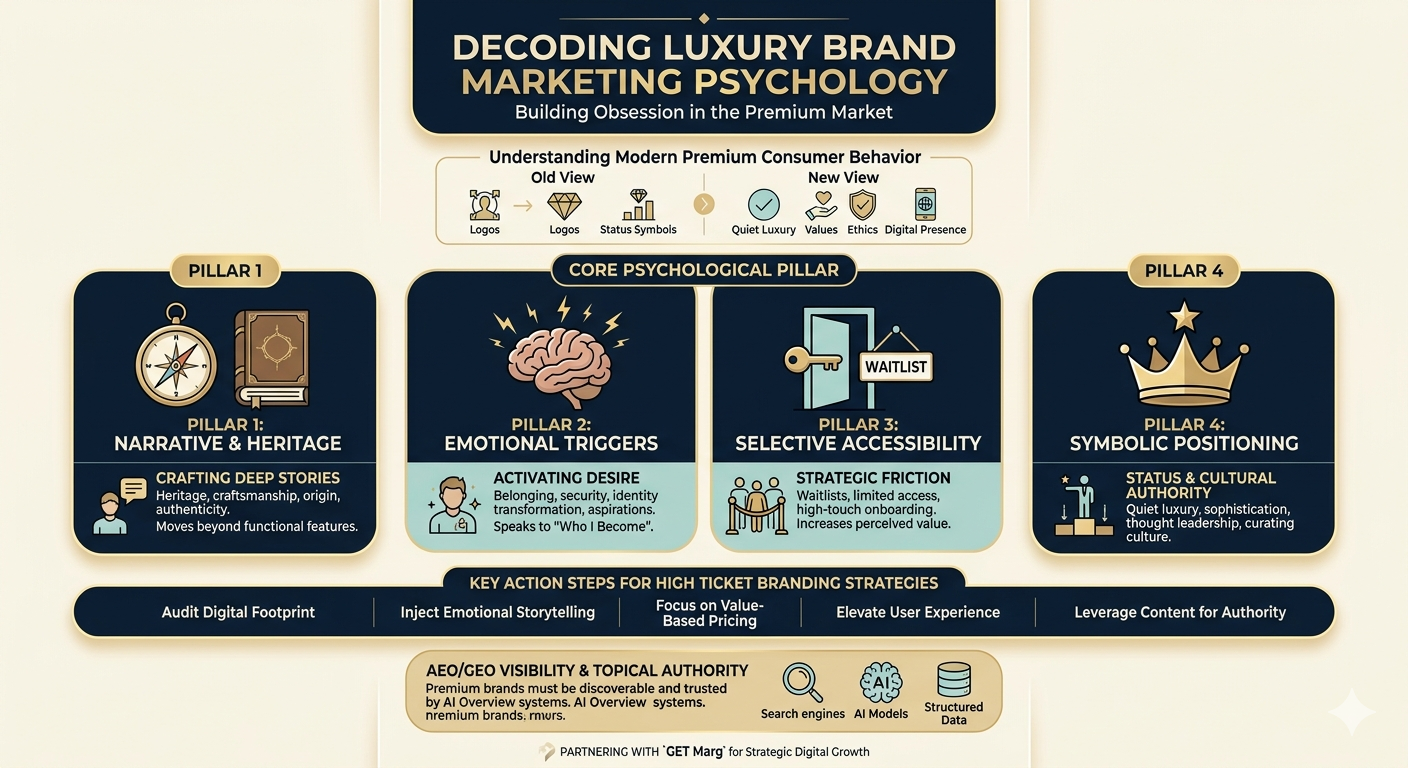
The Four Pillars of Luxury Brand Marketing Psychology
To build a brand that commands premium pricing, you must structure your positioning around specific emotional buying triggers. This framework moves your business away from commoditization and toward true industry authority.
1. The Paradox of Scarcity
Scarcity is not just about limited stock. In digital ecosystems, it means scarcity of access, time, or specific expertise. High ticket branding strategies leverage this by making the buying journey intentional rather than impulsive.
2. Identity and Social Signaling
Every premium purchase is a reflection of the buyer’s internal identity or desired social positioning. Your marketing must speak directly to who the buyer becomes when they associate with your brand.
3. The Power of High-Friction Onboarding
While mass-market brands try to remove every click from the checkout process, premium brands often introduce deliberate friction. Application processes, private consultations, and waitlists increase perceived value and filter for high-intent clients.
At GET Marg, our content strategy frameworks focus heavily on this element, ensuring that digital content qualifies premium buyers before they ever jump on a consultation call.
4. Cultural Authority and Narrative
A luxury brand must act as a cultural curator. This means your content should not merely describe your service or product; it must comment on industry trends, philosophy, and craft.
Data and Trends Shaping High-End Commerce
Recent shifts in digital search and consumer habits highlight how high-end buyers make decisions. The focus has moved away from flashy logos toward quiet sophistication and deep expertise.
| Consumer Behavior Trend | Impact on Premium Brands | Strategic Requirement |
|---|---|---|
| Search for Quiet Luxury | Decreased reliance on large visible branding. | Focus on subtle, high-quality content and design. |
| AI-Driven Research | Shoppers use AI to compare brand sustainability and heritage. | Build deep, clear digital footprints and topical authority. |
| Experience Over Asset | Higher spending on premium services and exclusive access. | Wrap physical products in high-touch digital experiences. |
Real-World Applications: From Logic to Emotion
To see luxury brand marketing psychology in action, let us look at two contrasting approaches to positioning a high-end service business.
Scenario A: The Feature-Driven Firm
A boutique design agency positions itself by listing its technical capabilities. Their website focuses on turnaround times, software proficiencies, and competitive pricing structures. They struggle to justify a premium retainer because they are competing on functional metrics.
Scenario B: The Identity-Driven Partner
Another agency uses high ticket branding strategies to frame their work as a corporate legacy transformation. They produce deep-dive thought leadership on the evolution of brand aesthetics. They do not publish prices or offer discounts. Instead, they require a multi-step application.
They command five times the fee of Scenario A because they align with the client’s emotional buying triggers of status, security, and elite execution.
The Mistakes That Subtly Damage Premium Authority
Many premium brands inadvertently lower their market value by falling back on outdated digital marketing practices. Avoiding these missteps is critical to maintaining a luxury brand marketing psychology that works.
What Premium Brands Often Do Wrong
Offering frequent or predictable promotional discounts.
Over-explaining or over-justifying the price point in public copy.
Using aggressive, high-pressure sales countdown timers on websites.
Neglecting digital search visibility, assuming luxury means being entirely invisible.
What to Do Instead
Instead of discounting, increase the value of the experience by adding exclusive bonuses. Let your craftsmanship and client case studies justify your pricing naturally. Keep your website presentation clean, confident, and free of artificial urgency tactics. Ensure your digital footprint is discoverable by AI engines and search platforms without compromising your brand dignity.
Practical Action Steps for Premium Positioning
If you want to realign your brand with modern premium consumer behavior, you can implement these strategic changes immediately.
Audit Your Digital Footprint: Look at your website and social channels through the lens of a high-intent buyer. Remove any copy that sounds defensive or transactional.
Deepen Your Information Value: Produce content that offers genuine information gain. Write about your philosophy, your proprietary methods, or detailed industry analysis.
Elevate Your Digital Touchpoints: Ensure your website design, loading speed, and initial inquiry process reflect the premium nature of your actual product or service.
Refine Your Messaging Style: Transition your messaging from benefit-driven to identity-driven, speaking directly to the aspirational goals of your target audience.
Key Takeaways
Identity First: Luxury brand marketing psychology relies on selling an identity transformation, not just a functional tool.
Embrace Friction: Introducing intentional steps in the buying process builds anticipation and protects your brand equity.
Prioritize Digital Authority: Modern high-end consumers use AI and advanced search to vet brands; your digital presence must show deep topical expertise.
Control the Narrative: Avoid mass-market promotional tactics that dilute your perceived value and break consumer trust.
Does scarcity still work in digital marketing?
Real scarcity works exceptionally well. Digital brands can create scarcity through limited cohort availability, exclusive digital memberships, or time-bound access to specific high-end services, provided the scarcity feels authentic.
Elevating Your Brand Narrative
Building a premium brand requires a delicate balance of confidence, deep psychology, and modern visibility. When your digital presence perfectly aligns with the expectations of high-end buyers, pricing objections tend to disappear. The goal is to make your business the clear, authoritative choice for those who value absolute quality over the lowest price.
Partner With Us for Premium Growth
Navigating the complexities of luxury brand marketing psychology requires a partner who understands both the art of storytelling and the mechanics of modern digital platforms. At GET Marg, we help premium brands, visionary founders, and elite service providers craft high ticket branding strategies that resonate deeply with modern consumers.
Whether you need to elevate your SEO authority, optimize for AI visibility, or refine your overarching digital growth strategy, we design bespoke marketing ecosystems that preserve your brand dignity while driving sustainable growth. Let us discuss how we can elevate your brand position.
Frequently Asked Questions-
How does luxury brand marketing psychology differ from standard marketing?
Standard marketing focuses on solving immediate problems with speed, affordability, and practical features. Luxury brand marketing psychology focuses on status, heritage, identity, and emotional buying triggers, making the price a secondary consideration.
Why do high ticket branding strategies require slower sales cycles?
Premium buyers require trust and validation before investing at a high level. High ticket branding strategies introduce deliberate touchpoints and deep informational content to build relationship equity over time rather than forcing an immediate transaction.
Can a service-based business use premium consumer behavior principles?
Yes. Service providers can apply these principles by productizing their expertise into exclusive frameworks, implementing strict client selection criteria, and producing high-value thought leadership that showcases deep industry authority.
How do modern search engines and AI look at premium brands?
AI platforms search for semantic clarity, deep expertise, and genuine information value. Premium brands must ensure their digital content answers complex, conversational queries with unparalleled depth to remain visible in modern search ecosystems.