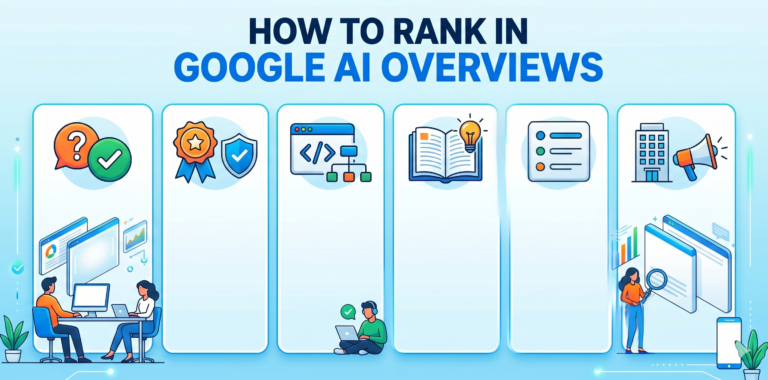
The rise of Generative AI in SEO is fundamentally reshaping how search engines rank, interpret, and display content. With AI-powered systems like Google AI Overviews and conversational search engines, traditional SEO strategies based only on keywords and backlinks are no longer enough.
In 2026, visibility depends on how well your content is understood by AI systems, not just how well it ranks in blue links. This shift has introduced a new discipline called Generative Engine Optimization (GEO), which focuses on optimizing content for AI-generated answers.
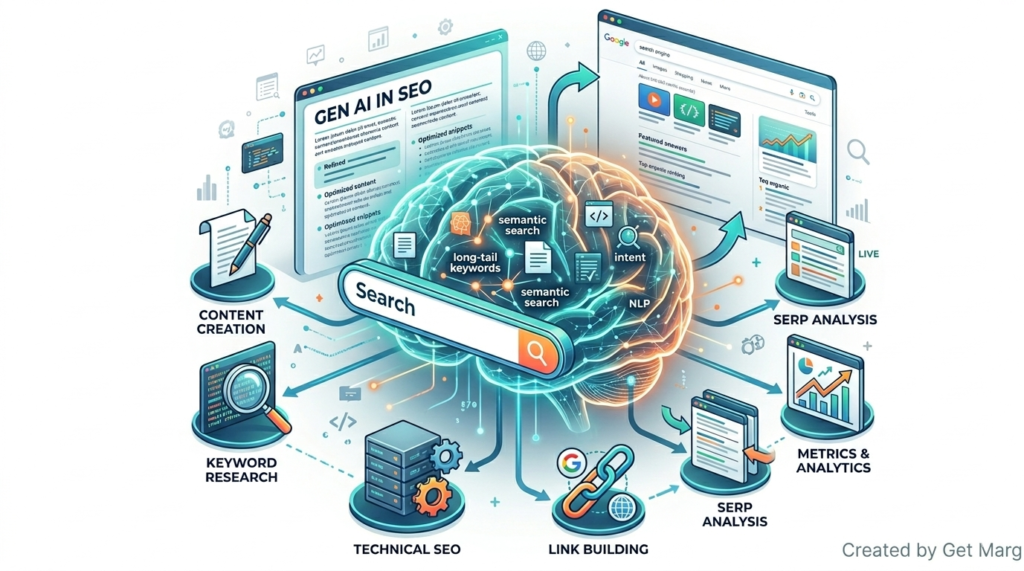
Brands that fail to adapt to AI search optimization will lose up to 70% of organic visibility by 2026.
What is Generative AI in SEO?
Generative AI in SEO refers to the use of artificial intelligence models that can create, analyze, and optimize content to improve search visibility. Unlike traditional automation tools that follow predefined rules, generative AI can understand context, identify search intent, generate content ideas, and assist with optimization at scale.
For brands, Generative AI is no longer just a content creation tool. It is becoming a strategic asset that helps marketers uncover opportunities, accelerate workflows, and adapt to a search landscape increasingly influenced by AI-powered search experiences.
As search engines integrate AI-generated answers directly into results, businesses must focus not only on ranking pages but also on becoming trusted sources that AI systems reference and cite.
How AI is Changing Search Engines in 2026
Search engines in 2026 are shifting from keyword-based systems to AI-powered answer engines that focus on intent, context, and personalization. Instead of showing only links, they now generate direct summaries using AI, often combining information from multiple trusted sources into a single response.
A major change is the rise of AI-generated results and semantic understanding, where search engines interpret natural language queries like a human rather than matching exact keywords. This makes searches more accurate and conversational. Another key shift is personalization. AI now uses user behavior, location, and preferences to deliver more relevant and predictive results, turning search into a discovery-driven experience.
For marketers and creators, this has made generative AI for SEO extremely important. Content is no longer just about ranking keywords. It must be structured, helpful, and optimized for AI systems that extract and summarize information directly.
In short, search engines are becoming intelligent assistants, and success in SEO now depends on how well content aligns with generative AI for SEO principles like clarity, authority, and intent satisfaction.
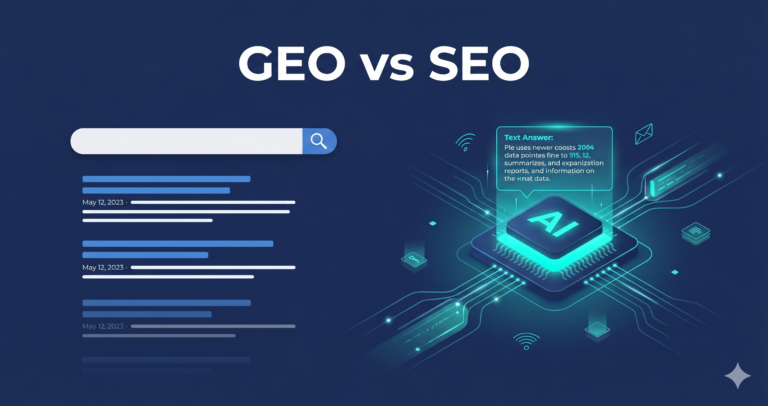
SEO vs GEO: What’s the Difference?
While SEO remains essential, a new discipline known as Generative Engine Optimization (GEO) is emerging alongside it.
| SEO | GEO |
|---|---|
| Optimizes for search rankings | Optimizes for AI-generated answers |
| Focuses on keywords | Focuses on context and authority |
| Measures rankings and traffic | Measures citations and AI visibility |
| Targets search engine users | Targets AI systems and users |
SEO helps content rank in search results. GEO helps content become part of the answers generated by AI systems. The most successful brands in 2026 are not choosing between SEO and GEO. They are combining both strategies to maximize visibility across traditional search results and AI-generated experiences.
Key Ranking Factors in AI Search
Search engines powered by AI evaluate content differently compared to traditional algorithms. The most important ranking factors now include:
- Information gain, meaning unique insights that are not available elsewhere
- Entity authority, which includes brand credibility and topical trust signals
- Content depth and semantic coverage across the topic
- Potential for citation in AI-generated summaries and answers
- Structured data, clarity, and overall readability
- User engagement signals such as dwell time and satisfaction
Optimizing for these factors is essential for appearing in AI-generated answers and improving visibility in systems driven by generative AI for SEO.
How Generative AI Impacts SEO Strategy
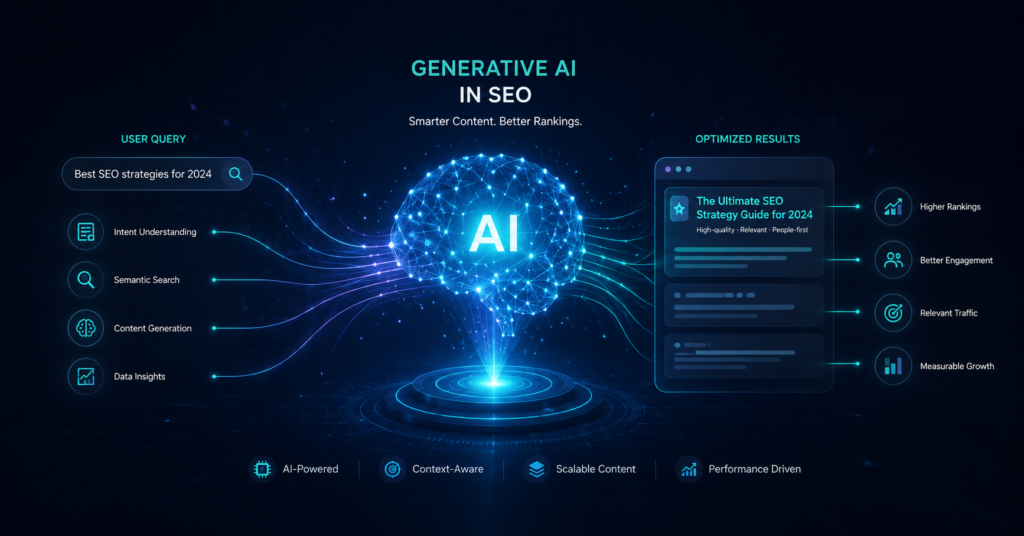
Generative AI is reshaping SEO by changing how content is created, evaluated, and delivered in search results. Instead of focusing only on keyword optimization, SEO strategies now need to align with how AI systems understand intent, context, and meaning.
One major impact is on content creation. With generative AI for SEO, marketers can produce large volumes of content faster, but search engines now prioritize originality and information gain over simple AI-generated text. This means generic or repetitive content is less likely to perform well. Another key shift is in optimization. SEO is no longer just about ranking pages, but about being featured in AI-generated summaries and answers. This requires strong topical depth, clear structure, and authoritative signals that help AI systems trust and cite the content.
Generative AI also improves keyword research and content planning. It helps identify user intent patterns, related entities, and content gaps that traditional tools may miss, making SEO strategies more data-driven and precise. Overall, generative AI for SEO is pushing marketers toward more intent-focused, structured, and high-value content that is designed for both users and AI systems.
Best Generative AI SEO Tools
TOOLS
Several AI-powered tools are helping marketers adapt to the evolving search landscape.
- ChatGPT- Useful for content ideation, keyword clustering, content briefs, and drafting optimized content.
- Gemini- Provides access to Google’s AI ecosystem and can assist with research, content planning, and search-related insights.
- Perplexity- Valuable for understanding how AI-powered search engines retrieve, cite, and present information.
- Semrush AI Features- Combines traditional SEO data with AI-assisted content creation and optimization workflows.
- Ahrefs AI Tools- Supports keyword research, content analysis, and competitive intelligence enhanced by AI capabilities.
- Surfer SEO- Uses AI-driven recommendations to improve content relevance, topical coverage, and on-page optimization.
The most effective strategy is not replacing human expertise with AI. Instead, leading brands use AI tools to enhance research, improve efficiency, and scale high-quality content creation.
Step-by-Step AI SEO Strategy
An effective SEO strategy in the age of AI search requires aligning content creation with how generative systems interpret intent, context, and authority. Below is a structured, SEO-optimized step-by-step framework to follow.
1. Perform Intent-Based Keyword Research
Start by focusing on search intent rather than isolated keywords. Group keywords into intent clusters such as informational, transactional, and navigational queries. Use AI-powered tools to identify semantic relationships, related entities, and content gaps for better targeting.
2. Build Topical Authority with Content Clusters
Create interconnected content clusters around core topics instead of publishing standalone articles. This helps search engines understand your expertise and improves your chances of ranking in AI-generated search results.
3. Optimize Content for Generative AI for SEO
Structure your content in a clear and scannable format. Use proper headings, short paragraphs, and direct explanations so AI systems can easily extract and summarize your content for search results and AI overviews.
4. Strengthen Entity and Brand Signals
Ensure consistent use of brand names, author details, and topic entities across all content. Strong entity recognition improves trust, relevance, and visibility in AI-driven search ecosystems.
5. Focus on Structured Data and Readability
Implement schema markup where possible and maintain clean formatting. Well-structured content improves machine understanding and increases the likelihood of being featured in AI-generated answers.
6. Monitor Performance and AI Visibility
Track engagement metrics such as dwell time, bounce rate, and user satisfaction. Additionally, monitor how often your content appears in AI summaries, featured snippets, and conversational search results.
By following this framework, you can build an SEO strategy that aligns with modern AI search systems and improves visibility across generative AI for SEO environments.
Benefits of Generative AI in SEO Content Strategy
To maintain your organic search performance, your team needs a structured approach that prioritizes semantic depth and platform-wide visibility. The transition requires moving away from thin, repetitive content production and shifting toward a system built for comprehensive authority.
The following framework outlines the core pillars your business must implement to capture the true benefits of generative AI in SEO:
Audit for Information Gain
Phase 1: Content EvaluationReview your existing blog and resource libraries to identify generic content. Replace shallow, rewritten articles with pieces that contain proprietary data, original quotes, and specialized insights.
Structure Data for LLM Consumption
Phase 2: Technical AlignmentOrganize your website information using clear hierarchies, explicit headings, and clean markdown. Large language models (LLMs) extract data more efficiently when text follows a predictable, logical layout.
Optimize for Conversational Queries
Phase 3: Intent MappingRewrite your content headers to mirror how real people ask questions naturally. Focus on long-tail, conversational phrases that align with voice search and direct assistant prompts.
Build Multi-Platform Entity Authority
Phase 4: Brand FootprintExpand your digital footprint beyond your primary website. Ensure your brand name, core products, and leadership team are consistently mentioned across reputable third-party platforms, industry forums, and digital public relations channels.
The Future of SEO with AI Metrics
The data surrounding modern search behavior clearly illustrates why businesses can no longer rely on outdated traffic generation playbooks. Consumer expectations have evolved, and the platforms are shifting their interfaces rapidly to match this demand.
The table below breaks down the primary differences between legacy search engine models and the current AI-driven ecosystem:
| Search Attribute | Legacy Search Engine Model | Modern AI-Driven Search Ecosystem |
| User Interaction | Short, disjointed keyword phrases | Long, conversational prompts and follow-up questions |
| Primary Goal | High click-through rate to external sites | Immediate information delivery directly on the search page |
| Evaluation Focus | Keyword density, metadata, and backlink volume | Topical authority, context, and unique information gain |
| Traffic Distribution | Shared across a full page of ten blue links | Concentrated on a few cited sources inside the text summary |
| Content Performance | High volume of single-topic blog posts | Deep, comprehensive resource hubs with original insights |
The underlying data supports this transition. Market reports show that around 72% of digital marketing managers have actively shifted their budgets toward conversational search optimization. Furthermore, early adopters who utilize specialized AI SEO tools have seen an average 40% increase in content production efficiency.
Despite the increase in automated content across the internet, user trust remains tied to authenticity. Data indicates that nearly 65% of consumers express concern over the rise of purely automated, generic web text, which underscores the urgent need for human oversight. Organizations that lean heavily on automated systems without manual editing often experience rapid drops in organic performance.
When analyzing the overall impact of AI on search engine optimization, businesses that focus heavily on unique brand assets and proprietary data points maintain their visibility, while sites relying on aggregated information face steep declines. The future of SEO with AI belongs entirely to brands that blend automated efficiency with genuine human expertise.
How Airbnb Navigated the Organic Search Evolution
When looking for a concrete example of how generative AI in SEO rewards specific brand equity, consider the strategic choices made by Airbnb. A few years ago, the travel marketplace noticed that reliance on generic performance marketing and basic keyword bidding was becoming increasingly expensive and less effective.
Instead of continuing to fund generic search ads and thin travel blogs, the leadership team made a deliberate decision to reallocate their resources. They focused heavily on building a recognizable brand identity and creating highly detailed, community-driven content that featured real hosts and unique neighborhood insights.
When search engines began deploying conversational summaries, the algorithm pulled heavily from Airbnb’s ecosystem. The brand was already established as a primary entity in the travel sector, with thousands of unique, non-replicated reviews and location guides. Because their data was structured, original, and deeply tied to real-world locations, conversational AI systems consistently cited their platform as a trusted authority.
The takeaway for D2C founders and business owners is clear. You cannot win the search battle by trying to out-publish the web with generic information. You win by building a distinct brand entity that algorithms must reference because your community data and insights do not exist anywhere else. Partnering with a dedicated agency like GET Marg can help your team build this exact level of real-world authority.
Mistakes with AI Content Generation for SEO
Many corporate marketing directors and content creators make critical errors when trying to adapt to the changing search landscape. Avoiding these common mistakes will save your brand from severe traffic drops.
- Relying entirely on unedited AI content generation for SEO: Publishing large volumes of raw, automated text results in thin content that lacks information gain. Search algorithms easily identify these patterns and de-index the pages.
- Chasing empty keyword volume metrics: Selecting topics based solely on traditional search volume tools rather than evaluating topical relevance and conversational intent leads to low-quality leads.
- Ignoring the conversational question format: Writing rigid, academic headers instead of answering the direct, natural language questions that users type into digital assistants.
- Neglecting technical site structure and clean markdown: Allowing your website data to sit in cluttered layout blocks that prevent search engines from easily parsing and extracting your key facts.
- Failing to build external brand mentions: Treating your website like an isolated island instead of ensuring your brand name is integrated across the broader digital ecosystem.
The Evolution of Organic Reach
Navigating the future of search requires a commitment to quality over raw volume. The era of manipulating search rankings through mechanical keyword placement is officially over.
- The landscape has shifted: Traditional blue links are being replaced by conversational summaries that answer user intents immediately.
- Information gain is mandatory: Your articles must provide unique value, proprietary data, or real stories to be considered valuable by modern search tools.
- Entities take center stage: AI systems rank websites based on the clear relationships between established brands, people, and concepts.
- Human editorial control is vital: Over-reliance on generic AI text generation without deep manual editing leads to algorithmic penalties.
- Technical clarity matters: Organizing data with clean markdown and conversational headers allows modern AI SEO tools and search engines to easily extract your insights..
Accelerate Your Content Strategy with GET Marg
Navigating the complex realities of modern digital marketing requires a forward-thinking execution partner. At GET Marg, we design advanced content systems built specifically for the era of AI search, semantic SEO, and conversational discovery. We help your business deploy the right AI SEO tools and move past outdated keyword tactics to build genuine topical authority that search engines trust.
Whether you need to revitalize your organic content strategy, scale your branding efforts, or improve performance marketing ROI, GET Marg operates as your dedicated digital growth teammate. We translate complex algorithmic shifts into sustainable lead generation and long-term brand equity. Let us help you protect your organic traffic and build a digital footprint that scales. Reach out to GET Marg today to begin building an AI-ready growth strategy.
Frequently Asked Questions(FAQs)
Q1. What is Generative AI in SEO?
Generative AI in SEO refers to using artificial intelligence systems to create, optimize, and structure content for better visibility in AI-driven search engines and Google AI Overviews.
Q2. How does generative AI assist in SEO?
Generative AI in SEO helps marketers create content outlines, optimize meta tags, generate keyword ideas, and improve content quality. Modern AI SEO tools can analyze search trends, identify opportunities, and automate repetitive tasks, allowing businesses to create search-friendly content more efficiently and at scale.
Q3. How is AI used in SEO?
AI is used in SEO for keyword research, content optimization, technical audits, competitor analysis, and search intent identification. Many businesses rely on AI SEO tools to process large datasets quickly and improve decision-making. This growing adoption highlights the significant impact of AI on search engine optimization across industries.
Q4. What is Generative Engine Optimization (GEO)?
GEO is the process of optimizing content specifically for AI-generated search responses rather than traditional search engine rankings.
Q5. How does AI affect SEO rankings?
AI changes SEO by prioritizing content quality, context, and authority instead of keyword density and backlinks alone.