Introduction: Search is no longer just search
For more than two decades, digital visibility was simple – rank on Google, get clicks, generate traffic. That entire model was built on Search Engine Optimization (SEO). But in 2026, the system has fundamentally changed. Users are no longer just searching. They are asking AI systems to decide, summarise, and recommend answers. This shift has introduced a new discipline: Generative Engine Optimization (GEO). Now businesses are no longer competing only for rankings. They are competing for inclusion in AI-generated answers. This is where the debate of GEO vs SEO becomes critical for founders, marketers, and brands.
GEO vs SEO is not just another debate for marketing geeks; it is the most critical shift affecting how your customers find you online today. People are getting tired of scrolling through ten blue links to find a simple answer. They simply open up a chat window, ask a specific question, and expect a highly accurate response in seconds.
The old way of getting discovered is slowly losing its effectiveness. We are transitioning from a world where businesses fight for clicks on a search page to a reality where machines choose one single answer to present to the user.
If your brand is missing from these generated responses, you are basically invisible to the modern consumer. Your competitors will happily step in and take that visibility. Let us look at exactly what this means for your business and how you can actually adapt to it.
What is SEO (Search Engine Optimization)?
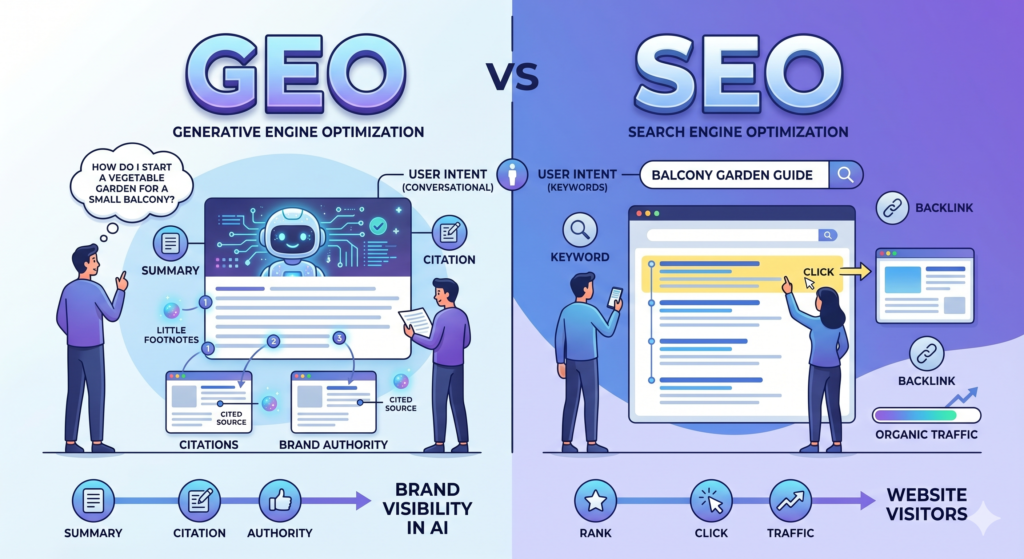
SEO (Search Engine Optimization) is the process of optimizing digital content to improve visibility on traditional search engines like Google and Bing.
The objective of SEO is:
To rank higher on search engine results pages (SERPs) and attract organic traffic.
Core elements of traditional SEO:
- Keyword optimization
- Backlink building
- Technical SEO (speed, indexing, structure)
- Content relevance
- Domain authority
How SEO works:
User searches → Google shows ranked list of links → user clicks → website gets traffic
SEO is fundamentally built for a link-based discovery system.
The success metric is:
👉 Clicks and traffic
What is GEO (Generative Engine Optimization)?
GEO (Generative Engine Optimization) is the process of optimising content so that AI systems like Google AI Overviews, ChatGPT, and Perplexity can:
- Understand your content
- Extract key insights
- Summarize your brand or information
- Cite your website inside AI-generated answers
GEO in simple terms:
GEO ensures your brand appears inside AI answers, not just search results.
How GEO works:
User asks a question – AI scans multiple sources – AI generates a final answer – your content may be cited
Unlike SEO, GEO is not about ranking links.
It is about becoming part of the answer itself.
The success metric is:
👉 Citations, mentions, and AI visibility
Core Elements of GEO vs SEO Explained
Understanding the true nature of GEO vs traditional SEO requires looking at how each system decides what to show the user. The old methods focused entirely on pushing a specific web page up a long list. The new approach focuses on becoming the trusted source material for a synthesised answer.
Adapting your format is no longer optional if you want to stay relevant. Having GEO vs SEO explained simply helps you stop wasting time on outdated tactics that no longer move the needle. Here is a clear breakdown of how the landscape is shifting:
- The Ultimate Goal: Traditional methods drive maximum traffic to a specific web page. Modern optimization aims to get your brand cited as the primary expert in an AI summary.
- The Input Signals: Old strategies relied heavily on exact match keywords and high volume backlinks. The new focus requires entity clarity, factual structure, and deep topical authority.
- The Content Format: Traditional writing used long introductions meant to keep readers scrolling down the page. The modern format demands direct answers placed right at the top of every section.
- The Measurement: Old campaigns measured success strictly through organic clicks. Modern campaigns track how often a brand is mentioned directly in generative responses.
GEO vs SEO: Key Differences Explained
| Dimension | SEO (Search Engine Optimization) | GEO (Generative Engine Optimization) |
|---|---|---|
| Full Form | Search Engine Optimization | Generative Engine Optimization |
| Core Objective | Rank web pages on search engines | Get content cited in AI-generated answers |
| Primary Platforms | Google Search, Bing | OpenAI ChatGPT, Google AI Overviews, Perplexity |
| User Experience | User clicks links from SERP | User gets direct AI-generated answers |
| Traffic Model | Click-based traffic to website | Often zero-click visibility + brand mentions |
| Ranking Logic | Algorithms (backlinks, keywords, technical SEO) | LLM-based relevance, entity authority, semantic clarity |
| Content Focus | Keyword-optimized web pages | Answer-ready, structured, factual content |
| Optimization Units | Keywords & backlinks | Entities, context, and extractable statements |
| Content Style | Long-form SEO blogs, optimized headings | Modular, concise, citation-friendly statements |
| Success Metrics | Rankings, CTR, organic traffic | AI citations, mentions, inclusion in answers |
| Authority Signals | Domain authority, backlinks, page authority | Brand mentions, topical authority, entity trust |
| Search Behavior | “Click to find answer” | “Get answer directly in search/AI” |
| Example Output | Blue links, snippets, featured results | AI summaries with cited sources |
| Time Horizon | Established & stable model | Emerging, rapidly growing (AI-first discovery) |
The Numbers Behind AI Visibility Optimization
The behavioral data shows exactly why we need to pay attention to these massive shifts right now. People are bypassing traditional discovery methods at an incredible rate. The numbers behind GEO vs SEO prove why adapting is completely non-negotiable for any growing business.
Around 80% of users now resolve their queries without ever clicking a traditional blue link. Nearly 48% of tracked searches feature an artificial intelligence overview at the top of the page. About 35% of Gen Z users prefer using smart chat tools as their primary research method before making a purchase. Visitors coming from these new citations convert at rates roughly 4 times higher than traditional organic traffic. Using highly structured formatting techniques can increase your chances of being cited by up to 40%.
| Metric Category | Traditional Search Reality | Modern Search Reality |
| User Behavior | Scrolling through multiple results | Reading a single compiled answer |
| Click Through Rates | Steadily declining across industries | Zero click searches are the standard |
| Traffic Quality | High volume with lower conversion intent | Lower volume with high conversion intent |
| Primary Goal | Ranking a specific URL on page one | Earning a brand citation in a summary |
How Zomato Mastered AI Search Optimization
Let us look at a real example of this shift in action with Zomato. They realized early on that users stopped typing broad terms and started asking highly specific, conversational questions about food recommendations. Zomato did not just rely on their existing domain authority; they took immediate action by structuring their massive database of restaurant menus, user reviews, and location details into incredibly clear formats.
By recognizing the GEO vs SEO difference early, Zomato made sure their platform data became the absolute foundation of the new knowledge base. They built dedicated, fact-dense pages for highly specific culinary niches. They ensured their platform data was incredibly easy for bots to parse without complex coding getting in the way. When users ask complex dining questions today, the engines consistently cite Zomato listings as the definitive answer. This proactive approach kept them at the top of the food discovery chain.
Where Brands Fail with GEO vs traditional SEO
Most digital marketing professionals fail today because they treat modern platforms exactly like traditional ranking projects. You cannot apply old rules to completely new systems. A major GEO vs SEO error is hiding your best answers behind too much conversational filler and fluff.
If your brand is currently missing from modern search answers, you are likely making a few common structural errors in your approach to SEO vs AI search optimization. Here is what you need to fix immediately:
- Hiding answers behind long introductions: Bots will not dig through four paragraphs of fluff to find your main point. They prioritize pages that deliver the exact answer in the very first sentence.
- Blocking crawlers accidentally: Many websites have technical settings that actively prevent bots from reading their content. If the system cannot crawl your page, it will never cite you.
- Using dynamic JavaScript for core information: If your pricing or feature lists only load when a user clicks a button, the engine cannot see them. Keep your most important data in plain text.
- Ignoring clear formatting: A lack of tables, bullet points, and clean structures makes your information too hard to extract. Machines need visual hierarchy to understand context.
- Relying entirely on old habits: Repeating the phrase SEO vs AI search optimization does not matter if the actual content lacks factual depth. You have to provide real information value.
Your Strategy for Generative Engine Optimization vs Search Engine Optimization
Getting your brand ready for the future requires immediate structural changes to your digital presence. You need to transition your mindset from chasing empty clicks to building a highly structured knowledge graph. Your strategy for GEO vs SEO requires clear execution and consistency.
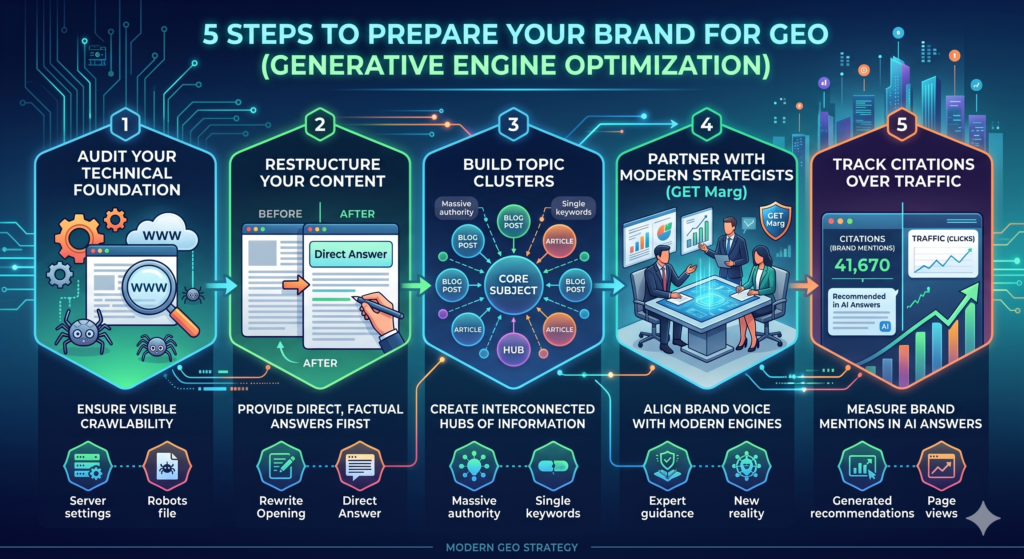
Once you have the concept of GEO vs SEO explained to your internal team, getting your brand ready is just a matter of following the right steps. Here is the exact sequence to improve your chances of being chosen as the answer:
- Audit Your Technical Foundation: Ensure your website actually allows bots to crawl your pages without unnecessary friction. Check your server settings, review your robots file, and confirm that your most valuable information is visible.
- Restructure Your Content: Look at your top performing pages and completely rewrite the opening paragraphs. Provide a direct, factual answer to the core question immediately, before you add any background context.
- Build Topic Clusters: Stop writing isolated blog posts that only target single keywords. Create interconnected hubs of information that cover a subject from every possible angle to build massive topical authority.
- Partner with Modern Strategists: Working with the team at GET Marg ensures your entire digital presence is structured for this new reality. We understand how to align your brand voice with the exact formatting these engines crave.
- Track Citations Over Traffic: Shift your analytics focus from traditional clicks to brand mentions. Start measuring how often your business is recommended in generated answers instead of just watching your page views.
How GET Marg Helps in GEO vs SEO Strategy
At GET Marg, we focus on helping businesses transition from traditional SEO to AI-first visibility systems.
Our approach includes:
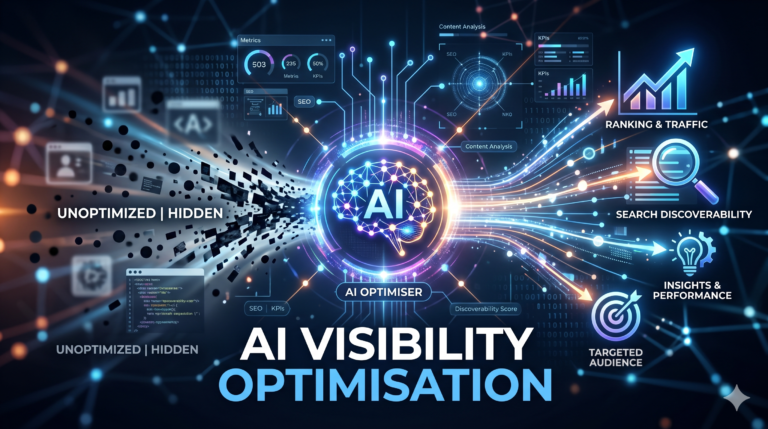
1. AI Visibility Optimization
Ensuring brands appear in:
- Google AI Overviews
- ChatGPT responses
- Perplexity citations
2. Entity-based SEO strategy
We structure content around:
- Brand entities
- Industry entities
- Topic clusters
3. GEO content frameworks
We build:
- AI-friendly blogs
- Structured knowledge content
- High-authority explainers
4. Hybrid SEO + GEO model
We combine:
- Traditional SEO foundations
- AI search optimization strategies
Core Takeaways on GEO vs SEO
The landscape of GEO vs SEO is moving incredibly fast right now. Standing still means losing your digital footprint entirely to competitors who are willing to adapt quickly. Here are the most important points to remember about Generative Engine Optimization vs Search Engine Optimization:
- Getting cited in generated answers is now far more valuable than ranking on page two of a traditional search.
- The new era is about factual clarity and direct answers versus traditional link popularity.
- The structural formatting of your content matters just as much as the quality of your actual writing.
- Brands must use tables, lists, and direct answers to help machines extract their knowledge easily.
- Incorporating AI visibility optimization protects your brand from becoming invisible as user habits change.
- Partnering with a modern growth team like GET Marg gives you a distinct advantage in navigating these technical shifts.
Conclusion
SEO and GEO are both essential in today’s evolving search landscape. SEO focuses on improving visibility on traditional search engines like Google by ranking websites through keywords, backlinks, and technical optimization to drive organic traffic. GEO, or Generative Engine Optimization, focuses on being included in AI-generated answers from systems like OpenAI and Google AI Overviews, where users get direct responses instead of clicking links. While SEO builds traffic, GEO builds brand presence inside AI answers. Together, they ensure complete digital visibility. Platforms like GetMarg help businesses adapt to this shift by aligning with both search engines and AI-driven discovery, making brands visible wherever users search or ask questions.
Frequently Asked Questions (FAQ’s)
What is the difference between GEO and SEO?
SEO is about helping your website rank on Google so people can click and visit your site. GEO is about making sure AI tools like ChatGPT or Google AI Overviews pick your content and use it directly in their answers. So SEO brings traffic, GEO brings visibility inside AI answers.
Is GEO going to replace SEO?
No, GEO isn’t replacing SEO. SEO is still needed for your website to get indexed and discovered. GEO just adds another layer where your content also becomes useful for AI systems. Think of SEO as the base and GEO as the next step on top of it.
Why should businesses care about GEO now?
Because people are not just searching anymore – they’re asking AI for answers. If your brand is part of those AI answers, you still get visibility even if users don’t click your website. That’s a big shift in how discovery works.
What is AI search optimization in GEO?
AI search optimization simply means writing content in a way that AI tools can easily understand and summarize. It focuses more on clarity, context, and meaning rather than just keywords.
Can SEO still bring results in the AI era?
Yes, SEO still works. People still use Google. But the difference is that now some answers are shown directly by AI, so fewer people may click on websites. That’s why SEO alone is not enough anymore.
What type of content works best for GEO?
Content that explains things clearly works best. For example:
1. Simple definitions
2. Comparisons like GEO vs SEO
3. Step-by-step guides
4. FAQs
5, Content that uses real names, tools, and examples
How can a business use both SEO and GEO together?
The best approach is to do both. SEO helps you rank and bring visitors. GEO helps you show up inside AI answers. When you combine both, your brand stays visible everywhere people are searching or asking questions.